
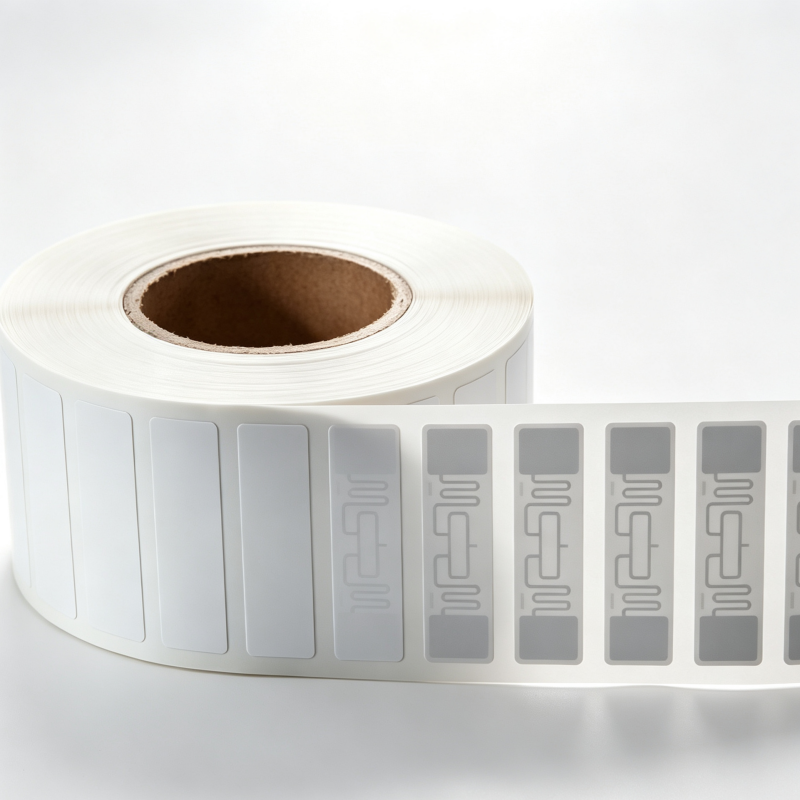
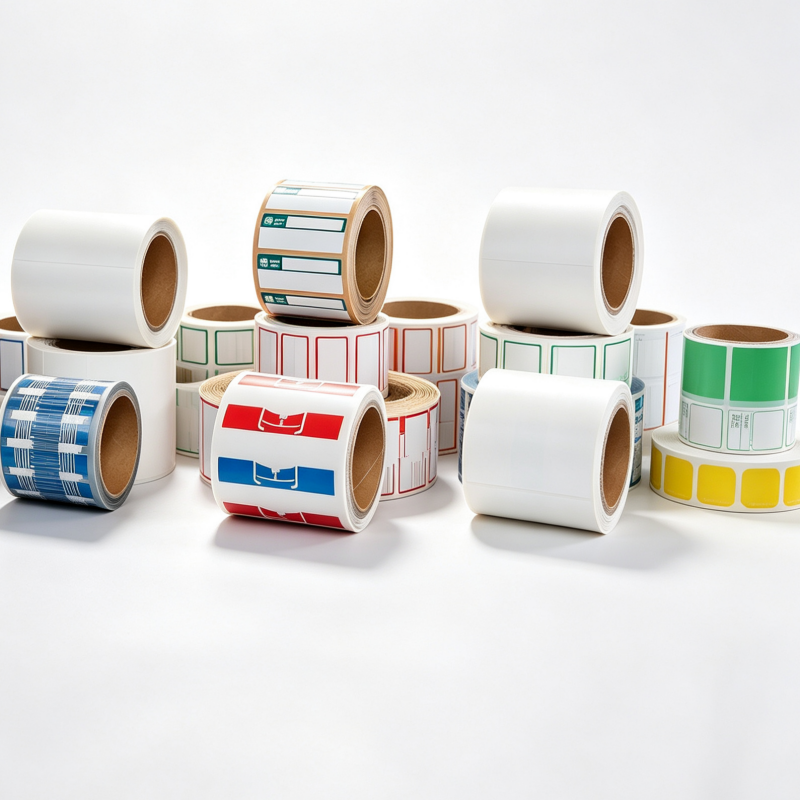
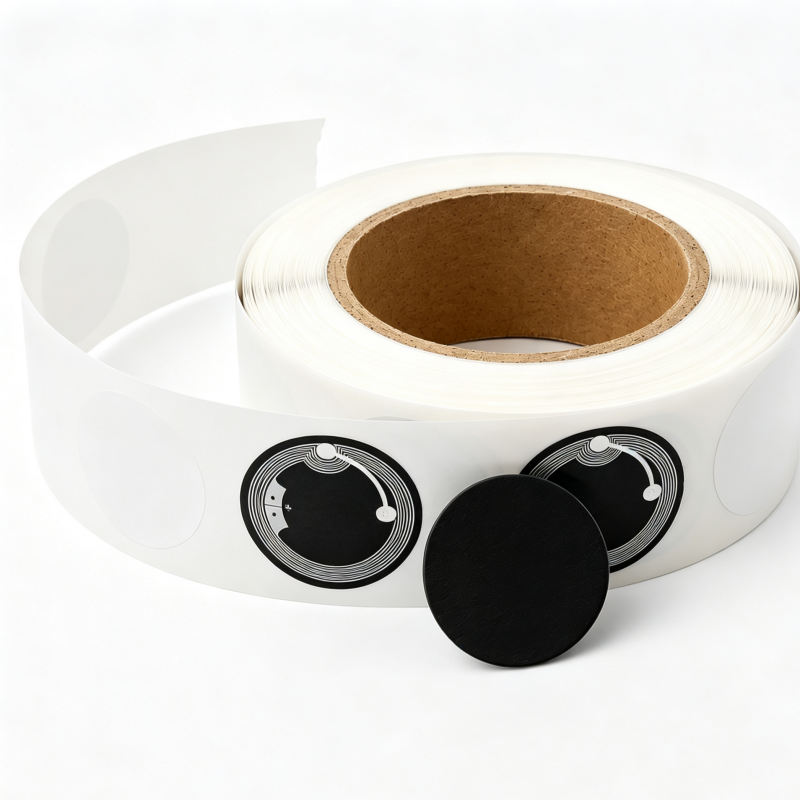
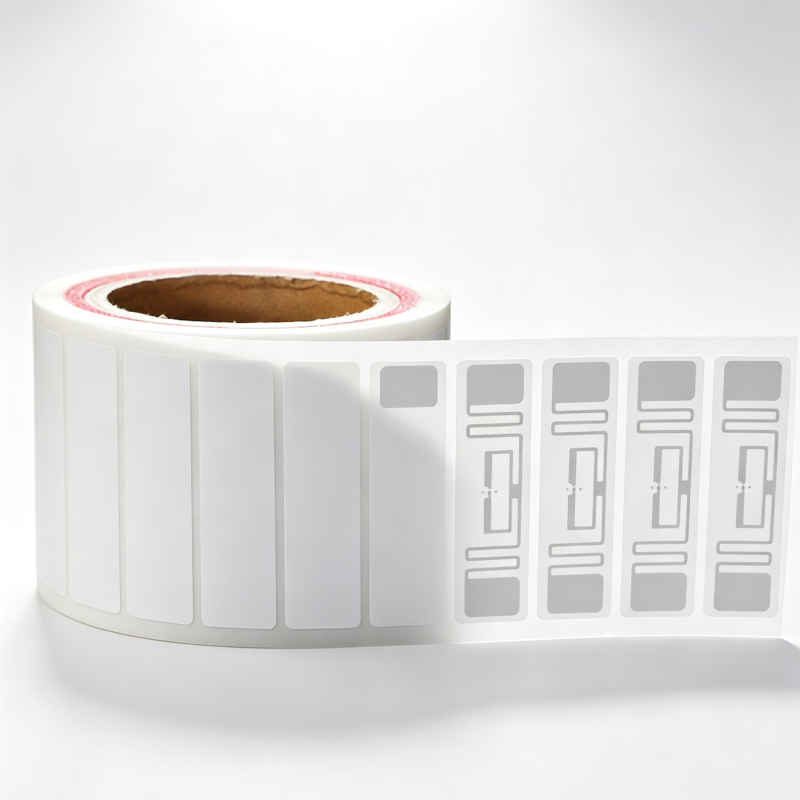
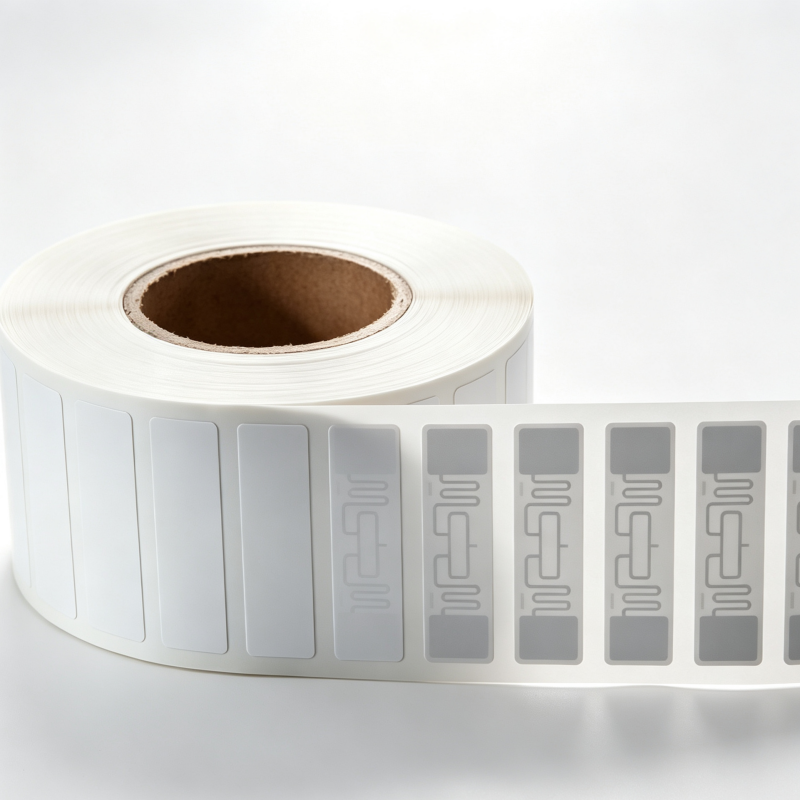
Custom Silver Ink Material RFID Label for Anti-Counterfeit Authentication
| ITEM | DETAILS |
|---|---|
| Product Type | RFID Electronic Tags / RFID Smart Labels |
| Materials | PET, Coated Paper, Synthetic Paper, Chrome Paper |
| Chip Type | UHF Chip, HF Chip, NFC Chip |
| Frequency | High Frequency (13.56MHz), Ultra High Frequency (860-960MHz) |
| Printing Method | Digital Printing, Thermal Transfer Printing, Screen Printing |
| Adhesive Type | Permanent Adhesive, Strong Adhesive |
| Surface Finish | Matte, Glossy, Lamination |
| Data Encoding | EPC Encoding, Serial Number, Batch Number, Variable Data Writing |
| Application | Warehouse & Logistics, Asset Management, Access Control & Attendance, Retail Anti-Counterfeiting, Library Management |
Counterfeit products are becoming harder to identify when authentication relies only on printed barcodes, logos or ordinary security stickers.
A barcode can be copied. A product number can be reproduced. Even a high-quality printed label can potentially be scanned, photographed and replicated.
A Custom Silver Ink RFID Label for Anti-Counterfeit Authentication takes a different approach by combining a printed security label with an electronic identity.
The result can combine:
Silver conductive ink + RFID antenna + RFID chip + unique serial number + printed security graphics + digital authentication
This construction is particularly useful for brands that need item-level identification and authentication for products such as cosmetics, electronics, luxury goods, wine and spirits, pharmaceuticals, automotive components, apparel, industrial products and premium packaging.
The important point is that RFID alone does not automatically make a product counterfeit-proof. The strongest systems combine unique serialization, RFID identification, physical security features and backend authentication.
GS1’s current anti-counterfeiting guidance specifically identifies instance-level identification and serialization as important tools for detecting counterfeit products. It also describes combining RFID Tag IDs with digitally signed data as an additional authentication factor.
What Is a Silver Ink RFID Label?
A silver ink RFID label uses conductive silver ink to form an RFID antenna or conductive structure, rather than relying exclusively on a traditionally etched metal antenna.
The basic construction can include:
Printing substrate → silver conductive antenna → RFID chip → protective/graphic layers
The substrate may be:
- Coated paper
- Synthetic paper
- PET
- PP
- Other flexible label materials
Silver-based conductive inks are widely used for printed RFID and NFC antennas. Current industrial solutions use screen printing, flexographic printing, and other roll-to-roll processes to deposit conductive material onto paper or film substrates.
This is important because the silver layer is not simply a decorative silver color.
It needs to provide the electrical characteristics required by the RFID antenna.
Research on printed RFID antennas has demonstrated the use of silver-based conductive inks for RFID antenna structures, while more recent industrial developments focus on scalable printing and flexible substrates.
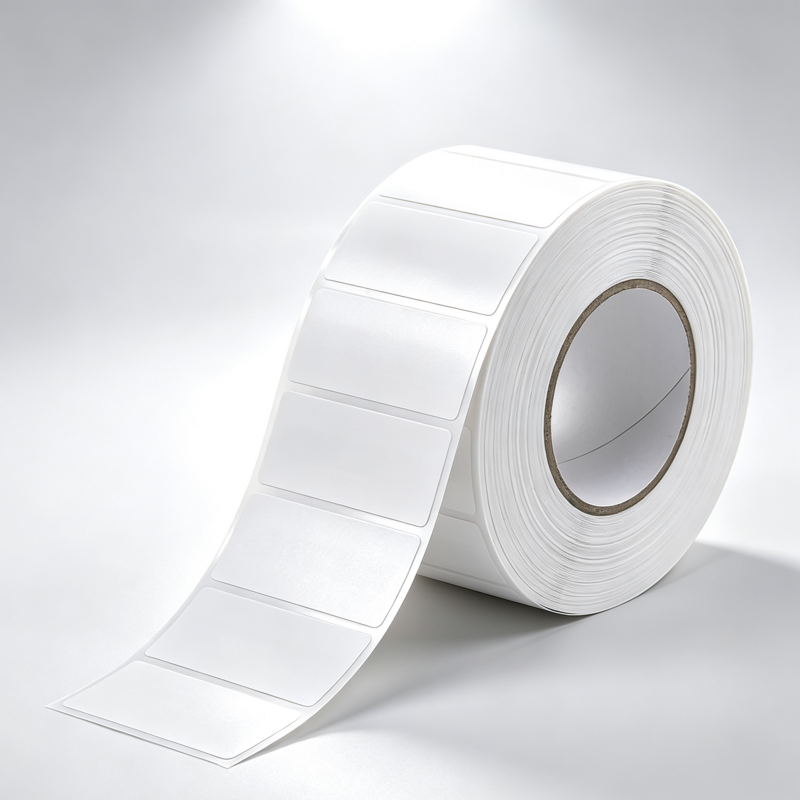
Why Use Silver Ink in an Anti-Counterfeit RFID Label?
There are two different reasons to use silver ink.
1. Functional conductivity
The silver ink can be used to create conductive antenna structures.
This makes it possible to manufacture RFID antennas directly through printing processes.
Silver has very high electrical conductivity; a recent review of printed RFID technology identifies silver as one of the dominant conductive materials used for printed electronics and RFID applications.
2. Visual security effect
Silver can also create a metallic visual appearance that complements:
- Metallic graphics
- Security patterns
- Fine-line printing
- Holographic effects
- Microtext
- Variable data
- Brand authentication graphics
However, these two functions should not be confused.
Conductive silver ink is an electronic component of the RFID system.
A normal metallic-looking silver ink used only for decoration does not automatically create an RFID antenna.
Clearly state this distinction when requesting quotations from a label manufacturer.
How Does RFID Authentication Help Fight Counterfeiting?
The key is uniqueness.
Imagine a luxury cosmetic product with the following information:
GTIN: 06912345678901
Serial: 004827391
RFID Tag ID: Unique chip identifier
Authentication Code: Digitally generated security value
A customer, distributor or inspector can scan the RFID label.
The authentication platform checks whether:
- The RFID tag exists.
- The serial number is valid.
- The product has been registered.
- The tag is associated with the correct product.
- The authentication code is valid.
- The product has already been authenticated.
- The product status is active, sold, recalled or suspicious.
This is much harder to reproduce than simply copying a printed barcode.
GS1 explains that ordinary barcode identifiers can be copied, while EPC/RFID tags contain a manufacturer-programmed unique Tag ID that can be used as an additional authentication factor in digitally signed authentication systems.
RFID + Serialization Is More Powerful Than RFID Alone
This is one of the most important points for brand owners.
An RFID chip does not automatically prove that a product is genuine.
The security system needs to know which specific RFID tag belongs to which specific product.
A practical authentication structure is:
GTIN + Unique Serial Number + RFID Tag ID + Authentication Data
For example:
| Data | Example |
|---|---|
| Brand | Premium Brand |
| GTIN | 06912345678901 |
| Product | Luxury Skin Serum |
| Batch | B2608 |
| Serial | 004827391 |
| RFID Tag ID | Unique chip ID |
| Authentication code | Unique |
| Status | Genuine / Active |
GS1’s 2026 digital-signature guidance states that using a unique product instance identifier together with the unique RFID Tag ID can create a higher barrier to counterfeiting than relying only on GTIN and batch/lot identification.
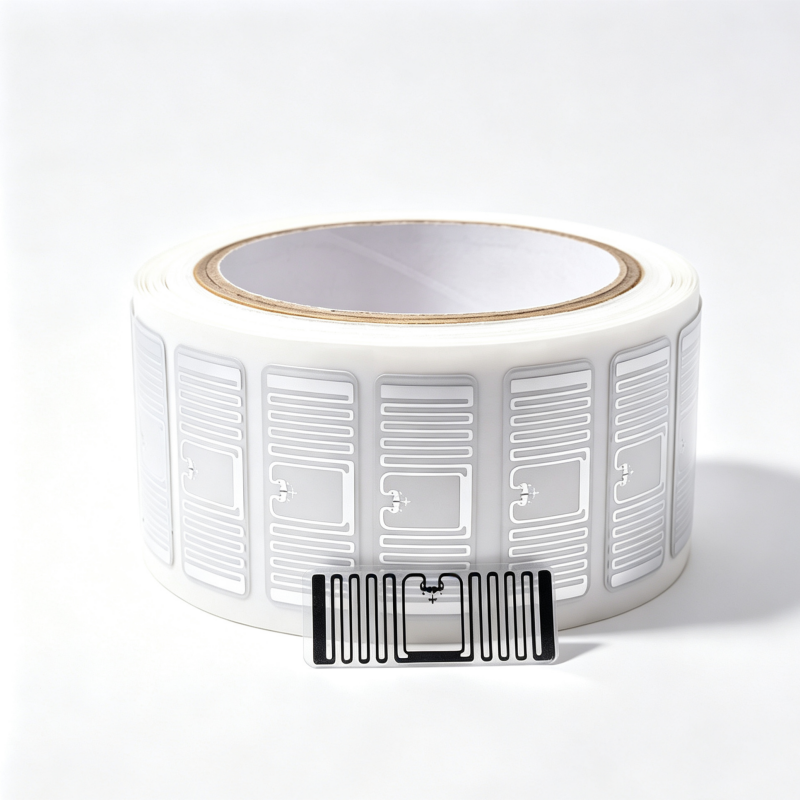
What Does a Custom Silver Ink RFID Label Look Like?
A finished label can combine electronic and visual security features.
For example:
Front layer
- Brand logo
- Product name
- Metallic silver graphics
- Serial number
- QR code
- Security wording
Functional layer
- Silver printed RFID antenna
- RFID chip
Optional security layers
- Microtext
- Guilloche patterns
- UV ink
- Holographic elements
- Tamper-evident construction
- Hidden authentication code
- Variable data
This layered approach is harder to reproduce than a single security feature.
Recommended Construction of a Silver Ink RFID Security Label
A commercial specification could look like this:
| Component | Recommended Options |
|---|---|
| Substrate | Paper / PET / PP |
| Antenna | Printed silver conductive ink |
| RFID | UHF or NFC depending on application |
| Chip | Customer-specified |
| Printing | CMYK / Pantone |
| Silver effect | Conductive or decorative depending on requirement |
| Serialization | Unique per item |
| QR code | Optional |
| Barcode | Optional |
| Security features | UV / hologram / microtext / tamper evident |
| Adhesive | Permanent / tamper evident |
| Finish | Matte / gloss / protective coating |
| Encoding | EPC / customer-defined |
| Authentication | Backend verification |
| QC | RFID + visual + data verification |
The exact construction should be developed around the customer’s RFID reader and authentication system rather than selected from a generic catalogue.
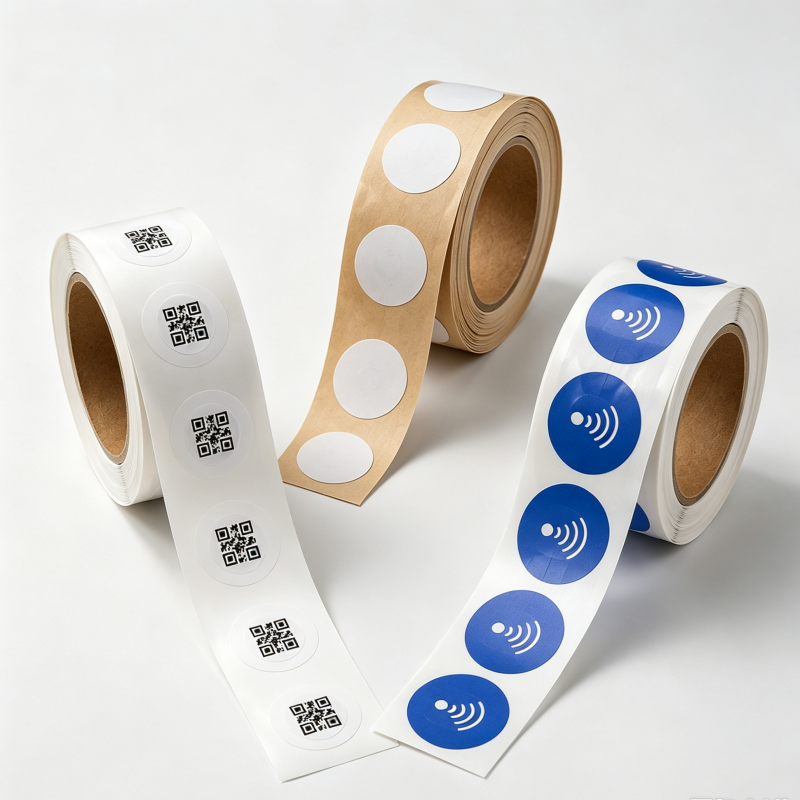
Silver Conductive Ink vs Traditional RFID Antenna
Traditional RFID antennas may use materials such as aluminum or copper.
Printed silver antennas use conductive ink to create the antenna pattern directly on the substrate.
| Feature | Silver Ink RFID | Traditional Metal Antenna |
|---|---|---|
| Manufacturing | Printed | Etched or bonded |
| Substrate flexibility | High | Depends on construction |
| Design customization | High | Moderate–high |
| Printing integration | Excellent | Separate process often required |
| Material usage | Printed only where needed | Depends on process |
| Complex patterns | Possible | Possible |
| RFID performance | Design dependent | Design dependent |
| Best advantage | Printed electronics integration | Established high-volume technology |
Printed RFID antenna manufacturing can also reduce material waste because conductive material is deposited where the antenna is required rather than removing large areas of metal through an etching process. Current industry sources describe conductive-ink printing as an additive approach that fits naturally into roll-to-roll label production.
How Is a Silver Ink RFID Antenna Manufactured?
The manufacturing process normally includes several technical stages.
Step 1: Select the substrate
The manufacturer evaluates:
- Paper smoothness
- Surface energy
- Thickness
- Dimensional stability
- Printing compatibility
- Environmental requirements
Paper and polymer films can both be used for printed RFID structures, depending on the application.
Step 2: Design the antenna
The antenna geometry is developed according to:
- RFID frequency
- Chip characteristics
- Required impedance
- Tag dimensions
- Read-performance target
The antenna cannot simply be drawn like a decorative graphic.
Its electrical geometry directly affects RFID performance.
Step 3: Print the conductive silver ink
The conductive ink is deposited onto the substrate.
Depending on the production system, printing may involve:
- Screen printing
- Flexographic printing
- Rotary printing
- Inkjet printing
Industrial conductive-ink suppliers provide formulations designed for different printing methods and substrates, including paper and PET.
Step 4: Cure or dry the conductive layer
The silver ink needs to achieve the required electrical properties.
The curing process depends on the ink chemistry and substrate.
This is an important production variable because excessive heat can damage temperature-sensitive materials while insufficient curing can result in unstable electrical performance.
Step 5: Attach the RFID chip
The chip is connected to the printed antenna.
The connection must be mechanically and electrically reliable.
Step 6: Add graphic printing
The security label can then receive:
- Logo
- Text
- Barcode
- QR code
- Security graphics
- Variable information
Step 7: Encode the RFID
The required EPC, serial number or other data is written to the RFID chip.
Step 8: Verify
The finished label should be checked for:
- Electrical continuity
- RFID read performance
- Encoding accuracy
- Printed information
- Barcode readability
- QR functionality
- Serialization accuracy
Why RFID Read Performance Must Be Tested After Printing
A common mistake is to test only the RFID inlay before completing the security label.
The finished product can behave differently.
Why?
Because additional layers can affect:
- Antenna characteristics
- Coupling
- Electrical impedance
- Mechanical structure
- RF performance
The final label should therefore be tested as a complete product.
This is especially important when the label includes:
- Metallic effects
- Foil
- Conductive ink
- Thick coatings
- Special adhesives
- Tamper-evident layers
What RFID Frequency Should You Choose?
The answer depends on the authentication scenario.
UHF / RAIN RFID
UHF RFID is useful when you need:
- Longer read distance
- Fast identification
- Multiple-tag reading
- Warehouse authentication
- Distribution tracking
- Retail inventory applications
GS1 identifies UHF Gen2 as a core RFID air-interface technology within the GS1 system.
NFC
NFC is useful when authentication is performed by:
- Smartphone
- Consumer
- Salesperson
- Distributor
- Service technician
The user can tap the product with a compatible smartphone.
For consumer-facing authentication, NFC can therefore provide a particularly convenient interaction.
Which is better?
There is no universal winner.
If your main objective is:
Warehouse → distribution → automated verification
UHF may be more appropriate.
If your objective is:
Consumer → smartphone → product authentication
NFC may be more convenient.
For some premium products, both technologies can be considered as part of a layered security system.
How to Combine RFID With QR Codes
RFID and QR codes can work together.
A QR code provides a low-cost visual/mobile interface.
RFID provides electronic identification.
For example:
Customer scans QR code → enters authentication platform → system checks serial
or:
Inspector reads RFID → system retrieves product record → authentication result displayed
The QR code should not simply contain the same static product number printed on every package.
For anti-counterfeit applications, a unique serialized QR code is much more useful.
Otherwise, counterfeiters can photograph one valid QR code and reproduce it.
How to Combine Silver Ink RFID With Other Security Features
A stronger anti-counterfeit label can use multiple layers.
Layer 1: Visible branding
Logo and product information.
Layer 2: RFID
Unique electronic identification.
Layer 3: Serialization
Every product receives a unique number.
Layer 4: Physical security
Examples:
- Hologram
- UV ink
- Microtext
- Guilloche pattern
- Tamper-evident material
- Laser marking
Layer 5: Digital authentication
The serial number is checked against a secure database.
Layer 6: Supply-chain events
Authentication records can reveal unusual behavior.
For example:
Same serial scanned in Los Angeles → Germany → China within 20 minutes
could trigger an investigation.
This is where an RFID label moves from a simple identification tool to part of a broader brand-protection system.
GS1 specifically describes combining physical security markings with digitally signed data as a way to increase the barrier to counterfeiters.
What Products Are Suitable for Silver Ink RFID Anti-Counterfeit Labels?
Luxury cosmetics
Useful for:
- Skincare
- Perfume
- Makeup
- Haircare
- Premium beauty products
Wine and spirits
Useful for:
- Premium wine
- Whisky
- Cognac
- Imported spirits
- Limited editions
Electronics
Useful for:
- Consumer electronics
- Components
- Accessories
- Batteries
- Replacement parts
Pharmaceuticals and healthcare
Authentication can help distinguish legitimate products from unauthorized products, subject to applicable regulatory requirements.
Apparel and luxury fashion
RFID can combine:
- Product identification
- Inventory
- Authentication
- Returns management
Automotive components
Unique RFID identification can help verify:
- Genuine parts
- Batch information
- Service history
- Distribution status
Industrial products
Suitable for higher-value components where counterfeit parts create safety or financial risks.
How to Design the Anti-Counterfeit Authentication System
A good security label starts with the backend system, not the artwork.
A practical workflow is:
Product registration
↓
Generate unique serial
↓
Assign RFID Tag ID
↓
Create authentication data
↓
Encode RFID
↓
Print physical security label
↓
Apply label to product
↓
Register product in database
↓
Activate product
↓
Authentication scan
↓
Return genuine / suspicious / invalid result
The label is therefore the physical interface between the product and the digital authentication system.
How to Avoid RFID Anti-Counterfeit Label Failure
Problem 1: Every product uses the same RFID code
This defeats the purpose of item-level authentication.
Solution: use unique serialization.
Problem 2: QR code contains only a static URL
A counterfeit manufacturer can copy it.
Solution: use unique, controlled identifiers and backend verification.
Problem 3: RFID works before final printing but fails after finishing
Additional materials may change RF behavior.
Solution: test the complete finished label.
Problem 4: Silver ink is decorative rather than conductive
A metallic silver appearance does not mean the ink can function as an RFID antenna.
Solution: specify conductive silver ink for RFID antenna printing.
Problem 5: No database connection
A unique RFID number without a verification system provides limited anti-counterfeit value.
Solution: connect the identifier to a secure authentication platform.
Problem 6: No duplicate-scan detection
A counterfeit product may reuse a copied serial number.
Solution: record authentication events and flag suspicious repeated scans.
Problem 7: Using batch numbers instead of unique serial numbers
One valid batch code can potentially be reproduced across thousands of counterfeit products.
GS1’s current guidance notes that GTIN + batch/lot identification creates a lower anti-counterfeiting barrier than product-level serialization combined with a unique RFID Tag ID.
How to Test a Custom Silver Ink RFID Label
A proper sample test should include several levels.
Electrical test
Check:
- Conductivity
- Resistance
- Antenna continuity
- Chip connection
RFID test
Check:
- Read sensitivity
- Read range
- Orientation
- Write performance
- Multiple-tag reading
Printing test
Check:
- Color
- Text
- Silver appearance
- Fine lines
- Barcode
- QR code
Security test
Check:
- Serial uniqueness
- Authentication response
- Duplicate detection
- Database connection
Environmental test
Depending on the product, test:
- Humidity
- Temperature
- Abrasion
- Adhesion
- Chemicals
- UV exposure
- Transportation
The most important rule is to test the label after all production layers have been added.
What Data Should Be Encoded Into the RFID Chip?
The answer depends on your system.
A typical structure could contain:
| Data | Purpose |
|---|---|
| GTIN | Identifies product class |
| Serial number | Identifies individual product |
| Batch | Production traceability |
| EPC | RFID identification |
| Authentication status | Backend verification |
| Product ID | Links to database |
| Optional security data | Additional authentication |
GS1 explains that different EPC encoding schemes offer different serial-number capacities and memory requirements. For example, shorter binary schemes can reduce tag memory requirements and potentially tag cost, while longer schemes support larger serial ranges.
This is another reason not to select the RFID chip purely according to unit price.
What Should You Ask an RFID Label Manufacturer?
Before ordering, ask:
- Is the silver ink conductive or decorative?
- Is the silver ink being used as the RFID antenna?
- Which RFID frequency is supported?
- Which chip is being used?
- What is the antenna design?
- Can the label be serialized individually?
- Can you encode the RFID tags?
- Can printed and electronic data be matched?
- What RFID reader was used for testing?
- Was the final finished label tested?
- Can you provide samples?
- Can you perform batch-level QC?
- Can you integrate QR/barcodes?
- Can you add tamper-evident features?
- What happens if the RFID read rate falls below the agreed specification?
A professional supplier should be able to answer these questions with technical information rather than simply saying:
“Our RFID labels have good quality.”
Custom Silver Ink RFID Label Cost Factors
The cost depends on the complete construction.
Major factors include:
- Silver conductive ink
- Substrate
- RFID chip
- Antenna dimensions
- Printing colors
- Label size
- Serialization
- Encoding
- QR/barcode
- Security features
- Die cutting
- Adhesive
- Lamination
- Holographic effects
- Testing
- Packaging
- Order quantity
Silver conductive ink can be more expensive than conventional graphic ink because the conductive material itself contributes significantly to the functional performance and material cost. Technical literature also notes the importance of controlling conductive-layer thickness because thicker conductive layers can improve electrical performance while increasing material consumption.
For this reason, a supplier quotation should clearly separate:
RFID inlay/antenna + chip + printing + serialization + encoding + security finishing + QC
rather than giving a unit price with no specification.
How to Reduce the Cost Without Reducing Security
There are several practical approaches.
Standardize the label size
A common size across several products simplifies production.
Avoid unnecessary silver coverage
If silver ink is being used for the RFID antenna, the antenna should be engineered for the required RF performance rather than simply maximizing silver coverage.
Use serialization intelligently
Do not store unnecessary information directly on the chip if the backend can securely store it.
Combine printing processes
Graphic printing, security printing and variable data can often be coordinated within the same production workflow.
Use a pilot order
Test the security architecture before committing to large quantities.
Match the chip to the application
A high-memory chip is not automatically better if the authentication system only requires a small amount of encoded data.
Custom Silver Ink RFID Label Manufacturing Workflow
For a commercial project, a practical manufacturing process is:
1. Security requirement analysis
Determine what the label needs to prevent.
↓
2. RFID technology selection
Choose UHF, NFC or another appropriate technology.
↓
3. Chip selection
Select memory and security features.
↓
4. Antenna design
Develop the conductive silver antenna.
↓
5. Material selection
Choose paper, PET, PP or another substrate.
↓
6. Security artwork
Add visible and hidden authentication features.
↓
7. Sample production
Create physical samples.
↓
8. RFID testing
Test the complete finished label.
↓
9. Encoding and serialization test
Confirm every identifier is unique and correctly associated.
↓
10. Authentication system test
Scan genuine and intentionally invalid examples.
↓
11. Pilot production
Produce a controlled quantity.
↓
12. Mass production
Scale only after approval.
This process reduces the risk of discovering a fundamental security or RF problem after mass production.
Frequently Asked Questions
What is a silver ink RFID label?
It is an RFID label in which conductive silver ink is used to create an RFID antenna or other conductive structure on a paper or film substrate.
It can combine electronic RFID identification with printed security graphics.
Is silver ink the same as metallic silver ink?
No.
This distinction is critical.
Conductive silver ink is engineered to provide electrical conductivity.
Decorative silver ink is primarily designed to create a visual metallic appearance.
A decorative silver ink should not be assumed to function as an RFID antenna.
Can silver ink be used to print an RFID antenna?
Yes.
Printed conductive silver inks are used in RFID antenna manufacturing. Industrial solutions support printing conductive antennas on paper and polymer substrates using processes such as screen and roll-to-roll printing.
Is silver ink better than aluminum for RFID?
Not universally.
The appropriate antenna material depends on:
- RFID frequency
- Antenna design
- Production method
- Substrate
- Cost
- Required performance
- Manufacturing volume
Silver offers excellent conductivity and is well suited to printed electronics, but it is generally more expensive than aluminum-based solutions.
Can an RFID label completely stop counterfeiting?
No.
RFID is one security layer, not an absolute guarantee.
The strongest systems combine:
Unique serialization + RFID + physical security + secure backend authentication + supply-chain monitoring
Can counterfeiters copy an RFID tag?
A counterfeit product may attempt to copy or emulate identifiers, which is why a simple RFID number should not be treated as sufficient authentication.
A stronger architecture can associate the product’s unique serial with the RFID chip’s manufacturer-programmed Tag ID and digitally signed authentication data. GS1 describes this approach as an additional authentication factor.
Should every product have a unique RFID serial number?
For high-value anti-counterfeit applications, item-level serialization generally provides a stronger security model than using only product or batch identifiers.
Can I combine RFID with holographic labels?
Yes.
RFID can be combined with:
- Holograms
- UV printing
- Microtext
- Tamper-evident materials
- Laser marking
- Variable QR codes
- Metallic printing
This creates multiple authentication layers.
Can the RFID label also contain a QR code?
Yes.
This is often useful because RFID can serve automated systems while the QR code provides a convenient smartphone interface.
What is the best material for an anti-counterfeit RFID label?
It depends on the product and environment.
Common options include:
- Coated paper
- Security paper
- Synthetic paper
- PET
- PP
For premium products, the material can also contribute to the visual identity of the security label.
How do I verify that an RFID label is genuine?
A secure system should verify more than whether an RFID chip responds.
It can check:
Unique identifier → product record → serial status → authentication data → Tag ID → previous scan history
A suspicious duplicate or mismatched identifier can then trigger an authentication failure or investigation.
How should I choose an RFID label supplier?
Ask the supplier to provide:
- Material specification
- RFID chip specification
- Antenna technology
- Silver ink information
- Encoding capability
- Serialization process
- Read-performance test
- Sample labels
- Data-matching process
- Quality-control procedure
Most importantly, test the finished label with your own RFID reader and authentication workflow before mass production.
Final Takeaway
A Custom Silver Ink RFID Label for Anti-Counterfeit Authentication should not be treated as simply another premium sticker.
Its real value comes from combining three levels of protection:
Physical security → Electronic identification → Digital authentication
The silver conductive layer can form the RFID antenna, while the printed label can carry brand graphics, visible security features, QR codes and serialized information.
The RFID chip can provide a unique electronic identity, and the backend system can determine whether that identity corresponds to a genuine registered product.
For high-value products, the strongest approach is therefore:
Unique product serial + RFID Tag ID + conductive silver RFID antenna + physical security feature + secure authentication database
GS1’s current guidance supports this layered approach, noting that unique product instance identification, serialization, physical security markings and digitally signed data can significantly increase the barrier to counterfeiters.
For manufacturers and brand owners, the most important practical lesson is simple:
Do not evaluate an anti-counterfeit RFID label by appearance or unit price alone.
Evaluate the complete system:
Can the RFID be read reliably?
Is every product uniquely serialized?
Does the printed data match the RFID data?
Can the authentication platform identify genuine and suspicious products?
And has the finished label been tested in the actual application environment?
If the answer to all five questions is yes, the label becomes much more than a printed security sticker—it becomes a physical identity layer connecting the product to a controlled digital authentication system.


Leave a Reply
Want to join the discussion?Feel free to contribute!