

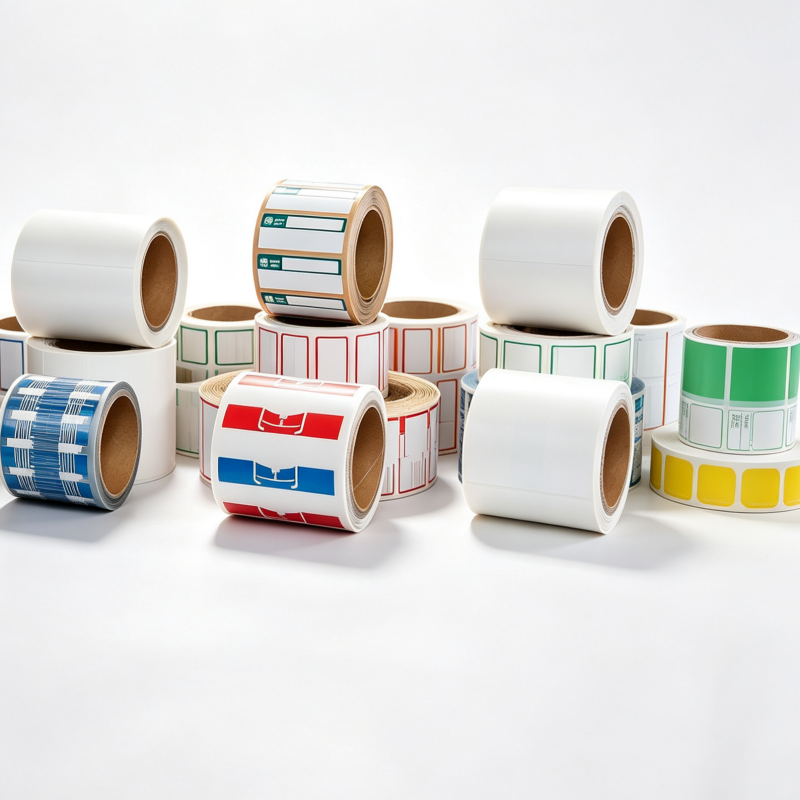
Custom Paper Chip Material RFID Label for Apparel Tagging
| ITEM | DETAILS |
|---|---|
| Product Type | RFID Electronic Tags / RFID Smart Labels |
| Materials | PET, Coated Paper, Synthetic Paper, Chrome Paper |
| Chip Type | UHF Chip, HF Chip, NFC Chip |
| Frequency | High Frequency (13.56MHz), Ultra High Frequency (860-960MHz) |
| Printing Method | Digital Printing, Thermal Transfer Printing, Screen Printing |
| Adhesive Type | Permanent Adhesive, Strong Adhesive |
| Surface Finish | Matte, Glossy, Lamination |
| Data Encoding | EPC Encoding, Serial Number, Batch Number, Variable Data Writing |
| Application | Warehouse & Logistics, Asset Management, Access Control & Attendance, Retail Anti-Counterfeiting, Library Management |
RFID Labels are advanced smart labels embedded with a radio-frequency identification (RFID) chip and antenna, enabling wireless data storage, transmission, and automatic identification without direct line-of-sight scanning. Combining printed labeling with embedded electronic tracking technology, these labels are widely used for inventory management, asset tracking, supply chain automation, and anti-counterfeiting across a broad range of industries.
A Custom Paper Chip Material RFID Label for Apparel Tagging combines a printable paper surface with an embedded RFID inlay, allowing clothing brands, manufacturers, wholesalers and retailers to identify individual garments electronically while still keeping the appearance of a conventional hang tag or paper label.
For apparel businesses, this combination is practical because the RFID function can be hidden inside a familiar paper tag while the outside can still carry the brand logo, product information, barcode, size, color, price and care information.
The real value, however, is not simply putting an RFID chip on a clothing tag.
The tag needs to work reliably with the retailer’s RFID system, be encoded correctly, remain readable when attached to garments, and fit the supplier’s existing tagging workflow.
This guide explains how to select, customize and use paper RFID labels for apparel tagging, including specifications, chips, sizes, encoding, placement, testing, costs and common purchasing mistakes.
What Is a Custom Paper RFID Label for Apparel?
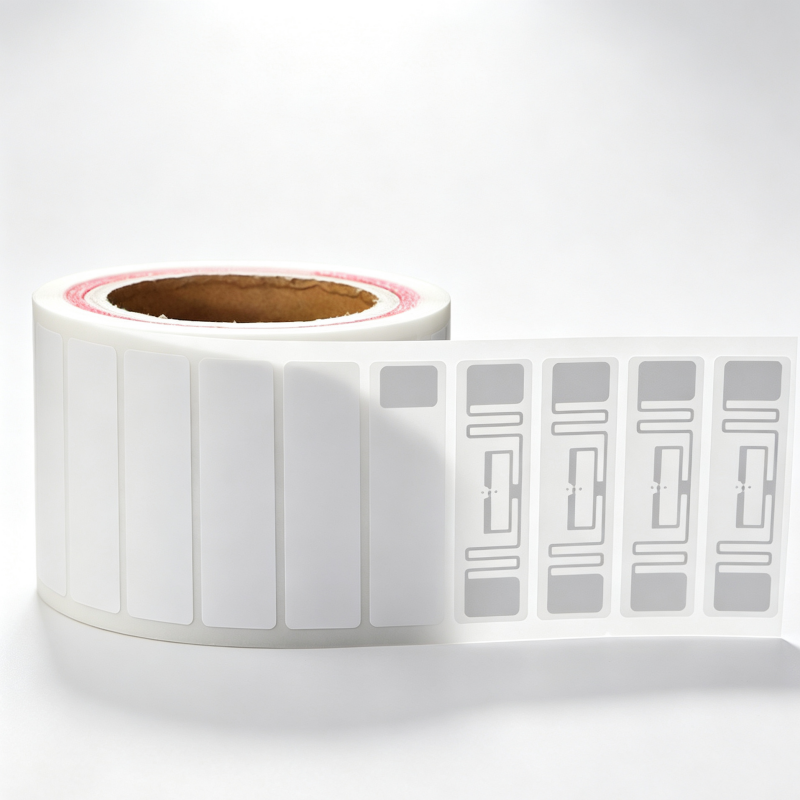
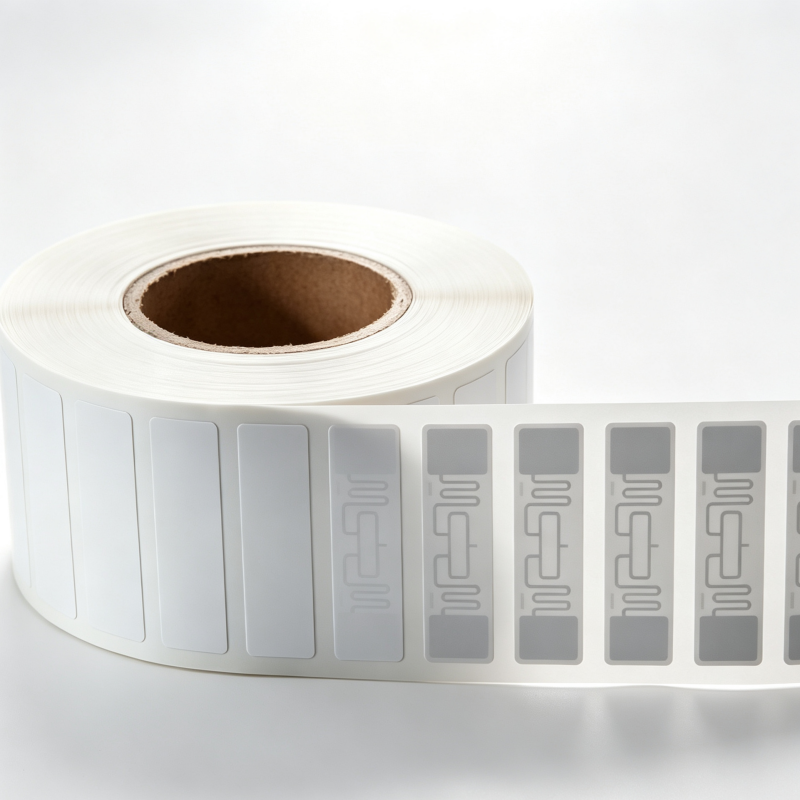
A paper RFID label is normally constructed from several layers:
Printed paper + RFID inlay + adhesive or tag construction + backing/liner
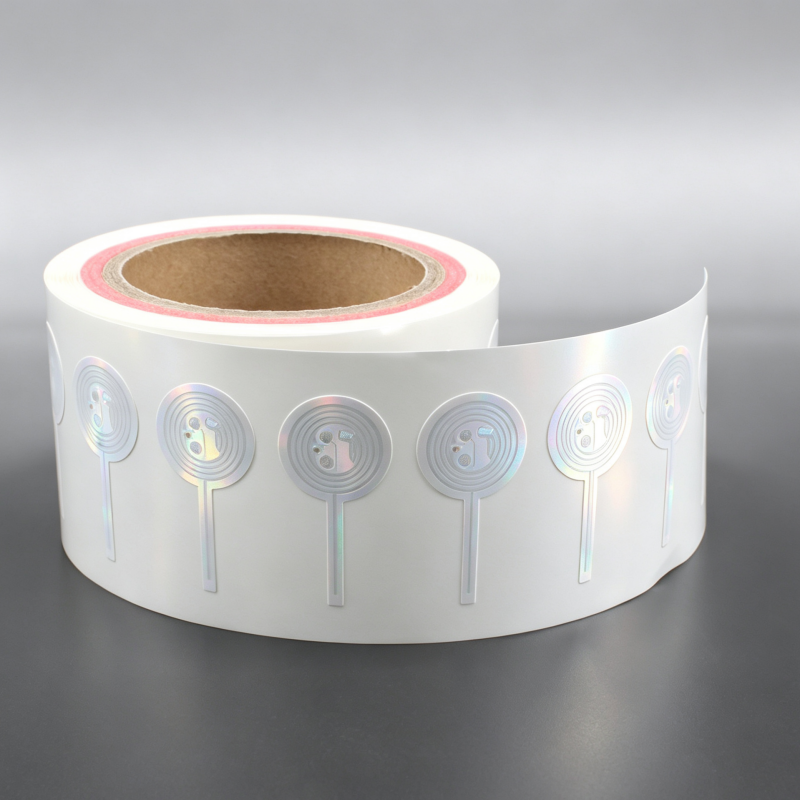
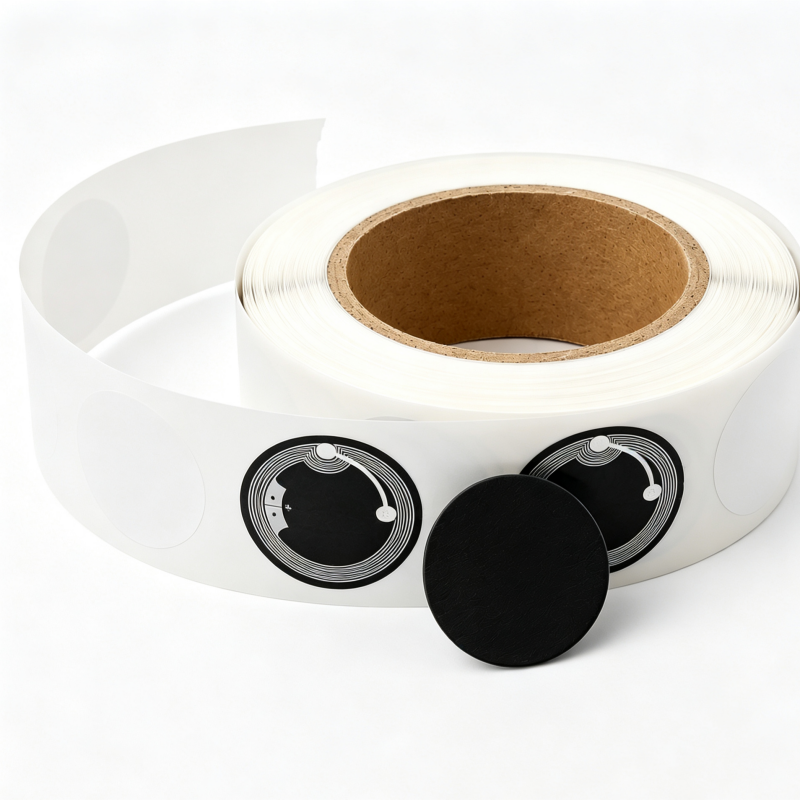
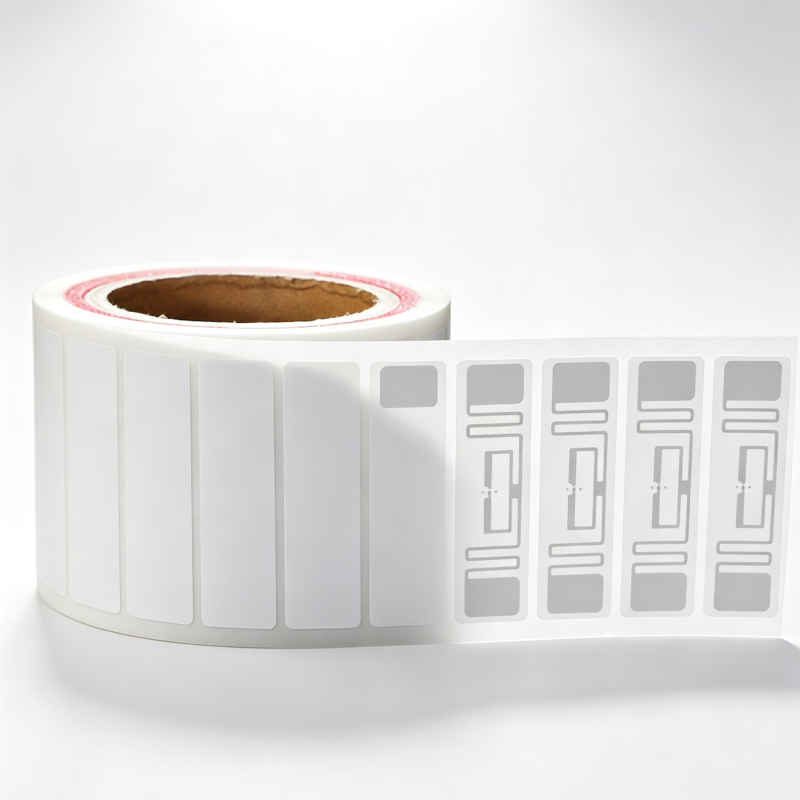
The RFID inlay contains:
- RFID chip
- Antenna
- Connection between chip and antenna
The chip stores or processes identification data, while the antenna communicates with an RFID reader.
For apparel applications, the most common solution is generally passive UHF/RAIN RFID because it is designed for reading multiple tagged items without requiring a battery.
GS1’s EPC Gen2 air-interface standard operates in the 860–930 MHz UHF range, and passive UHF RFID is widely implemented across supply-chain applications.
Unlike an active RFID tag, a passive RFID tag receives operating energy from the reader’s radio signal and sends information back through backscatter. It therefore does not require a battery.
For apparel, this makes a paper RFID hang tag or sticker much easier to integrate into existing product packaging and tagging operations.
Why Use Paper RFID Labels for Apparel?
A clothing manufacturer could attach a traditional barcode to every garment.
So why add RFID?
The main advantage is that RFID can automate item identification at a scale that is difficult to achieve with conventional barcode scanning.
A barcode generally needs to be presented to a scanner with appropriate orientation and line of sight.
RAIN RFID can identify tagged items without direct line-of-sight contact and can capture multiple tags in a reading operation. GS1 notes that UHF RAIN RFID can capture unique identifiers at high rates and at distances well beyond 10 meters under suitable conditions. Actual apparel read range depends heavily on the reader, antenna, tag design, orientation, environment and deployment.
For apparel companies, this can support:
- Receiving
- Inventory counting
- Stockroom management
- Store replenishment
- Shipping verification
- Returns
- Loss prevention
- Omnichannel fulfillment
- Item-level traceability
Research into apparel RFID deployments has also identified inventory accuracy, out-of-stock reduction, cycle counting and loss prevention as important use cases.
How Does an RFID Apparel Label Work?
The process is relatively simple.
1. A unique identifier is assigned
Each garment receives a unique electronic identity.
For example:
Brand + Item + Size + Color + Serial Number
The exact encoding structure depends on the customer’s RFID system and data standard.
GS1’s EPC Tag Data Standard defines how EPC information corresponds with GS1 identification keys and specifies the data carried by EPC-encoded RAIN RFID tags.
2. The information is encoded into the chip
An RFID encoder writes the required data into the RFID chip.
3. The label is attached to the garment
The RFID tag may be:
- Hang tag
- Sticker
- Sew-in label
- Care-label construction
- Packaging label
- Carton label
4. A reader interrogates the tag
The reader sends radio energy to the passive tag.
The tag responds by backscattering information to the reader.
5. The software connects the RFID identity to the product record
The RFID number can then be associated with:
- SKU
- Style
- Size
- Color
- Purchase order
- Production batch
- Warehouse
- Store
- Sales status
This is where RFID becomes a business tool rather than simply a printed label.
Recommended Specifications for a Custom Apparel RFID Paper Label
There is no universal specification because retailers and RFID systems have different requirements.
However, a typical custom paper RFID apparel tag can be specified using the following parameters:
| Specification | Typical Options |
|---|---|
| Material | Coated paper / art paper / synthetic paper |
| RFID frequency | UHF |
| Protocol | EPC Gen2 / ISO 18000-63 |
| Chip | Impinj / NXP / other compatible chips |
| Size | Custom |
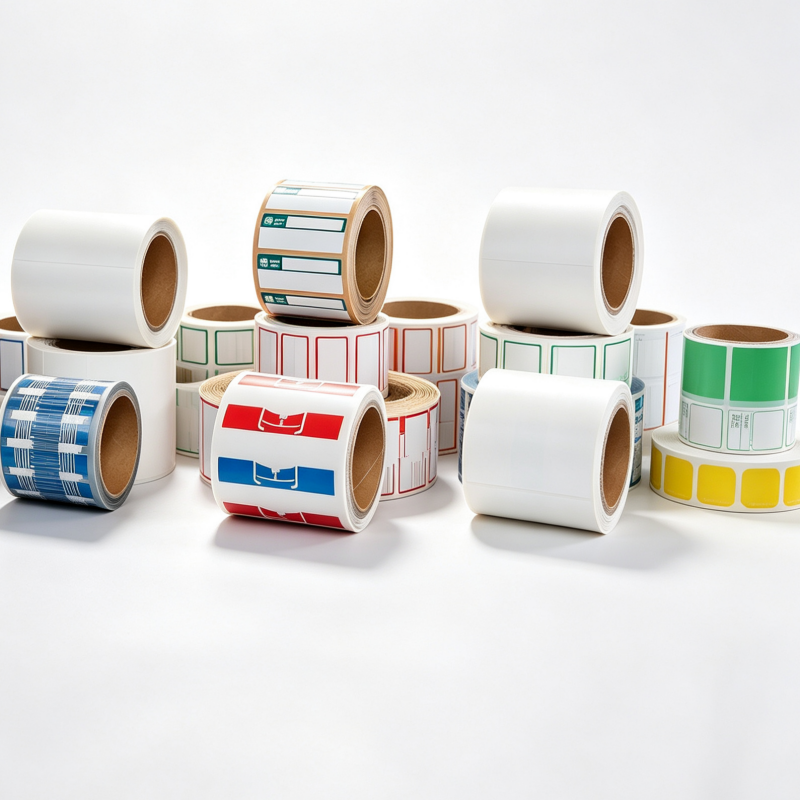
| Shape | Rectangle / square / custom die cut |
| Printing | 1–4 colors / CMYK / Pantone |
| Barcode | Optional |
| QR code | Optional |
| Encoding | EPC / customer-defined data |
| Attachment | Hang tag/adhesive / sewn label |
| Surface | Matte / gloss |
| Finishing | Lamination/varnish / foil/embossing |
| Application | Apparel/footwear / accessories |
| Read testing | Recommended before mass production |
Commercial RFID apparel tags are available in different paper and synthetic constructions, with examples around 50 × 50 mm and customizable sizes. Some commercial UHF clothing tags specify ISO 18000-6C/EPC Gen2 compatibility and reading ranges around 1–10 m, although actual range varies substantially by system configuration.
Therefore, a supplier should never guarantee a specific reading distance without testing the complete tag in the customer’s actual environment.
EPC Memory and Apparel Identification
For many apparel applications, the RFID tag does not need to store a large amount of product information.
The RFID system can use a unique EPC to identify the garment and retrieve the detailed product record from the customer’s database.
For example:
EPC → SKU → Black T-Shirt → Size M → Batch 2026-10 → Warehouse A
This approach keeps the RFID tag relatively simple while allowing the software system to store much richer product information.
GS1 provides apparel-specific resources for encoding product and serial data into EPC, including guidance around SGTIN-96.
Paper Material Options for RFID Apparel Tags
The paper itself affects the appearance, printing quality and durability of the finished tag.
Coated paper
Coated paper provides a smooth surface for:
- Brand logos
- Product information
- Barcodes
- QR codes
- Product photography
- Retail graphics
It is a common choice for premium apparel hang tags.
Art paper
Art paper can provide a clean, high-quality printed appearance.
It is suitable for:
- Fashion brands
- Clothing collections
- Shoes
- Accessories
- Retail hang tags
Kraft paper
Kraft paper creates a natural or environmentally oriented appearance.
It works particularly well for:
- Organic clothing
- Sustainable fashion
- Handmade apparel
- Outdoor brands
- Eco-focused packaging
Synthetic paper
Synthetic paper can be considered when the tag needs greater resistance to:
- Water
- Tearing
- Humidity
- Rough handling
However, synthetic material can change the cost and appearance of the finished tag.
How Large Should an Apparel RFID Paper Tag Be?
There is no single best size.
Common commercial formats can range from small tags used on accessories to larger fashion hang tags.
A practical size depends on:
- Amount of printed information
- RFID antenna size
- Required read performance
- Garment type
- Retailer requirements
- Attachment method
For example:
40 × 20 mm
may be sufficient for a small accessory tag.
A larger:
50 × 50 mm
or similar format can provide more space for branding and product information.
However, the antenna size must also be considered.
Making the paper tag smaller does not simply mean cutting down the outside dimensions.
The RFID inlay needs sufficient physical space to maintain the desired RF performance.
Can You Print a Barcode and RFID on the Same Apparel Tag?
Yes.
In fact, this is often a very practical approach.
A single apparel hang tag can contain:
Brand logo + SKU + Size + Color + Barcode + QR code + RFID
The barcode provides a familiar backup identification method.
RFID provides automated electronic identification.
This hybrid approach can be useful during RFID implementation because employees do not have to abandon existing barcode workflows immediately.
Where Should RFID Tags Be Placed on Clothing?
Placement is extremely important.
For apparel, RFID tags may be attached to:
- Hang tags
- Price tags
- Care labels
- Brand labels
- Packaging
- Polybags
The best location depends on the garment and the retailer’s RFID requirements.
GS1 US apparel guidelines emphasize coordination between suppliers and retailers when selecting EPC tag type and placement, and identify point-of-manufacture tagging as an efficient approach in many supply chains.
Why placement matters
Two identical RFID tags can perform differently depending on:
- Folded garment position
- Tag orientation
- Tag proximity to other tags
- Reader antenna angle
- Metal accessories
- Liquids or dense materials
- Packaging
- Tag stacking
This is why a supplier should not simply say:
“This RFID tag has a 10-meter read range.”
The more useful question is:
“What read performance does this tag achieve in my actual apparel and reader configuration?”
RFID Tag Orientation Matters
UHF RFID antennas are sensitive to their relationship with the reader’s electromagnetic field.
A tag that reads extremely well in one orientation may perform differently when:
- Rotated
- Folded
- Hidden between garments
- Placed inside a carton
- Hung vertically
- Placed horizontally
This is one reason apparel RFID programs need actual deployment testing.
A university RFID feasibility study involving apparel and footwear found generally strong read rates across test scenarios, but also identified tag shadowing as a potential problem when tags were pushed tightly together.
How to Encode RFID Apparel Labels
A typical commercial workflow is:
1. Receive customer item data
↓
2. Generate unique EPC numbers
↓
3. Print the paper label
↓
4. Encode RFID chip
↓
5. Verify encoded data
↓
6. Match printed barcode with RFID EPC
↓
7. Test RFID readability
↓
8. Package the completed tags
The critical step is the relationship between the printed identity and electronic identity.
For example:
Barcode: 06912345678901
must correspond to the correct RFID record.
A mismatch can create inventory errors that are much more serious than a printing defect.
How to Test Custom RFID Apparel Labels Before Mass Production
This is where experienced buyers should be especially careful.
Do not approve a large RFID order based solely on a supplier’s laboratory test.
Ask for samples.
Test the tags with the same readers and antennas used in your warehouse or store whenever possible.
Test 1: Single-tag reading
Check:
- Read distance
- Orientation sensitivity
- EPC accuracy
- Write/read reliability
Test 2: Multiple-tag reading
Put several garments together.
Then test:
- 10 tags
- 50 tags
- 100 tags
- More if relevant to your actual operation
This helps identify tag collision and shadowing issues.
Test 3: Garment test
Test the RFID tag on the actual:
- T-shirt
- Jacket
- Jeans
- Coat
- Shoes
- Accessories
The textile itself is rarely the only factor.
The finished garment construction and folding method can change the reading environment.
Test 4: Carton test
If cartons will contain multiple garments, test the actual carton configuration.
Test 5: Reader gate test
If the tags will pass through a portal reader, test:
- Walking speed
- Cart speed
- Garment density
- Tag orientation
- Reader sensitivity
This is much more valuable than relying on a theoretical maximum reading distance.
Common RFID Apparel Label Problems
Problem 1: Low read rate
Possible causes include:
- Poor inlay selection
- Incorrect tag orientation
- Tag shadowing
- Excessive tag density
- Reader configuration
- Antenna positioning
- Environmental interference
Problem 2: Barcode and EPC mismatch
This is a data-management problem rather than a printing problem.
The printed and electronic identities must be verified together.
Problem 3: Tag doesn’t meet retailer requirements
A retailer may specify:
- Chip family
- EPC format
- Tag dimensions
- Placement
- Encoding process
- Read-performance requirements
Do not manufacture first and ask about retailer requirements later.
Problem 4: Paper tag tears
If the hang tag is repeatedly handled, standard lightweight paper may not be enough.
Consider:
- Heavier stock
- Reinforced hole
- Synthetic paper
- Lamination
Problem 5: RFID works in the factory but not in the store
This is one of the most important real-world risks.
The factory test may use:
- One tag
- Ideal orientation
- Short distance
- Clean environment
The store may involve:
- Hundreds of garments
- Metal fixtures
- Multiple readers
- Dense tag populations
- Different tag orientations
Therefore, final validation should happen as close as possible to the real application environment.
How to Avoid Common RFID Apparel Tagging Mistakes
Mistake 1: Buying the cheapest RFID inlay
Price is important, but read performance and consistency are more important for a high-volume project.
Mistake 2: Selecting the chip before understanding the system
Start with the retailer’s or integrator’s requirements.
Mistake 3: Treating read range as the only performance metric
A longer theoretical range does not automatically mean better inventory performance.
Mistake 4: Ignoring tag placement
The same RFID tag can behave differently in different positions.
Mistake 5: Skipping sample testing
Always test samples on actual garments.
Mistake 6: Encoding tags without verification
The supplier should verify that the RFID data is readable and matches the printed information.
Mistake 7: Ordering all SKUs immediately
Pilot the system first.
A small pilot can reveal problems with:
- Tag size
- Placement
- Encoding
- Reader settings
- Read rate
- Workflow
before the project becomes expensive.
Custom RFID Apparel Label Production Process
A professional RFID label manufacturer can organize production as follows:
Step 1: Confirm customer requirements
Collect:
- Product type
- Garment type
- Retailer requirements
- RFID standard
- Chip
- Size
- Material
- Printing
- Quantity
- Encoding requirements
Step 2: Select RFID inlay
Choose the appropriate:
- Chip
- Antenna
- Inlay size
- Frequency
- Performance level
Step 3: Design paper label
Create:
- Logo
- Product information
- Barcode
- QR code
- Size
- Color
- Care information where applicable
Step 4: Produce samples
Provide blank and printed samples.
Step 5: Encode RFID
Write the required EPC or other approved data.
Step 6: Verify
Check:
- Printed information
- Barcode
- EPC
- RFID readability
- Data matching
Step 7: Mass production
Print, convert, encode and inspect the required quantity.
Step 8: Final QC
Check sample rates from production batches before shipment.
What Quality Control Should You Request?
For a commercial RFID apparel tag order, ask the supplier to verify:
| QC Item | What to Check |
|---|---|
| Dimensions | Within agreed tolerance |
| Paper | Correct grade |
| Printing | Color and text accuracy |
| Chip | Correct chip model |
| EPC | Correct encoding |
| Barcode | Scannable |
| QR code | Functional |
| RFID read | Meets agreed test conditions |
| Data matching | Printed and electronic IDs correspond |
| Die cut | Clean |
| Hole | Correct position |
| Adhesion | If adhesive construction is used |
| Quantity | Correct production count |
For serialized tags, data verification is particularly important.
How Much Does a Custom Paper RFID Apparel Label Cost?
The price depends on much more than the paper.
The main cost factors are:
- RFID chip
- Antenna/inlay
- Paper material
- Tag dimensions
- Printing
- Number of colors
- Encoding
- Serialization
- Barcode/QR code
- Finishing
- Packaging
- Order quantity
- Testing requirements
A simple printed RFID hang tag can cost considerably less than a premium tag requiring specialty paper, foil, embossing, serialization and individual data encoding.
For B2B purchasing, ask suppliers to quote different quantities, such as:
| Quantity | Purpose |
|---|---|
| 1,000 | Pilot |
| 5,000 | Small production |
| 10,000 | Standard commercial order |
| 50,000 | Volume purchasing |
| 100,000+ | Large-scale program |
Also ask whether encoding is included in the unit price.
A quotation of $0.XX/tag is not meaningful unless you know whether it includes:
RFID inlay + paper + printing + encoding + serialization + QC + packaging.
How to Reduce RFID Apparel Tagging Costs
There are several ways to reduce the total cost without compromising the RFID system.
Standardize tag dimensions
Using one or two standard sizes across products can simplify purchasing and production.
Use the same chip where possible
If multiple customers or product lines can use the same approved chip, production complexity can decrease.
Print common artwork in advance
If the brand information is identical across many SKUs, only variable information needs to change.
Encode at the manufacturing stage
GS1 US notes that applying EPC during item tagging, often at the point of manufacture, can provide better economics and reduce additional handling.
Test before scaling
A pilot order is cheaper than replacing a large batch of tags that fails in the customer’s RFID environment.
Paper RFID Label vs Traditional Apparel Barcode
| Feature | Paper Barcode Tag | Paper RFID Tag |
|---|---|---|
| Visual printing | Yes | Yes |
| Unique electronic ID | No | Yes |
| Line of sight | Usually required | Not normally required |
| Multiple-item reading | Limited | Yes |
| Manual scanning | Common | Can be automated |
| Item-level tracking | Yes, with scanning | Yes |
| Battery | No | No for passive UHF |
| Printing cost | Lower | Higher |
| RFID reader required | No | Yes |
| Inventory automation | Limited | Stronger potential |
RFID is therefore not simply a more expensive barcode.
It changes how inventory can be captured.
GS1 describes RAIN RFID as capable of capturing unique identifiers at high rates without line-of-sight contact, which is particularly useful for supply-chain visibility and inventory accuracy.
Who Should Use Custom Paper RFID Apparel Labels?
They are particularly useful for:
- Clothing manufacturers
- Fashion brands
- Apparel exporters
- Department stores
- Retail chains
- Sportswear brands
- Footwear companies
- Luxury fashion brands
- Warehouse operators
- Third-party logistics companies
They are especially valuable when a business manages a large number of individual SKUs differentiated by:
Style + Color + Size + Serial Number
For example, a clothing retailer might have:
20 styles × 8 colors × 10 sizes = 1,600 SKU combinations
When item-level quantities become large, manually scanning every garment becomes increasingly labor-intensive.
RFID can provide a more automated way to identify those individual products.
Frequently Asked Questions
What is a paper RFID label?
A paper RFID label is a printed paper tag containing an RFID inlay made from a chip and antenna. It combines conventional product identification with electronic RFID identification.
What RFID frequency is used for apparel?
UHF/RAIN RFID is widely used for apparel item-level tagging. GS1’s EPC Gen2 air interface operates in the 860–930 MHz range.
Does an apparel RFID tag need a battery?
No, not when using a passive UHF RFID tag.
The RFID reader supplies the operating energy through its radio signal, and the tag responds through backscatter.
How far can an apparel RFID tag be read?
There is no universal distance.
Commercial UHF tags may advertise ranges of several meters or more under suitable conditions, but actual performance depends on:
- Reader power
- Antenna
- Tag design
- Orientation
- Garment arrangement
- Environment
- Reader configuration
GS1 notes that RAIN RFID can operate at distances well beyond 10 meters in suitable deployments, but this should not be interpreted as a guaranteed apparel read distance.
Can RFID be printed on a paper clothing tag?
The RFID chip itself is not printed like ordinary ink.
Instead, the RFID inlay is integrated into or attached to the paper tag, after which the paper surface can be printed with the brand and product information.
Can RFID and barcode be used on the same apparel tag?
Yes.
This is actually a useful configuration because the barcode can remain available for conventional scanning while RFID supports automated identification.
Can RFID tags be sewn into clothing?
Yes.
RFID can be incorporated into fabric or care-label constructions. GS1’s RFID guidelines specifically address EPC/RFID tags inserted into printed fabric labels, with consumer notice and choice considerations.
Where is the best place to put an RFID tag on clothing?
There is no universal location.
Hang tags, care labels and other positions can work depending on the garment and RFID system.
The retailer, RFID integrator and supplier should agree on placement and validate the actual read performance.
Can RFID tags be removed from clothing?
For a removable paper hang tag, yes.
For RFID integrated into a sewn fabric label, removal depends on the construction.
GS1 notes that consumer products containing RFID should consider appropriate notice and consumer choice, particularly when the RFID is integrated into a product label.
Does paper affect RFID performance?
The paper itself is generally not the primary RF obstacle, but the complete tag construction matters.
Paper thickness, antenna design, chip selection, tag orientation and surrounding materials can all affect performance.
Can RFID tags be reused?
Some RFID chips support rewritable memory, but whether the physical tag can be reused depends on the construction and business process.
For disposable apparel hang tags, reuse is generally not the main objective.
Should I use EPC Gen2 or ISO 18000-6C?
These standards are closely related in UHF RFID deployments. GS1’s EPC Gen2 air-interface standard is a close subset of ISO/IEC 18000-63.
For a commercial project, follow the specification required by the retailer or RFID system integrator.
How can I improve RFID read rates?
Start with:
- Correct inlay selection
- Correct tag orientation
- Correct placement
- Adequate reader/antenna configuration
- Testing with actual garments
- Testing with multiple tagged garments
- Controlling tag shadowing
Do not attempt to solve every read problem by simply increasing reader power.
Should I buy blank RFID tags or pre-printed RFID labels?
Blank tags may make sense if you already have an in-house printing and encoding process.
Pre-printed and pre-encoded labels are often more convenient when you want the supplier to manage:
Printing + serialization + encoding + QC
The right option depends on your production workflow and annual tag volume.
Final Buying Checklist
Before ordering custom paper RFID labels for apparel, confirm:
RFID frequency confirmed
Chip model confirmed
EPC format confirmed
Retailer requirements confirmed
Paper material confirmed
Tag size confirmed
Antenna size confirmed
Printing colors confirmed
Barcode confirmed
QR code confirmed
Encoding method confirmed
Serialization confirmed
Attachment method confirmed
Placement confirmed
Actual garment tested
Multiple-tag read test completed
Reader compatibility confirmed
Printed/EPC data matching verified
Pilot batch approved
Mass-production QC standard agreed
Final Takeaway
A Custom Paper Chip Material RFID Label for Apparel Tagging is more than a paper hang tag with an RFID chip hidden inside.
For a successful apparel RFID project, five components need to work together:
RFID inlay + paper construction + printed information + encoding + deployment environment
The biggest purchasing mistake is focusing only on the unit price or advertised reading distance.
A better approach is to define the retailer’s RFID requirements first, select a compatible UHF inlay and paper construction, create a combined barcode/RFID identification system where appropriate, test the tag on real garments, validate multiple-tag reading, and only then move to mass production.
For apparel manufacturers and brands, the most reliable workflow is:
Confirm retailer requirements → select chip/inlay → design paper tag → encode EPC → verify data → test on actual garments → pilot → approve → mass production.
That process may require more preparation than simply ordering printed tags, but it dramatically reduces the risk of receiving thousands of RFID labels that look correct while failing to perform reliably in the warehouse or retail environment.


Leave a Reply
Want to join the discussion?Feel free to contribute!