
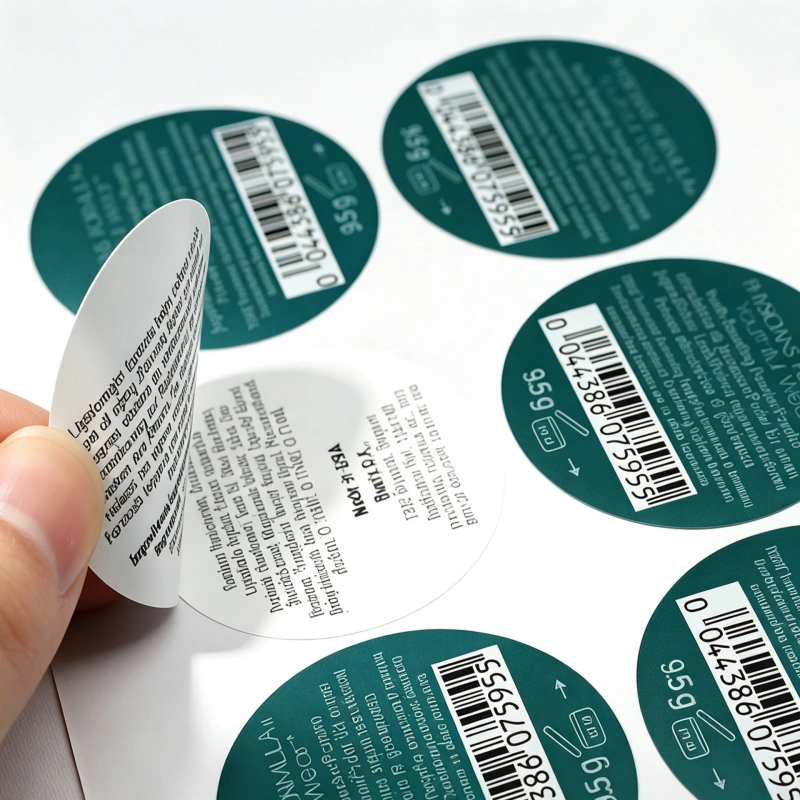
Multi Layer Labels: Types, Benefits, Materials, and Custom Manufacturing Solutions
Discover multi layer labels, including peel-and-reveal, booklet and resealable labels. Compare materials, applications, costs and custom B2B solutions.
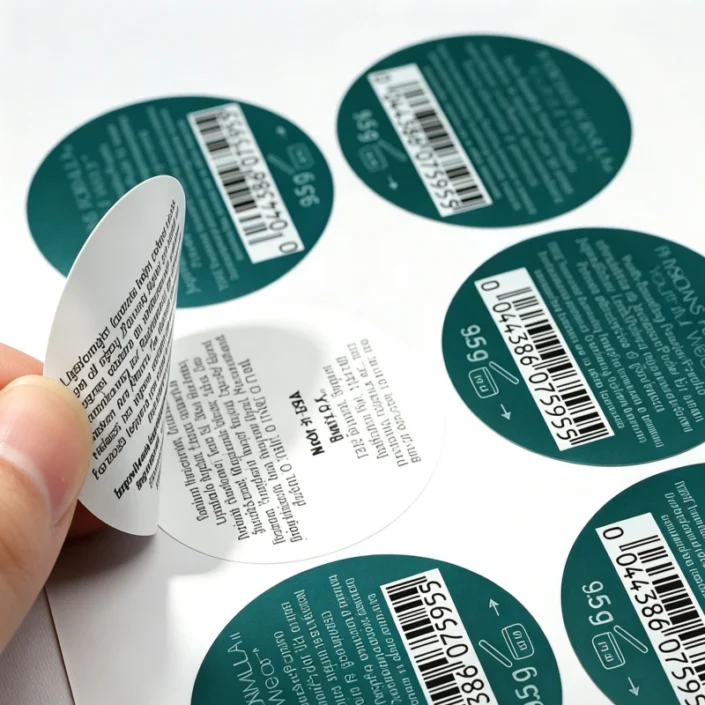
Multi layer labels are pressure-sensitive labels designed with two or more printable layers, allowing brands to display more information without increasing the label’s footprint on the package. Also known as multi-layer labels, peel-and-reveal labels, peel-and-read labels, or extended content labels (ECLs), they are widely used for products that require multilingual information, detailed instructions, promotional messages, or additional regulatory text.
For manufacturers, importers, packaging companies, and private-label brands, multi layer labels solve a practical problem: the product needs more information than a conventional label can accommodate. Instead of increasing container size or adding a separate leaflet, a multi-layer construction adds printable panels within a compact label format. Industrial label suppliers identify pharmaceutical instructions, chemical warnings, cosmetic information, and multilingual packaging as major applications.
As a custom label manufacturer, we approach each project by evaluating the volume of information, container dimensions, substrate, adhesive, opening mechanism, and production requirements. The goal isn’t simply to add layers, but to make the label easy to open, easy to read, secure in transit, and compatible with the customer’s packaging line.
What Are Multi Layer Labels?
A multi-layer label combines several printed surfaces into a single label. Depending on the design, the consumer can lift the top panel, reveal hidden information, unfold a booklet, or remove a secondary label.
A typical peel-and-reveal label includes:
- A top printable layer carrying the primary brand and product information.
- One or more inner printable panels containing additional information.
- A hinge, patterned adhesive, or resealable section that controls opening and closing.
- A base label with permanent adhesive to keep the construction attached to the package.
- A release liner that protects the adhesive before application.
The exact structure varies according to the application. Some products use two printed plies, while booklet-style or extended-content constructions may include several additional panels. For example, ID Technology describes extended-content labels as a solution for adding instructions, disclosures, and multilingual information to packaging without increasing its label footprint.
How much information can a multi-layer label hold?
The capacity depends on the number of printable panels, panel dimensions, font size, artwork layout, and material construction.
A supplier’s technical specifications may advertise four, eight, sixteen, or more printable panels for particular booklet constructions. These are product-specific capabilities, not universal limits for all multi-layer labels.
For planning purposes, we recommend counting the actual usable panels rather than simply counting the physical layers. A double-sided panel can provide more than one printable surface, while areas reserved for adhesive, hinges, or closure tabs may not be available for text.
Types of Multi Layer Labels
Different multi-layer constructions solve different packaging problems. Choosing the right structure early can reduce material waste, improve usability, and avoid unnecessary production complexity.
| Type | How it works | Best suited for |
|---|---|---|
| Peel-and-reveal labels | The top panel lifts to reveal information underneath | Cosmetics, food, promotions, product instructions |
| Peel-and-reseal labels | The label opens and closes repeatedly | Products requiring recurring access to information |
| Booklet labels | Folded or bound panels create a compact multi-page leaflet | Pharmaceuticals, supplements, detailed instructions |
| Fold-out or concertina labels | Multiple panels unfold outward | Chemical products, multilingual instructions |
| Two-ply or piggyback labels | A removable upper label sits above a second label | Logistics, inventory, coupons, secondary identification |
| Extended content labels (ECLs) | A broader category designed to carry additional printed content | Regulated products and multi-market packaging |
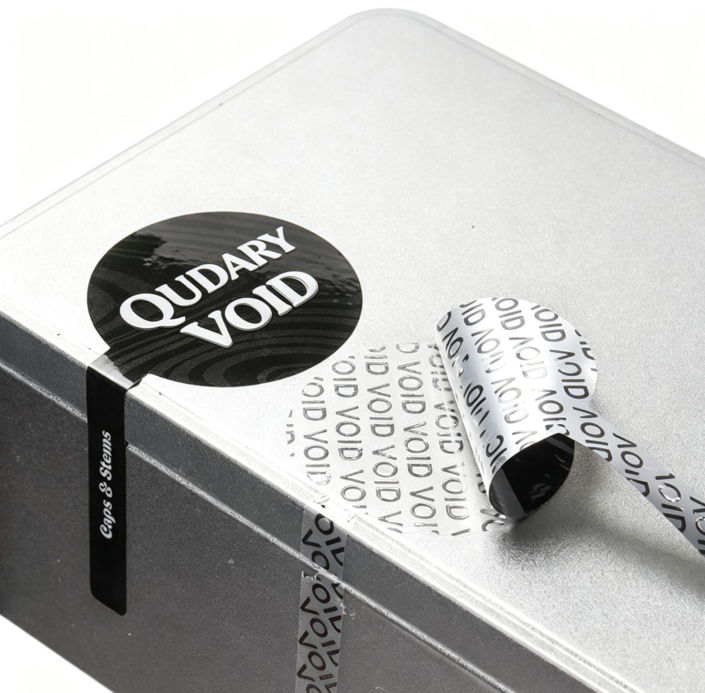
| Tamper-evident multi-layer labels | The construction is designed to show evidence of attempted removal or opening | Selected security-sensitive packaging |
| Multi-language labels | Multiple languages are arranged across inner panels or pages | Export products sold in several markets |
These categories can overlap. For example, a booklet label may also be an extended-content label, and a peel-and-reveal label may include a resealable closure. Industry suppliers describe these formats as related solutions for adding information, supporting promotions, and addressing packaging constraints.
1. Peel-and-Reveal Labels
Peel-and-reveal labels have a liftable top panel that exposes additional printed information underneath.
They are often a practical choice when the package needs moderate extra content but doesn’t require a full booklet.
Typical applications include:
- Cosmetics and personal care
- Food and beverage packaging
- Product promotions
- Coupons and discount messages
- Multilingual product information
- Supplement labels
For this format, we focus on the opening tab, hinge strength, adhesive pattern, and ability to close the label again without damaging the printed panels.
2. Booklet Labels
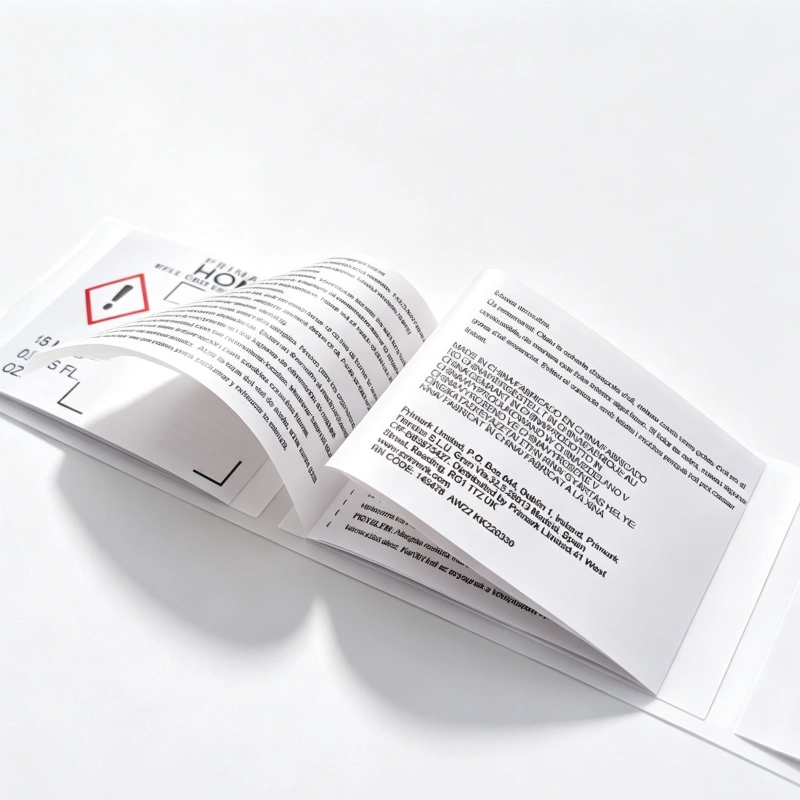
Booklet labels incorporate folded or multi-page printed content into the label construction.
They are useful when the product requires extensive information, such as instructions, precautions, detailed product descriptions, or several language versions.
A booklet format may be more appropriate than a basic peel-and-reveal label when the information volume is high or when the content needs to be organized into clearly separated sections.
3. Peel-and-Reseal Labels
Peel-and-reseal labels are designed to open and close repeatedly. They can be useful when consumers need to access instructions, product information, or promotional content more than once.
The critical engineering requirement is that the closure works consistently without detaching the label from the container.
A label’s opening-cycle performance depends on its construction and testing conditions. Buyers should specify the expected usage and approve samples against a defined cycle-test requirement rather than assuming all resealable labels offer the same performance.
4. Fold-Out and Concertina Labels
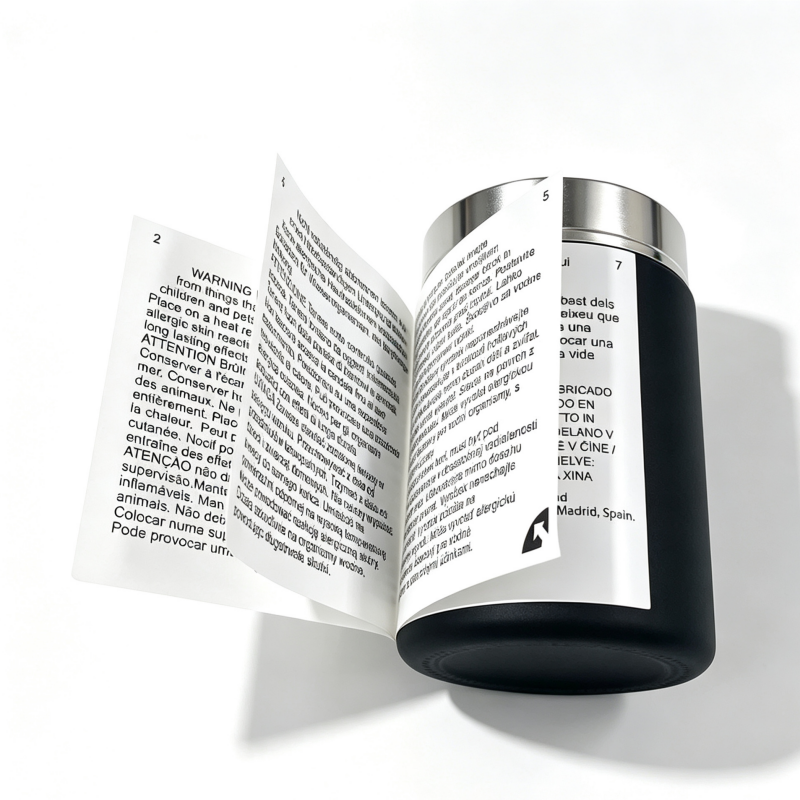
Fold-out labels use connected panels that unfold outward, providing more space than the closed label footprint suggests.
They suit chemical products, agricultural products, or export packaging where several languages and detailed safety information must fit on a relatively small container.
The design must account for fold direction, panel sequence, crease or hinge position, and how the label returns to its closed position.
5. Two-Ply and Piggyback Labels
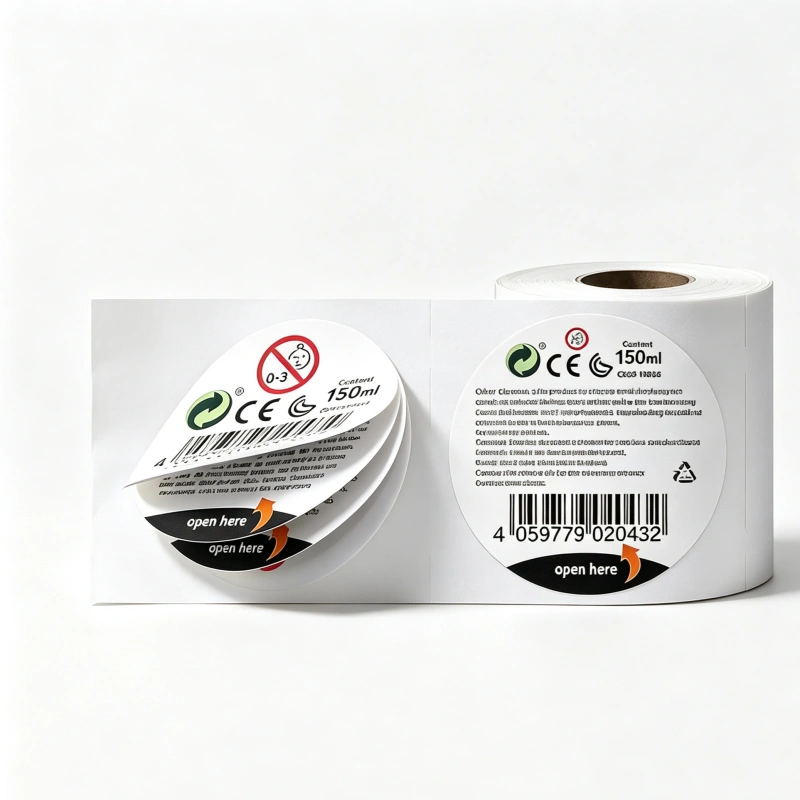
A two-ply or piggyback construction contains one label layer over another. Depending on the design, you can remove the upper label and transfer it to another surface while the lower label remains attached to the original package.
This format is useful for selected logistics, product identification, coupon, and inventory workflows. It differs from a booklet label because its primary function is to transfer or separate an identification label, not present multiple pages of information.
Why Do B2B Buyers Choose Multi-Layer Labels?
For a brand or packaging buyer, the decision should be based on a clear business requirement. Multi-layer labels add complexity compared with standard labels, so the additional functionality should justify the cost.
More information without increasing package size
A multi-layer construction can provide extra printable surfaces while keeping the visible label footprint largely unchanged. This is useful when a bottle, jar, or small container has limited space for text.
Support for multilingual packaging
Brands selling in multiple countries may need different language versions of product information. Multi-layer labels can organize this content into separate panels, helping one package design serve more than one market.
However, you must still verify the correct regulatory information for each destination. A multi-layer format provides additional space; it does not automatically make the content compliant.
Better organization of instructions
Detailed information can be separated into logical sections, such as:
- Primary product identification
- Directions for use
- Warnings and precautions
- Ingredients or technical details
- Additional language versions
- Promotional content
This structure can make information easier to navigate than placing every detail on one crowded surface.
Promotions without redesigning the entire package
Peel-and-reveal and related promotional labels can incorporate coupons, rebates, loyalty messages, and campaign information directly onto a product package.
Potential reduction in separate inserts
For suitable products, a multi-layer label may reduce the need for a separate information leaflet or an enlarged outer package. The actual savings depend on the product, label construction, packaging line, and total cost of the existing solution.
We recommend comparing the total packaging cost, not only the price per label.
Industries That Use Multi Layer Labels
Pharmaceutical and healthcare packaging
Pharmaceutical and healthcare products may require detailed instructions, warnings, and other information that is difficult to fit on small containers.
The U.S. Food and Drug Administration explains that drug labeling is subject to specific legal and regulatory requirements, including provisions covering package and container labeling. A multi-layer label can provide more space, but it must still accommodate the information required for the relevant product and market.
For these projects, buyers should confirm the applicable regulatory requirements, artwork revision control, legibility, and validation process before production.
Cosmetics and personal care
Cosmetic bottles and jars often have limited label areas but need room for ingredients, directions, precautions, brand information, and multilingual text.
Multi-layer labels can add space while keeping a clean front-facing design. Select materials and adhesives based on the container, product exposure, and expected handling.
Food and beverage
Multi-layer labels can help food and beverage brands organize additional product information, language versions, promotional messages, or recipes.
For products exposed to refrigeration or condensation, the complete label construction should be tested under realistic conditions. A label that performs well on a dry container may behave differently when repeatedly exposed to moisture.
Household and industrial chemicals
Chemical products may need extensive instructions and hazard communication across several markets.
For these applications, buyers should verify the product classification and destination market requirements. The label’s material, adhesive, print durability, and resistance to expected exposure should also be evaluated.
Agricultural products and supplements
Agricultural products and supplements can require detailed instructions, precautions, dosage information, or multiple languages. A booklet or fold-out format may be appropriate when a simple peel-and-reveal label does not provide enough usable space.
How to Choose the Right Multi Layer Label Structure
The most effective way to select a construction is to start with the package and the information that must appear on it.
| Buyer requirement | Recommended starting point | Key design consideration |
|---|---|---|
| A moderate amount of hidden information | Peel-and-reveal | Opening tab, hinge, and reseal performance |
| Extensive instructions or many language versions | Booklet label | Panel count, sequence, legibility, and closure |
| Information accessed repeatedly | Peel-and-reseal | Repeated opening and closing |
| Several panels that need to unfold outward | Fold-out or concertina | Fold geometry and usable panel size |
| A removable secondary label | Two-ply or piggyback | Transferability and adhesive behavior |
| Extra regulatory information on a small container | Extended content label | Content verification and artwork control |
| Visible evidence of removal is required | Tamper-evident multi-layer construction | Security design and validation |
Before choosing, answer five questions:
- How much information must fit on the label?
- How many languages are required?
- Will consumers need to open and reseal it?
- What is the package material and shape?
- Will the label be applied manually or by an automatic labeling machine?
These answers help determine the layer count, panel dimensions, adhesive pattern, material, and converting method.
Materials Used in Multi-Layer Labels
A multi-layer label uses multiple materials rather than a single sheet. Each component has a specific role.
Paper face materials
Paper is often suitable for dry-product packaging, promotional labels, and selected booklet constructions. Different paper grades provide different levels of stiffness, printability, and surface finish.
Film materials
PP, PET, and other synthetic films may suit labels that require improved moisture resistance, dimensional stability, or flexibility. The appropriate film depends on the package, adhesive, printing process, and expected environment.
Adhesives
The base label adhesive must match the container surface and application conditions. The upper-layer or patterned adhesive must do a different job: control opening and closing without allowing unwanted delamination.
Common considerations include:
- Glass, PET, PP, or HDPE container surfaces
- Surface energy and coating
- Application temperature
- Moisture and condensation
- Required permanent adhesion
- Repeated opening and resealing
- Dispensing and converting conditions
Protective finishes
Lamination, varnish, or other surface treatments can help protect the printed surface or deliver a particular appearance. Their suitability depends on the ink, substrate, folding design, and intended use.
A finish that improves surface protection should not interfere with the label’s ability to open, fold, or reseal.

How Multi-Layer Labels Are Manufactured
Multi-layer labels require more coordination than a conventional single-layer sticker because several printed panels must be aligned and converted into one functional construction.
A typical custom production workflow includes the following stages.
Step 1: Requirement review
We confirm the container, label dimensions, information volume, number of languages, panel count, application method, and target market.
Step 2: Structural design and dieline
The manufacturer prepares a structural drawing showing the panel arrangement, fold positions, opening tab, adhesive zones, and finished dimensions.
This is especially important for booklets and fold-out labels, where the panel order determines whether the information can be read correctly.
Step 3: Artwork and content verification
The artwork is checked panel by panel. Buyers should confirm all text, translations, warnings, symbols, variable data, and revision information before printing.
For regulated products, the content should be approved by the responsible compliance or regulatory team.
Step 4: Printing
Depending on the construction, printing may use digital, flexographic, or another suitable process. The choice depends on quantity, artwork complexity, variable data, substrate, and color requirements.
Step 5: Lamination and layer assembly
The printed layers are combined using the specified adhesive and lamination arrangement. Registration is critical because the printed information must align with the final panels and opening geometry.
Step 6: Folding, die-cutting, and finishing
The label is converted into its final format. Cutting depth, fold position, opening tab, and closure behavior must be checked against the approved sample.
Step 7: Quality inspection
Inspection can include print quality, dimensions, panel alignment, opening and resealing, barcode readability, and application performance.
Step 8: Packing and delivery
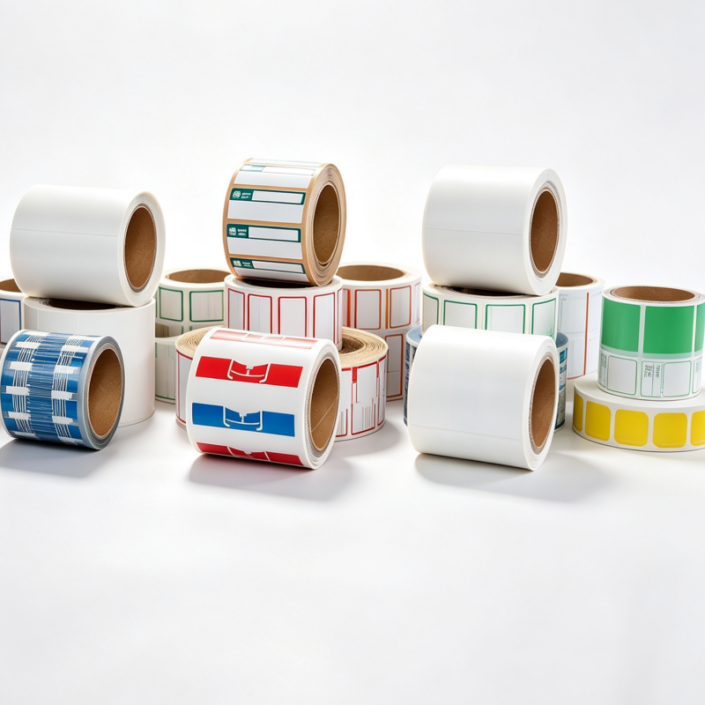
Labels are packed in the format required by the buyer, including agreed roll direction, core size, label orientation, carton labeling, and SKU separation.
Industry label manufacturers describe similar production routes that combine digital or flexographic printing with lamination, converting, and performance checks for extended-content and resealable labels.
Quality Control: What Buyers Should Test Before Mass Production
For multi-layer labels, the printed appearance is only one part of quality. The label must also open correctly, remain attached to the package, and protect the information through storage and use.
| Test | What to verify | Why it matters |
|---|---|---|
| Dimensional inspection | Finished size, panel size, and cutting accuracy | Prevents fitting and dispensing problems |
| Print inspection | Color, text, symbols, and legibility | Reduces errors and reprints |
| Cross-layer registration | Alignment between printed panels | Prevents text from being cut off or misplaced |
| Opening test | Easy access without tearing unintended areas | Improves usability |
| Reseal test | Closure behavior over the agreed number of cycles | Confirms repeated-use performance |
| Adhesion test | Base label remains attached to the actual package | Reduces edge lifting and label loss |
| Environmental test | Performance under relevant moisture, temperature, or chemical exposure | Checks suitability for the real application |
| Barcode or QR verification | Correct data and reliable readability | Supports identification and traceability |
| Artwork revision check | Correct approved version used in production | Important for regulated or frequently updated content |
For a new construction, we recommend producing a physical sample and applying it to the actual container before mass production. A flat proof or digital mockup cannot fully demonstrate opening force, panel alignment, curvature, or resealing behavior.
Common Problems With Multi Layer Labels and How to Solve Them
Problem 1: The top layer is difficult to open
Possible causes: The opening tab is too small, the adhesive pattern is unsuitable, or the material is too stiff for the design.
Solution: Review the tab geometry, material flexibility, and adhesive pattern. Test the label with the intended user and package.
Problem 2: The label does not reseal properly
Possible causes: The reseal adhesive is unsuitable, the surface has been contaminated, or the opening mechanism damages the closure area.
Solution: Confirm the expected number of opening cycles and test the complete construction rather than relying on the adhesive specification alone.
Problem 3: Inner text is misaligned
Possible causes: The artwork does not account for fold lines or die-cut tolerances, or the printed layers are not correctly registered.
Solution: Use a panel-by-panel dieline, maintain safe areas, and approve a physical sample before the full run.
Problem 4: The base label lifts from the package
Possible causes: The adhesive does not match the container surface, the package is contaminated, or the label is applied under unsuitable conditions.
Solution: Confirm the container material, surface treatment, application temperature, and expected exposure. Test adhesion on the actual package.
Problem 5: The label jams during automatic application
Possible causes: Incorrect roll direction, inconsistent label spacing, unsuitable liner properties, or a construction that is too complex for the applicator setup.
Solution: Provide the labeling-machine specifications before production and test the finished roll on the intended line.
Problem 6: The wrong artwork version is printed
Possible causes: Uncontrolled file revisions, unclear approval responsibility, or changes made after the final proof.
Solution: Establish a documented artwork approval process. For regulated products, use revision identifiers and ensure that the final approved file can be traced to the production batch.
How Much Do Multi-Layer Labels Cost?
Multi-layer labels generally cost more than simple single-layer labels because they require additional materials, printing surfaces, lamination, folding, die-cutting, and quality checks.
However, there is no universal price per label. Cost depends on construction and order specifications.
| Cost factor | How it affects pricing |
|---|---|
| Number of layers and printable panels | More material and converting operations may be required |
| Label dimensions | Larger labels consume more material |
| Substrate | Paper, film, specialty materials, and finishes have different costs |
| Printing method | Quantity, colors, variable data, and setup influence production cost |
| Opening and resealing design | Specialized adhesive patterns and converting may add complexity |
| Die-cutting and folding | Complex shapes and booklet formats may require additional processing |
| Inspection requirements | Barcode verification, cycle tests, and documented controls can add cost |
| Order quantity | Setup costs are spread differently across small and large orders |
| Packing format | Roll specifications, SKU separation, and export packing affect the total |
For budgeting, the most reliable approach is to request a quotation based on a defined construction rather than a generic request for “multi-layer labels.”
A quote request should include the finished size, panel count, material, artwork, quantity per design, adhesive requirements, application method, destination market, and any required quality or compliance tests.
We do not recommend choosing a supplier solely by the lowest unit price. If a label fails on the filling line or contains incorrect information, the cost of rework, rejected packaging, and production interruption can exceed the original price difference.
How to Reduce Multi Layer Label Costs Without Compromising Function
For B2B buyers, cost optimization should begin with the design.
Use only the panels you need. Count the required information and organize it before selecting the structure. A simple peel-and-reveal design may suffice when a full booklet isn’t necessary.
Standardize dimensions across product variants. Where practical, using a shared label footprint can simplify tooling and purchasing.
Keep artwork organized. Provide complete, approved files and translations to reduce revision cycles.
Choose materials based on the actual environment. Do not pay for specialized performance that the product does not need, but do not downgrade materials where failure could be costly.
Test before mass production. A prototype can reveal problems with opening, alignment, or adhesion before they affect the full order.
Compare total packaging cost. Evaluate whether the multi-layer format can replace a separate leaflet or prevent the need to redesign the container. The savings depend on the actual project.
How to Select a Multi Layer Label Manufacturer
A suitable supplier should understand both printing and the functional engineering of the label.
Before placing an order, ask the manufacturer:
- Can you recommend the correct structure based on our information volume and container?
- Can you provide a dieline showing all panels and folds?
- Which face materials and adhesives are available?
- Can you produce peel-and-reveal, booklet, fold-out, or resealable formats?
- How do you verify cross-layer registration?
- Can you provide physical samples for testing?
- Can the finished labels run on our automatic labeling equipment?
- How are artwork revisions and approvals controlled?
- What inspection records or test reports can you provide?
- What is the MOQ, lead time, and price for each proposed construction?
We recommend sharing the actual container dimensions and packaging-line requirements early in the discussion. This helps the manufacturer assess feasibility before investing time in artwork and tooling.
Frequently Asked Questions About Multi Layer Labels
What is the difference between multi-layer labels and booklet labels?
Multi-layer labels are a broad category that includes several constructions. Booklet labels are one type, using folded or bound panels to create a compact multi-page format. Peel-and-reveal and fold-out labels are other types of multi-layer construction.
How many layers can a multi-layer label have?
The number depends on the design, material, panel dimensions, and manufacturing process. Commercial suppliers offer different structures, including multi-ply and booklet formats with several printable panels. Buyers should specify the required usable panels rather than relying only on a layer count.
Are multi-layer labels waterproof?
Not automatically. Water resistance depends on the face material, printing, protective finish, adhesive, and package surface. For refrigerated products or products exposed to water, test the complete label on the actual container.
Can multi-layer labels be used for pharmaceutical products?
They can provide additional space for instructions and other information, but the final label must meet the applicable requirements for the specific product and market. Buyers should have the content reviewed by their regulatory team and confirm the manufacturer’s quality and documentation capabilities.
Can multi-layer labels be applied automatically?
Yes, some constructions are designed for automatic application. The label dimensions, liner, roll direction, spacing, dispensing behavior, and machine settings must be compatible with the packaging line. A production trial is recommended.
Can multi-layer labels include multiple languages?
Yes. Inner panels or booklet pages can be allocated to different languages. The final layout should preserve readability and ensure that all required content is included for the intended markets.
Are peel-and-reseal labels reusable?
They are designed to be opened and closed, but performance varies by construction. Buyers should specify the expected opening cycles and approve samples against a defined resealing test.
What information is needed for a quotation?
Provide the label size, number of printable panels, artwork, material preference, quantity, container type, adhesive requirements, application method, destination markets, and required testing. A physical sample or container drawing is helpful for more complex designs.
Request a Custom Multi Layer Label Solution
As a custom label manufacturer, we help B2B buyers develop multi-layer packaging labels that require additional information, multiple languages, instructions, or promotional content.
We recommend starting with the packaging problem: identify the information that must be displayed, determine how consumers will open and close the label, and confirm the conditions the label must withstand. From there, the structure, materials, adhesive, and production route can be selected more accurately.
For an initial project review, prepare the following:
- Product category and destination market
- Container dimensions and material
- Required printable panels and languages
- Artwork or sample label
- Expected quantity per design
- Manual or automatic application method
- Required environmental and performance tests
We can then assess the required construction and help you define a practical specification for sampling, quotation, and mass production.
Contact our team to discuss your custom multi layer label project, request a sample, and explore an OEM or ODM solution for your packaging requirements.
Sources and Further Reading
- ID Technology — Extended Content & Promotional Labels: Product applications and functionality for booklet, resealable, multi-panel, and promotional labels. Read the technical overview.
- U.S. Food and Drug Administration (FDA) — Labeling for CBER-Regulated Products: Official information and references to applicable biological product and package-labeling requirements. Visit the FDA.
- FlexoTech — Peeling and Revealing: Finding Success in Multi-Layer Labels: Industry discussion of peel-and-reveal labels and the need to fit additional information into limited packaging space. Read the industry feature.
- Asas Label — Multi-Layer Labels: Examples of peel-and-reveal, resealable, and fold-out formats and their common applications. Review the product overview.
Regulatory note: These sources explain labeling concepts and selected requirements. They do not replace a product-specific compliance review. Buyers should verify the current rules applicable to each product and destination market before approving final artwork.
Name: Michael Turner
Position: Packaging Procurement Manager
Rating: ★★★★★ (5/5)
Date: March 18, 2026
Purchase Status: Sample review — not independently verified
“We needed multi layer labels to fit product information in several languages without increasing our packaging size. The label structure was practical, the printing was clear, and the peel-and-reveal design made the additional content easy to access. A good solution for our export packaging requirements.”
Name: Sarah Mitchell
Position: Product Development Manager
Rating: ★★★★★ (5/5)
Date: July 9, 2025
Purchase Status: Sample review — not independently verified
“Our project required custom dimensions, specific materials, and a carefully designed opening mechanism. The supplier helped us review the specifications and adjust the artwork before production. The finished labels looked professional and met our packaging design expectations.”
Name: Daniel Foster
Position: Purchasing Director
Rating: ★★★★☆ (4/5)
Date: November 22, 2024
Purchase Status: Sample review — not independently verified
“We chose multi layer labels because our products needed more space for instructions and regulatory information. The multi-panel format helped us organize the content while keeping the package compact. Sampling before mass production was particularly useful for checking readability and label performance.”

Leave a Reply
Want to join the discussion?Feel free to contribute!