How Custom Labels Improve Product Packaging and Brand Value
When consumers compare similar products on a retail shelf, the label is often one of the first elements they notice. Before they read the ingredients, compare prices, or search for reviews, they see the product name, colors, logo, typography, images, and overall packaging design.
This is why Custom Labels are more than a way to attach information to a package. For food brands, beverage companies, cosmetics manufacturers, electronics suppliers, household-product businesses, and private-label companies, a well-designed label can influence product perception, strengthen brand recognition, improve shelf visibility, and communicate important product information.
But buyers searching for Custom Labels are usually looking for more than attractive printing. Their real questions are often practical:
- What type of label is best for my product?
- Which material should I choose?
- How can custom labels improve my packaging?
- Are custom labels waterproof?
- How much customization is possible?
- Which finishes make a product look premium?
- How can labels support brand differentiation?
- What should I consider before ordering labels?
- How can I balance quality and cost?
This guide answers these questions from a practical purchasing perspective and explains how Custom Labels can improve both product packaging and long-term brand value.
What Are Custom Labels?
Custom Labels are labels manufactured according to a company’s specific product, packaging, branding, and application requirements rather than using a standard off-the-shelf label.
Customization can cover almost every part of the label:
- Material
- Size
- Shape
- Color
- Artwork
- Adhesive
- Printing
- Surface finish
- Security features
- Variable information
- Packaging format
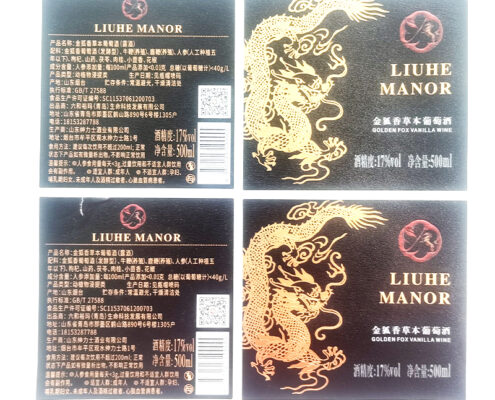
For example, a premium wine brand may require textured paper with gold foil, while a refrigerated beverage manufacturer may need a waterproof BOPP label.
A cosmetics company could choose a clear PET label with a minimalist design, while an industrial manufacturer may prioritize durable PET, chemical resistance, and strong permanent adhesive.
Therefore, customization is not simply about changing the artwork. It is about creating a label that works with the product and the brand simultaneously.
Why Do Custom Labels Matter for Product Packaging?
Packaging has several functions.
It needs to:
- Protect the product
- Communicate information
- Identify the brand
- Attract customers
- Differentiate the product
- Support the purchasing decision
The label contributes directly to several of these functions.
A generic label can communicate basic information, but a professionally designed custom label can turn the package into a recognizable brand asset.
Consider two products with identical containers.
One has a plain white label containing basic text.
The other has:
- A distinctive logo
- Consistent brand colors
- Premium typography
- Clear product hierarchy
- High-quality imagery
- A carefully selected material
- Embossing or foil details
The products may contain similar contents, but the second package can communicate a significantly different perceived value.
That is the power of packaging design.
Custom Labels Strengthen Brand Recognition
One of the biggest long-term benefits of custom labeling is brand consistency.
Customers may encounter the same brand across:
- Retail stores
- E-commerce websites
- Social media
- Advertising
- Trade shows
- Product packaging
Consistent visual elements help customers recognize the brand more quickly.
Important brand elements can include:
- Logo
- Brand colors
- Typography
- Graphic patterns
- Icons
- Product photography
- Label shape
- Finishing style
For example, a company selling five different skincare products may use different colors for each product while keeping the same typography, logo placement, and label structure.
This creates a recognizable product family.
Instead of designing every label independently, the company develops a visual labeling system.
Custom Labels Help Products Stand Out on the Shelf
Shelf competition is intense.
A consumer may see dozens of similar products within a few seconds.
A custom label can help create visual differentiation through:
- Strong color contrast
- Unusual shapes
- Premium materials
- Clear typography
- Minimalist design
- Metallic effects
- Transparent labels
- Textured paper
- Foil stamping
However, standing out does not mean making the label visually chaotic.
Effective packaging usually establishes a clear hierarchy:
Brand → Product → Key Benefit → Supporting Information
Customers should understand what the product is before they need to read every detail.
A beautiful label that requires detective work is still a bad label.
Material Selection Can Increase Perceived Product Value
Material is one of the most underestimated aspects of label design.
Two labels can use exactly the same artwork but create completely different impressions because they use different materials.
Standard Coated Paper
Suitable for:
- Mass-market products
- Food packaging
- Promotional products
- Cost-sensitive applications
It offers good print quality at an economical price.
Kraft Paper
Often used to communicate:
- Natural
- Handmade
- Organic
- Sustainable-looking
It is popular for:
- Coffee
- Tea
- Handmade foods
- Natural cosmetics
- Craft products
Textured Specialty Paper
Textured paper can create a premium tactile experience.
Potential applications include:
- Wine
- Gourmet food
- Luxury cosmetics
- Premium spirits
BOPP / PP
BOPP and PP provide moisture resistance and are suitable for:
- Beverages
- Food
- Cosmetics
- Personal care
- Refrigerated products
PET
PET can provide higher durability and is commonly considered for:
- Electronics
- Industrial equipment
- Chemical containers
- Durable product identification
The material should therefore be selected according to both brand positioning and product environment.
Custom Labels Create a Better Tactile Experience
Packaging is not purely visual.
Consumers also interact physically with products.
They may:
- Pick up a bottle
- Touch the label
- Feel its texture
- Rotate the package
- Compare products
A textured or soft-touch label can create a different experience from a standard glossy paper label.
Finishing options can include:
- Embossing
- Debossing
- Soft-touch
- Matte lamination
- Gloss lamination
- Spot UV
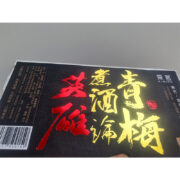
- Foil stamping
For premium products, this tactile experience can reinforce the perception that the product itself is carefully made.
In other words:
The label becomes part of the product experience.
Custom Labels Support Premium Branding
Premium positioning does not necessarily mean using the most expensive materials.
The goal is to make design elements work together.
For example:
Matte black label + gold foil + minimalist typography
can create a luxury appearance.
Alternatively:
Kraft paper + dark green printing + simple botanical graphics
can communicate a natural brand identity.
Another option:
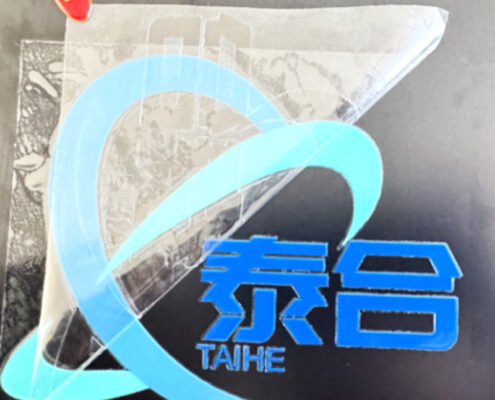
Clear film + white ink + metallic details
can create a modern appearance for transparent packaging.
The right combination depends on the target customer.
A luxury perfume label and a children’s snack label should not look identical—and thankfully, they don’t have to.
Custom Labels Improve Product Information Hierarchy
A label has limited space.
It may need to communicate:
- Product name
- Brand
- Flavor
- Ingredients
- Instructions
- Warnings
- Net quantity
- Barcode
- QR code
- Manufacturer information
- Certifications
- Batch information
If all information has the same visual importance, customers may struggle to understand it.
Custom label design allows brands to establish a hierarchy.
For example:
Primary Information
Brand + Product Name
Secondary Information
Flavor + Main Product Benefit
Supporting Information
Ingredients + Usage + Other Details
Machine-Readable Information
Barcode + QR Code
This structure makes packaging easier to understand without sacrificing essential information.
Custom Labels Help Communicate Product Positioning
A label can communicate what a brand wants consumers to think about the product.
For example:
Natural Positioning
Potential elements:
- Kraft paper
- Earth tones
- Botanical graphics
- Simple typography
Luxury Positioning
Potential elements:
- Dark colors
- Metallic foil
- Embossing
- Specialty paper
Modern Technology
Potential elements:
- Minimalist layout
- Clear film
- Metallic effects
- Geometric graphics
Family-Oriented Products
Potential elements:
- Bright colors
- Friendly typography
- Illustrations
- Simple product messaging
The important point is that label design should reflect the target market rather than simply follow current design trends.
Custom Labels Improve Brand Differentiation
Many product categories contain similar packaging.
Examples include:
- Coffee
- Wine
- Cosmetics
- Sauces
- Supplements
- Candles
- Pet products
- Household cleaners
If competitors all use similar bottle shapes, custom labels provide another opportunity to differentiate.
A distinctive:
- Label shape
- Color system
- Typography
- Material
- Finish
- Graphic style
can make the product easier to identify.
Over time, these visual elements can become associated with the brand itself.
Custom Labels for Different Industries
The ideal custom label solution changes by industry.
Food Packaging Labels
Food labels often need to balance:
- Branding
- Product information
- Moisture resistance
- Barcode readability
- Retail appearance
Popular materials include paper, BOPP, PP, and specialty papers.
Beverage Labels
Beverage labels may face:
- Condensation
- Refrigeration
- Ice
- Wet handling
BOPP and other synthetic materials can be considered where moisture resistance is required.
Premium wine and spirits brands may also use:
- Textured paper
- Foil
- Embossing
- Metallic finishes
Cosmetics Labels
Cosmetic packaging often emphasizes premium appearance.
Potential solutions include:
- Clear labels
- PET
- BOPP
- Metallic labels
- Soft-touch finishes
- Gold and silver foil
Pharmaceutical Labels
Pharmaceutical labels prioritize accurate information and reliable identification.
Depending on the application, they may include:
- Barcodes
- Variable data
- Batch numbers
- Security features
- Tamper evident elements
Industrial Labels
Industrial products may require greater durability.
PET and specialized synthetic materials can be considered where labels face:
- Chemicals
- Heat
- Oil
- Water
- Abrasion
- UV exposure
Custom Labels Can Improve Packaging Durability
Brand value is important, but a label also has to survive its actual environment.
A label may encounter:
- Moisture
- Condensation
- Friction
- Temperature changes
- Oil
- Chemicals
- UV exposure
A label that looks excellent when manufactured but peels after two days is not exactly a packaging success story.
Material and adhesive selection should therefore reflect the application.
For example:
Refrigerated beverage → BOPP + suitable moisture-resistant adhesive
Outdoor equipment → PET or durable synthetic material + suitable adhesive
Dry food carton → Paper label + standard permanent adhesive
The best label is not necessarily the strongest label. It is the label whose performance matches the product’s actual requirements.
Custom Labels Can Support Product Security
Custom labels can also become part of an anti-counterfeiting strategy.
Security features may include:
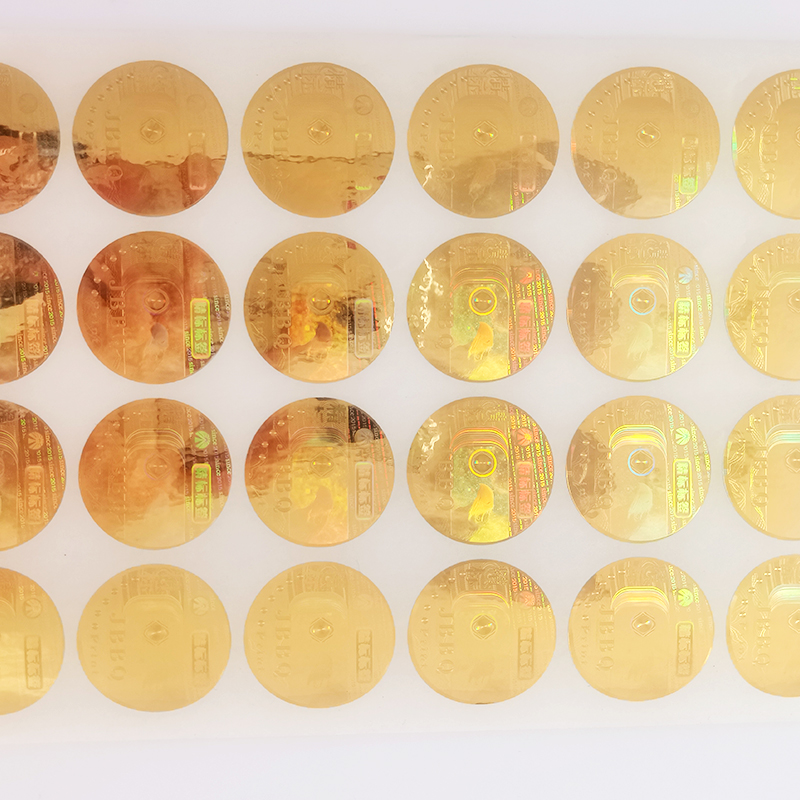
- Holograms
- VOID patterns
- Destructible materials
- Microtext
- UV printing
- Serial numbers
- QR codes
- RFID
- NFC
These features can help brands address:
- Counterfeiting
- Warranty fraud
- Unauthorized opening
- Product diversion
- Product authentication
For higher-value products, combining multiple security elements can create a stronger protection system.
For example:
Holographic feature + unique QR code + tamper evident adhesive
provides both visual and digital authentication.
Custom Labels Can Add Digital Value to Packaging
A printed label no longer has to be purely physical.
QR codes, NFC, and RFID can connect packaging with digital services.
A QR code could direct customers to:
- Product instructions
- Authentication
- Product registration
- Warranty information
- Recipes
- Brand stories
- Promotional campaigns
NFC can provide a more interactive experience for compatible devices.
This creates an opportunity to transform the label from a static information carrier into a digital touchpoint.
Custom Labels Can Support Multiple SKUs
Growing brands often have multiple product variations.
For example, a beverage company may sell:
- Original
- Lemon
- Berry
- Orange
- Zero Sugar
Instead of creating completely unrelated designs, the brand can develop a standardized label system.
For example:
Same layout + same logo + different color coding
This creates consistency while allowing consumers to identify individual SKUs quickly.
It also simplifies brand management and can make future product launches easier.
Custom Labels and Private Label Products
Private-label businesses often need packaging that looks unique, even when another company manufactures the underlying product.
Custom labels allow private-label brands to establish their own identity.
They can customize:
- Brand name
- Product description
- Color palette
- Label shape
- Product information
- Barcode
- Finishing
This is particularly useful for:
- Supermarkets
- E-commerce sellers
- Distributors
- Importers
- Boutique brands
- Contract manufacturers
A professionally designed custom label can help a private-label product compete visually with established brands.
Custom Labels Can Improve E-Commerce Branding
Even though customers may first discover a product online, the physical packaging still matters.
When a customer receives the product, the packaging becomes part of the unboxing experience.
A customized label can:
- Reinforce brand recognition
- Make packaging more professional
- Encourage social-media sharing
- Improve perceived quality
- Communicate product instructions
- Provide QR-based customer engagement
For emerging e-commerce brands, packaging can be an important part of building repeat recognition.
How Much Do Custom Labels Cost?
There is no universal price for Custom Labels because many variables affect the final cost.
Important factors include:
- Label material
- Label dimensions
- Quantity
- Printing method
- Number of colors
- Adhesive
- Finishing
- Die-cutting
- Variable data
- Security features
- Packaging format
Generally, increasing production volume can reduce the unit cost because setup and production expenses are distributed across more labels.
However, the cheapest label is not necessarily the most economical solution.
If a low-cost label:
- Peels off
- Fades
- Tears
- Cannot be scanned
- Looks inconsistent
the resulting replacement and brand costs can be much higher.
The better approach is to optimize total value, not simply unit price.
How to Choose the Right Custom Labels
Before requesting a quotation, answer these questions.
1. What product will the label be used on?
Food, beverage, cosmetics, electronics, industrial products, or another category?
2. What is the packaging material?
Glass, PET, PP, metal, cardboard, or flexible packaging?
3. Where will the product be stored?
Indoor, outdoor, refrigerated, frozen, or high-humidity conditions?
4. How long should the label last?
Temporary, seasonal, retail-life, or long-term industrial use?
5. Does the label need special features?
For example:
- Waterproof
- Removable
- Tamper evident
- Security
- UV resistant
- Chemical resistant
6. What brand image do you want?
Natural, premium, luxury, modern, industrial, playful, or minimalist?
7. What finish do you need?
- Matte
- Gloss
- Foil
- Embossing
- Soft-touch
- Spot UV
Answering these questions before production can dramatically reduce the risk of ordering the wrong label.
Common Mistakes When Ordering Custom Labels
Choosing Material Based Only on Appearance
A beautiful paper may not survive refrigeration.
Ignoring Adhesive Compatibility
The face material may be perfect while the adhesive fails on the actual packaging.
Designing Without Considering Label Shape
A label that looks good on a computer screen may wrinkle on a curved bottle.
Using Too Many Design Elements
More effects do not automatically create a premium appearance.
Forgetting Barcode Testing
A barcode must be reliably readable, not merely visually correct.
Skipping Physical Samples
Digital artwork cannot fully reproduce the tactile and visual characteristics of the final label material.
How to Test Custom Labels Before Mass Production
A professional sampling process can help prevent expensive production mistakes.
Step 1: Apply the Label to the Actual Packaging
Do not test only on a flat piece of material.
Step 2: Simulate Real Conditions
Depending on the product, test:
- Refrigeration
- Humidity
- Water exposure
- Friction
- Temperature changes
- Chemical contact
- Outdoor exposure
Step 3: Check Adhesion
Look for:
- Edge lifting
- Peeling
- Wrinkling
- Bubbles
Step 4: Check Printing
Verify:
- Color
- Text
- Barcode
- QR code
- Fine details
Step 5: Evaluate Appearance
Check the label under actual retail lighting and from normal viewing distance.
This process helps ensure that the final Custom Labels meet both functional and branding requirements.
Custom Labels Manufacturer: Perfect Label
Perfect Label provides customized label manufacturing solutions for brands, manufacturers, distributors, retailers, and private-label businesses.
Custom label solutions can include:
- Food labels
- Beverage labels
- Wine labels
- Cosmetic labels
- Pharmaceutical labels
- Industrial labels
- Waterproof labels
- Security labels
- RFID labels
- Specialty paper labels
- Clear labels
- Foil labels
- Tamper evident labels
Customization can cover the complete label structure:
Material + Adhesive + Size + Shape + Printing + Finishing + Security Features
Perfect Label can help customers develop label solutions according to their product packaging and application environment rather than relying on a one-size-fits-all specification.
For businesses launching a new product, changing packaging, developing a private-label product, or upgrading an existing label, this approach can help balance appearance, performance, production efficiency, and brand value.
Custom Labels vs. Standard Labels
| Feature | Standard Labels | Custom Labels |
|---|---|---|
| Design | Predefined | Fully customized |
| Size | Limited | Custom |
| Shape | Standard | Custom die-cut |
| Material | Limited options | Wide selection |
| Adhesive | Standard | Application-specific |
| Branding | Basic | Brand-focused |
| Finishing | Limited | Multiple options |
| Security | Usually limited | Available |
| Variable Data | Limited | Available |
| Product differentiation | Low | High |
Standard labels can be useful for simple applications, but custom labels provide much greater control when packaging and branding are important.
The Relationship Between Custom Labels and Brand Value
Brand value is not created by a label alone.
It comes from the entire customer experience:
Product Quality + Packaging + Brand Identity + Customer Experience
However, the label connects many of these elements.
A customer sees the label.
They touch the label.
They read the label.
They associate its visual style with the brand.
They may scan its QR code.
They may keep the package.
They may see the same design again months later.
Over time, these repeated interactions can strengthen brand recognition.
That means a label can have value far beyond its production cost.
FAQ About Custom Labels
What are Custom Labels used for?
Custom labels are used for product identification, branding, product information, barcodes, promotions, security, traceability, and packaging decoration across industries such as food, beverages, cosmetics, pharmaceuticals, electronics, and industrial products.
Can Custom Labels be made waterproof?
Yes. Materials such as BOPP, PP, PET, and certain synthetic substrates can provide strong moisture resistance. The adhesive and printing system should also be selected according to the application.
Can I customize the shape of a label?
Yes. Custom labels can be produced in rectangles, circles, ovals, squares, irregular die-cut shapes, and other designs according to the packaging.
What material should I choose for premium packaging?
Specialty papers, textured papers, clear films, metallic materials, and premium finishing techniques can all create a higher-end appearance. The best choice depends on the product and brand positioning.
Can Custom Labels include QR codes?
Yes. QR codes, barcodes, serial numbers, variable data, RFID, and NFC can be incorporated into suitable label constructions.
Are Custom Labels more expensive than standard labels?
They can have higher initial setup costs, but larger production volumes can reduce unit costs. The final price depends on material, size, quantity, printing, finishing, and security requirements.
Can Custom Labels be used on refrigerated products?
Yes. For refrigerated products, moisture-resistant materials and adhesives designed for the expected temperature and condensation conditions should be considered.
Can I order a sample before mass production?
A physical sample or proof is strongly recommended, especially when material appearance, color, adhesive performance, or special finishing is important.
Final Thoughts
Custom Labels can improve product packaging in ways that go far beyond adding a logo.
The right label can make a product easier to recognize, more attractive on the shelf, easier to understand, more resistant to its operating environment, and more consistent with the brand’s positioning.
For brands, the most important principle is to treat the label as part of the overall packaging strategy.
Start with the product.
Then consider:
Packaging Surface → Application Environment → Material → Adhesive → Design → Printing → Finishing → Security → Testing
A dry snack may need an economical paper label. A refrigerated beverage may require moisture-resistant BOPP. A premium wine brand may benefit from textured paper and foil stamping. An electronic product may require PET and tamper evident features. A private-label product may need a completely customized visual identity.
The right solution depends on the job.
Ultimately, the strongest Custom Labels are those that successfully combine function and branding. They protect important information, survive the product’s environment, communicate the brand’s personality, and create a consistent experience from the retail shelf to the customer’s hands.
A label may be physically small, but when designed strategically, it can carry a surprisingly large share of a product’s brand value.

International Trade Sales professional with 10+ years of experience in the label printing and packaging industry. Specializing in export sales, global market development, and client relationship management, with expertise in custom labeling solutions across paper and film substrates (PP, PE, PET). Serving global clients across FMCG, pharmaceutical, and personal care sectors. Committed to delivering quality, consistency, and trust in every shipment.