
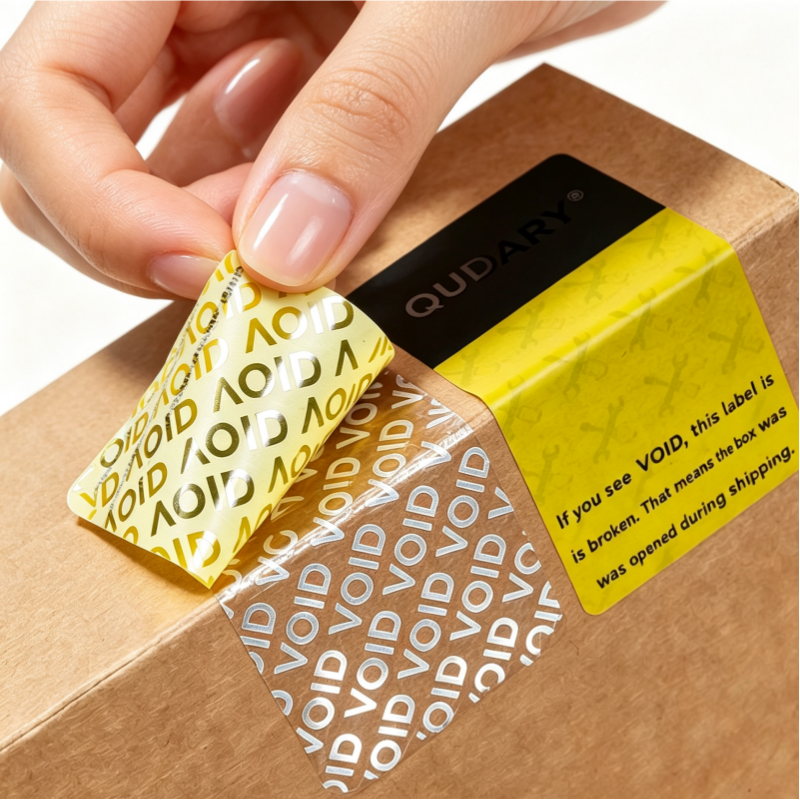
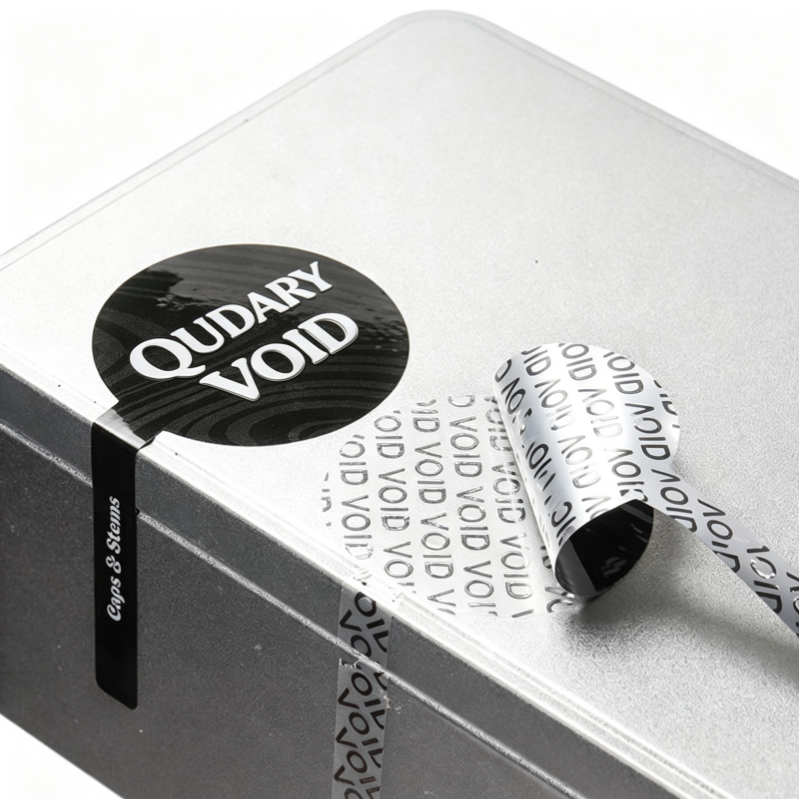
Custom tamper proof stickers
Basic Product Information
| Item | Specification |
|---|---|
| Product Name | Custom Tamper Proof Stickers |
| Alternative Names | Tamper-Evident Labels, Security Stickers, VOID Labels, Anti-Tampering Seals |
| Product Type | Custom self-adhesive security labels |
| Application | Product sealing, warranty protection, packaging security, brand protection, anti-transfer identification |
| Customization | OEM / ODM |
| Printing Method | Flexographic Printing, Digital Printing, Offset Printing, Screen Printing |
| Design | Custom Logo, Text, Pattern, Serial Number, Barcode, QR Code |
| Shape | Rectangle, Square, Circle, Oval, Custom Die-Cut Shape |
| Color | CMYK, Pantone Colors, Black, White, Silver, Gold, Custom Colors |
| Surface Finish | Glossy, Matte, Satin, Metallic, Holographic |
| Adhesive Type | Permanent Adhesive, Security Adhesive, Substrate-Specific Adhesive |
| Supply Format | Roll, Sheet, Individual Pieces |
| Packaging | Export Cartons, Customized Packaging |
| Origin | China |
| MOQ | Subject to Material, Size, Printing, and Customization Requirements |
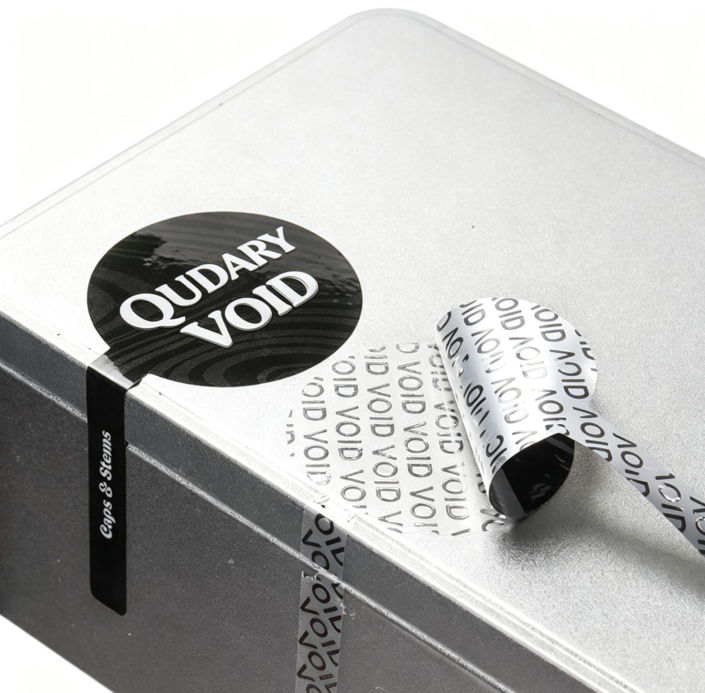
Custom tamper-proof stickers help manufacturers, brand owners, packaging companies, and distributors identify unauthorized opening, removal, or interference with a product or package. Unlike ordinary product labels, these security stickers reveal tampering through a visible VOID message, a broken pattern, surface damage, adhesive residue, or material fragmentation.
For B2B buyers, the right solution depends on more than the printed design. Label material, adhesive performance, packaging surface, opening method, storage conditions, and production process all affect whether the security feature works as intended.
This guide explains the main types of custom tamper-evident stickers, compares competing technologies, outlines the customization process, and provides practical recommendations for sourcing labels in bulk.
What Are Custom Tamper-Proof Stickers?
Custom tamper-proof stickers, more accurately called custom tamper-evident stickers or security labels, are adhesive labels designed to show visible signs when someone tries to remove, open, transfer, or alter them.
Depending on their construction, they may:
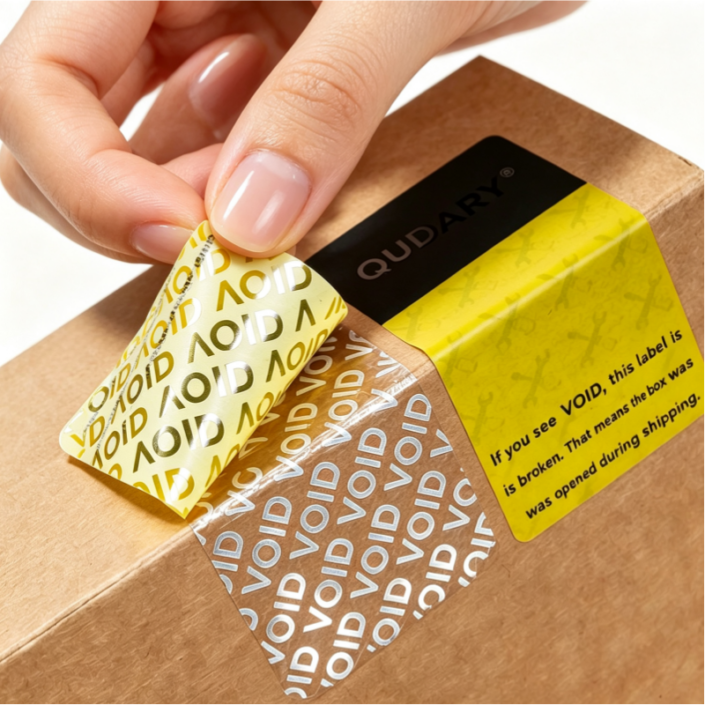
- Reveal a hidden “VOID,” “OPENED,” or customized message.
- Leave a permanent pattern or residue on the packaging surface.
- Break into small pieces when someone tries to remove them.
- Tear along a predetermined line when a sealed package is opened.
- Carry unique serial numbers, barcodes, QR codes, or brand-specific security graphics.
The purpose is to make unauthorized access easier to detect and to discourage casual tampering. However, no sticker alone can guarantee that a product is impossible to open, counterfeit, or reseal. High-risk applications may require additional packaging barriers, authentication systems, traceability, or controlled distribution.
According to Avery Dennison’s security-labeling materials, established technologies include VOID labels, frangible films, fiber-tear labels, and tear-based seals. Each provides a different type of visible evidence and should be selected according to the application. Source: Avery Dennison, Security Solutions.
Who Needs Custom Tamper-Evident Stickers?
Custom security labels are used across many B2B industries.
| Industry | Typical application | Recommended starting solution |
|---|---|---|
| Cosmetics and skincare | Sealing cartons, jars, and product boxes | VOID or destructible labels |
| Electronics | Warranty seals and component identification | VOID polyester or destructible labels |
| Food and beverage | Sealing takeaway containers, bottles, and cartons | Tear-resistant paper or film seals |
| Pharmaceuticals and healthcare | Packaging integrity indicators and product identification | Application-specific tamper-evident packaging |
| E-commerce and logistics | Sealing shipping cartons and reusable containers | Tear seals or VOID labels |
| Automotive and industrial equipment | Warranty identification and service-access control | Durable VOID labels or serialized security labels |
| Luxury goods | Packaging seals and brand-protection features | Customized VOID, holographic, or multi-feature labels |
| Asset management | Identification of access points and equipment | Serialized labels with QR codes or barcodes |
Procurement note: The best label for a cardboard cosmetics box may not be suitable for a textured plastic enclosure or a metal equipment panel. Buyers should specify the actual application surface and the expected opening process before selecting a material.
Types of Custom Tamper-Proof Stickers
1. VOID Security Stickers
VOID stickers display a hidden message or pattern when someone attempts to remove the label. Depending on the construction, the message may appear on the label, the substrate, or both.
Common customization options include:
- White, silver, or other selected face colors
- Standard or custom VOID messages
- Company logos and warning text
- Sequential numbering and barcode printing
- Different adhesive and residue configurations
Best for: Electronics, warranty seals, product cartons, branded packaging, and access-control applications.
One important distinction is the residue requirement. Some VOID constructions leave a visible message with little or no adhesive residue, while others are designed to leave a permanent mark on the labeled surface. Avery Dennison documents different VOID constructions for these distinct purposes. Source: Avery Dennison, Security Labelling Solutions.
2. Destructible Vinyl Stickers
Destructible labels use a fragile face material that breaks or fragments when removal is attempted. The label is difficult to lift in one intact piece and transfer to another product.
They are useful when the security requirement is to prevent clean removal rather than simply reveal a message.
Best for: Warranty seals, product authentication labels, small electronic devices, and applications where label transfer is a concern.
Limitation: Very fragile materials can be difficult to apply to small, curved, or uneven surfaces. Test label size, die-cut design, and application method together.
3. Tamper-Evident Paper Stickers
Paper-based security stickers are often used to seal cartons, bags, takeaway packaging, and other paper-compatible surfaces. They may rely on tearing, fiber damage, or a permanent adhesive to make removal visible.
They can combine branding and security text in one label, such as a logo with “Sealed for Your Protection.”
Best for: Food delivery, retail cartons, e-commerce packaging, and high-volume package sealing.
Limitation: Paper may be less suitable than film for applications involving moisture, abrasion, or prolonged outdoor exposure. The actual performance depends on the paper, coating, adhesive, and package surface.
4. Tear-Strip and Slit Security Stickers
These stickers incorporate cuts, slits, notches, or a designed tear path. When the user opens the package or removes the sticker, the material tears and cannot be restored to its original condition without visible damage.
They are especially useful when customers need a clear indication that a box, bag, or food container has been opened.
Best for: Takeaway packaging, delivery cartons, consumer product boxes, and selected retail packaging.
The tear pattern must be designed around the package-opening method. A seal that is too narrow, poorly positioned, or applied to an unsuitable surface may not provide reliable evidence.
5. Holographic and Multi-Feature Security Stickers
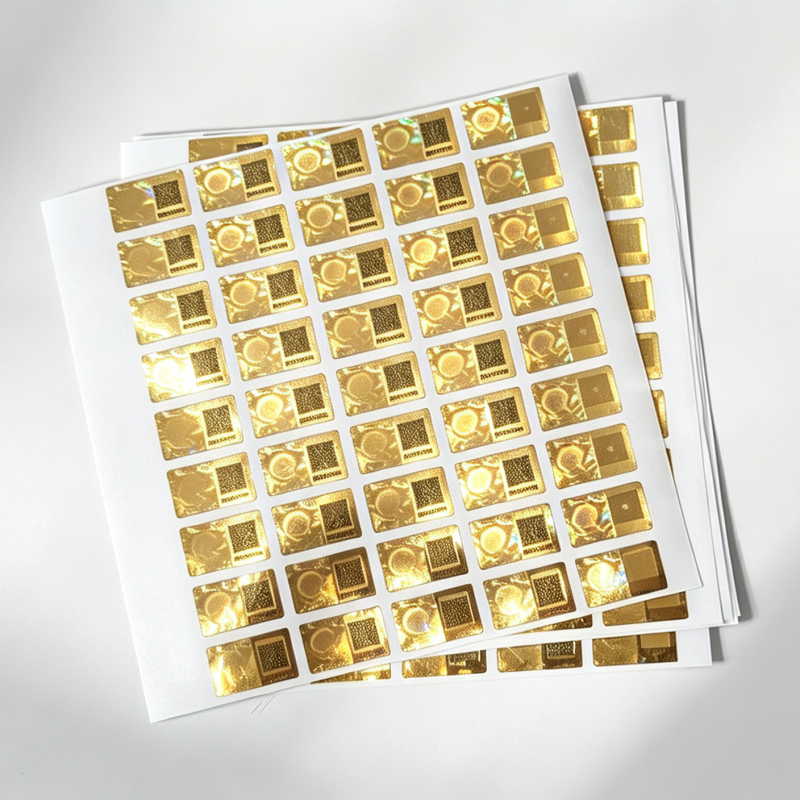
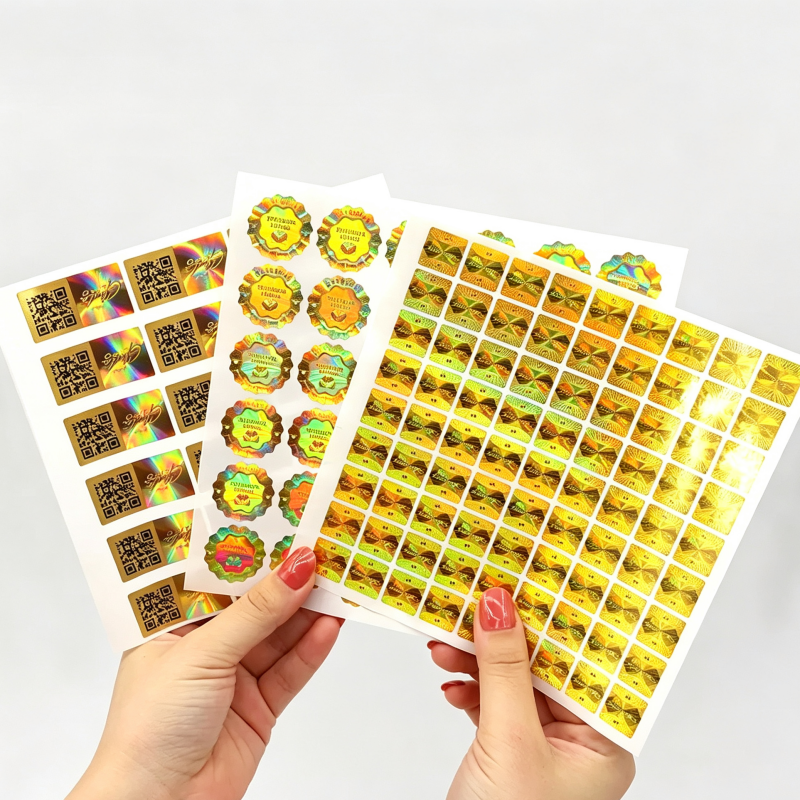
Holographic labels use optical effects for visual identification. They can be combined with VOID technology, serial numbers, microtext, QR codes, or other brand-specific features.
These features make unauthorized copying harder, especially when the label design is controlled and authentication information is managed properly.
Best for: Luxury packaging, high-value electronics, certificates, branded components, and products at risk of counterfeiting.
Important: A holographic appearance alone does not prove authenticity. For stronger protection, combine visible security features with unique identifiers and a verification process.
6. Serialized Tamper-Evident Stickers
Serialized labels carry unique numbers or machine-readable information, such as a barcode, QR code, or Data Matrix code. When integrated with a controlled database, they can connect a label to a product, batch, warranty record, or inspection history.
Best for: Warranty administration, industrial components, distribution tracking, and product authentication programs.
Buyers choosing this option should confirm that the supplier can prevent duplicate serial numbers and deliver the numbering sequence in the required format.
How to Choose the Right Material and Adhesive
A reliable tamper-evident sticker is a complete construction, not just a printed face material. The face stock, adhesive, release liner, die-cut geometry, and target surface work together.
| Material or construction | Main advantage | Typical use | Main consideration |
|---|---|---|---|
| Paper | Print-friendly and suitable for many carton seals | Boxes, bags, food packaging | Moisture and tear performance |
| Polyester (PET) | Dimensional stability and durability | Electronics, industrial labels, VOID seals | Surface energy and adhesive compatibility |
| Fragile vinyl | Breaks into pieces during removal | Warranty and anti-transfer seals | Handling and application difficulty |
| Holographic film | Distinctive visual security effect | Brand protection and premium packaging | Added cost and design control |
| Tear-pattern film | Controlled opening and visible damage | Cartons, delivery packaging | Tear direction and package geometry |
Match the Adhesive to the Substrate
The surface receiving the label is one of the most important factors in specification.
- Cardboard and paperboard: Test whether the label tears the paper fibers or leaves another visible sign when removed.
- Glass: Confirm adhesion to a clean, dry surface and test for residue or transfer behavior.
- Smooth plastic: Identify the plastic type rather than assuming all plastics have the same surface properties.
- Low-surface-energy plastics: Ask the material supplier to recommend a compatible adhesive and verify performance on the actual part.
- Painted or coated metal: Confirm that removal produces the required evidence without unacceptable damage to the coating.
- Textured or curved surfaces: Evaluate the adhesive contact area, label flexibility, and resistance to edge lifting.
3M’s tamper-indicating label materials illustrate why adhesive selection matters: its product range includes different face stocks and adhesive systems designed for different substrates and performance requirements. Source: 3M, Tamper Evident Label Material 7381/7866.
Define the Operating Environment
Before requesting a quotation, provide the supplier with the expected:
- Application temperature
- Storage and operating temperature range
- Exposure to water, oil, cleaning agents, or UV light
- Surface condition and cleanliness
- Required adhesion and tamper-evidence timing
- Expected storage and distribution duration
Do not assume that a sticker suitable for indoor carton sealing will perform equally well on outdoor equipment or a surface exposed to chemicals.
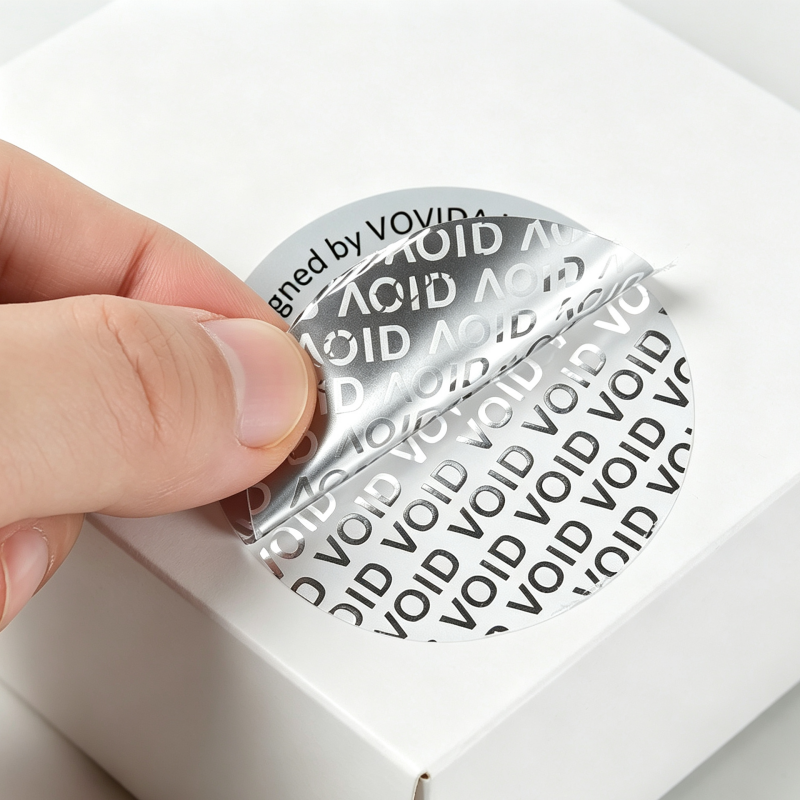
Custom Tamper-Proof Stickers: Competitor and Technology Comparison
For B2B sourcing, “competitor analysis” is most useful when it compares the available technical approaches rather than simply comparing supplier names. Different suppliers specialize in different security constructions, order quantities, and customization capabilities.
| Solution category | Main strength | Potential limitation | Best fit |
|---|---|---|---|
| Standard paper tamper seals | Simple construction and efficient printing | Less suitable for harsh environments | High-volume carton and delivery seals |
| VOID security labels | Clear visual indication after removal | Performance depends on substrate and VOID construction | Warranty seals and electronics |
| Destructible labels | Difficult to remove intact and transfer | Can be harder to apply and handle | Product identification and anti-transfer needs |
| Holographic security labels | Strong visual differentiation | Visual effects alone do not guarantee authentication | Premium brands and anti-counterfeiting programs |
| Serialized security labels | Supports tracking and verification workflows | Requires number control and potentially a database | Traceability, warranties, and distribution |
| Multi-feature custom labels | Can combine visible and data-based controls | More design coordination and potentially higher cost | Higher-risk products and branded goods |
How Major Material Suppliers Differ
Avery Dennison: Its published security-label portfolio covers VOID, frangible film, fiber-tear, and tear-based constructions. Buyers evaluating its materials should focus on which construction matches their required tamper evidence, rather than assuming all security labels work in the same way. Official product guide.
3M: Its tamper-indicating materials include VOID polyester and adhesive options designed for different surfaces. This makes substrate compatibility an important point to compare when selecting a material for plastic, metal, or coated packaging. Official product page.
Custom label converters and manufacturers: These suppliers may offer more direct control over label dimensions, artwork, printing, die-cutting, numbering, roll formats, and packaging. Their suitability depends on documented material options, sample performance, production consistency, and quality control—not simply on whether they claim to offer a low factory price.
How should a B2B buyer decide? Compare suppliers using the same specification sheet. Request samples on the same target substrate, test the same removal method, and compare the visible result, adhesive behavior, print quality, lead time, and total landed cost.
What Determines the Cost of Custom Tamper Proof Stickers?
There is no single reliable price for all custom tamper-proof stickers. The quotation depends on the construction, label size, order volume, printing requirements, and application conditions.
The principal cost factors are:
- Security technology: Standard tear seals, VOID labels, destructible films, and multi-feature security labels require different materials and processes.
- Material and adhesive: Specialty films and adhesives designed for challenging surfaces may cost more than basic paper constructions.
- Dimensions and die-cutting: Larger labels generally use more material; intricate shapes may require additional tooling or setup.
- Printing and finishing: Multiple colors, metallic effects, holographic elements, variable data, and protective coatings affect production costs.
- Order quantity: Setup costs are distributed across the order differently at small and large volumes.
- Variable data and serialization: Unique sequential numbers, barcodes, and QR codes require additional data preparation and verification.
- Packaging and delivery: Roll direction, core size, roll diameter, individual packing, freight, and delivery terms influence the final cost.
For an accurate comparison, request quotations with the same label size, material, adhesive, security feature, print coverage, quantity, roll specifications, and delivery terms. A low unit price isn’t always the best value if the label fails during application or doesn’t provide the intended tamper evidence.
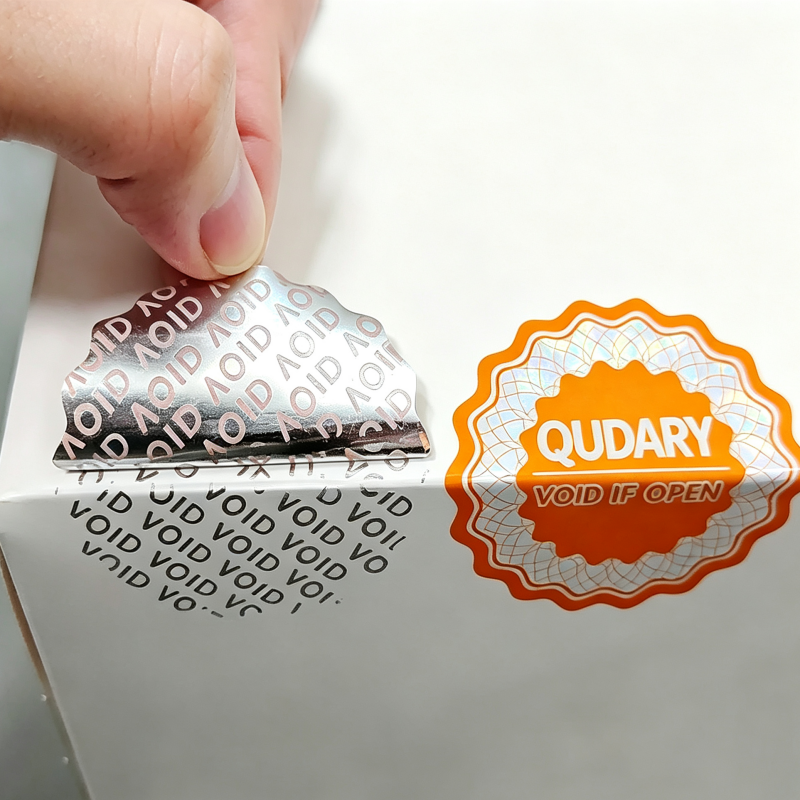
How to Customize Tamper Proof Stickers: A Step-by-Step Process
A structured customization process reduces the risk of ordering a security label that looks correct but fails in actual use.
Step 1: Define the Security Objective
Start with the problem you need to solve.
For example:
- Detect whether a package has been opened.
- Prevent a warranty label from being transferred intact.
- Reveal removal attempts on an electronic device.
- Seal a food-delivery container.
- Identify a product and connect it to a unique tracking record.
These objectives may require different constructions. A package seal that tears when opened may not suit a warranty label that must leave a permanent VOID message.
Step 2: Provide the Packaging and Surface Details
Send the supplier photographs or samples of the target packaging. Include the substrate type, surface texture, curvature, coating, and available application area.
If the label crosses a carton flap or container opening, show exactly where it will be placed. Geometry affects both seal performance and ease of use for the end customer.
Step 3: Select the Tamper-Evidence Mechanism
Choose the intended visible result:
- A VOID message on the label or substrate
- Material fragmentation
- Fiber tearing or surface damage
- A controlled tear when opening
- A serialized label linked to a verification system
If you need more than one protection method, specify which feature is intended to detect tampering and which is intended to support authentication or tracking.
Step 4: Confirm Materials, Adhesive, and Size
Determine the face material, adhesive type, label dimensions, shape, liner, and application format. For automated production, confirm whether the labels should be supplied on rolls and specify the roll direction, core diameter, and maximum roll diameter.
Do not finalize the specification based only on a catalog sample. Evaluate the label on the actual packaging material.
Step 5: Submit Artwork and Variable Data
Provide the logo, colors, wording, barcode or QR code, serial-number format, and any required security graphics.
For serialized labels, confirm:
- The start and end of the number sequence
- Whether leading zeros must be retained
- Whether codes must be unique across batches
- The required barcode or QR code format
- Whether a digital record of the sequence is required
The supplier should confirm the artwork and variable-data layout before production.
Step 6: Review a Sample or Pre-Production Proof
Check more than appearance. Verify:
- Print sharpness and color consistency
- Label dimensions and die-cut accuracy
- Adhesion to the actual substrate
- The result after attempted removal
- Whether the label can be transferred or reapplied
- Barcode or QR code readability, where applicable
- Compatibility with the intended application method
For demanding applications, request a physical sample. A digital artwork proof cannot establish adhesive performance or the actual tamper-evidence result.
Step 7: Approve Mass Production and Quality Checks
Once the sample passes the agreed tests, approve the production specification. Ask the supplier to document the material construction, artwork version, quantity, numbering sequence, and agreed acceptance criteria.
For repeat orders, retain a reference sample and use the same test method to compare new batches.
Step 8: Confirm Packaging and Delivery
Specify roll or sheet format, labels per roll, core size, roll direction, carton packing, shipping marks, and delivery terms. These details are particularly important for automated labeling lines and multi-site distribution.
Common Buyer Problems and Practical Solutions
Problem 1: The Sticker Peels Off Without Showing Evidence
Likely causes: The adhesive is unsuitable for the substrate, the surface is contaminated, or the label is applied under unsuitable conditions.
Solution: Identify the exact surface material, clean it according to the packaging or equipment manufacturer’s instructions, and test a compatible adhesive construction. Include the actual application temperature and any surface coating in the supplier brief.
Problem 2: The VOID Message Does Not Appear Clearly
Likely causes: The label construction is not matched to the surface, the required transfer behavior is misunderstood, or the label has not been tested under the intended removal conditions.
Solution: Define exactly where the message should appear and what residue is acceptable. Approve the construction only after removal tests on the target substrate.
Problem 3: The Sticker Breaks During Transport
Likely causes: The material is too fragile for the handling conditions, or the label geometry creates unintended stress.
Solution: Review the package design, label dimensions, and tear pattern. Test representative cartons through normal handling and distribution before approving a fragile construction for mass production.
Problem 4: The Label Damages Packaging That Must Remain Presentable
Likely causes: The label leaves adhesive residue or removes the surface coating when peeled away.
Solution: Consider a non-residue VOID construction or another design that displays tampering without damaging the underlying surface. Verify that the chosen option still provides the required evidence.
Problem 5: Counterfeiters Copy the Printed Design
Likely causes: The label relies on a logo or visible graphic alone, without controlled identifiers or additional verification.
Solution: Combine a tamper-evident construction with unique serial numbers, controlled QR codes, difficult-to-reproduce graphics, and a verification workflow where justified. Keep numbering records secure and define how duplicates or invalid codes will be handled.
Problem 6: A Supplier’s Sample Performs Well, but Bulk Production Is Inconsistent
Likely causes: The approved material specification is incomplete, production materials change, or acceptance criteria are not documented.
Solution: Record the approved construction, artwork, dimensions, and test method. Set batch inspection criteria and retain reference samples. For high-risk applications, agree on performance testing before placing the full order.
Quality Testing and Compliance Considerations
The correct test depends on the application. A useful B2B inspection plan may include:
| Test | What to check | Why it matters |
|---|---|---|
| Visual inspection | Print defects, color, surface damage | Ensures consistent appearance |
| Dimensional inspection | Label size, die-cut, and registration | Supports accurate application |
| Adhesion check | Edge lifting and bond consistency | Reduces premature detachment |
| Removal test | VOID transfer, tearing, fragmentation, or residue | Verifies the intended evidence |
| Environmental test | Performance after relevant temperature, moisture, or chemical exposure | Checks suitability for the operating environment |
| Code verification | Barcode or QR readability and sequence integrity | Supports traceability and data control |
| Application-line trial | Feeding, dispensing, and placement | Reduces production interruptions |
Testing should reproduce the real application as closely as practical. A test on clean glass does not prove performance on coated cardboard or textured plastic.
For regulated products, buyers must also review the requirements that apply to the product and destination market. In the United States, 21 CFR 211.132 addresses tamper-evident packaging for specified over-the-counter human drug products. A security sticker may form part of a packaging system, but choosing a label alone does not establish regulatory compliance. Assess the complete package design, application, labeling statements, and applicable rules.
How to Choose a Reliable Custom Tamper-Proof Sticker Supplier
For importers, packaging companies, and brand owners, supplier evaluation should cover technical ability and production reliability.
Before placing a bulk order, ask the supplier:
- Which VOID, destructible, tear-seal, and other security constructions can you supply?
- Can you recommend a material and adhesive for our exact substrate?
- Can you produce custom sizes, shapes, colors, logos, and variable data?
- Can you maintain controlled sequential numbering without duplicates?
- Can you provide physical samples for testing?
- What quality checks are performed during production?
- Can you supply rolls compatible with our labeling equipment?
- What are the MOQ, sample lead time, production lead time, and shipping terms?
- Can you provide relevant technical data and material documentation?
- How do you match repeat orders to the approved sample and specifications?
Perfect Label is a professional label manufacturing company. We are a comprehensive enterprise integrating R&D, design, production, and sales. Contact us for anti-counterfeiting label solutions. A capable supplier should explain the trade-offs between available constructions rather than recommending the same label for every application.
Frequently Asked Questions
Are custom tamper proof stickers really tamper-proof?
No sticker can guarantee that tampering is impossible. The more accurate term is “tamper-evident.” These labels are designed to reveal visible signs of opening, removal, or transfer. Their effectiveness depends on the construction, substrate, application, and conditions of use.
Can I print my company logo on tamper-evident stickers?
Yes. Custom labels can incorporate logos, colors, warning text, product information, serial numbers, barcodes, QR codes, and selected security graphics. The available options depend on the material and printing process.
Can tamper-evident stickers be removed without residue?
Some constructions are designed to reveal a tampering message without leaving adhesive residue on the substrate. Others intentionally leave a mark or residue. Specify the required removal result before choosing the material.
Are VOID stickers better than destructible stickers?
Neither is universally better. VOID labels reveal a message or pattern when removal is attempted, while destructible labels fragment during removal. Choose VOID technology when a visible message is useful; choose a destructible construction when preventing intact transfer is the main objective. Test both if the application has competing requirements.
Can tamper-evident stickers be used on plastic and metal?
Yes, but the adhesive must be compatible with the actual surface. Plastic types, coatings, textures, and surface contamination can affect performance. Test the proposed construction on the real product before ordering in bulk.
Can custom security stickers include QR codes and serial numbers?
Yes. These features can support identification, tracking, warranty administration, and product verification. For meaningful authentication, you should control the identifiers and connect them to a verification process. A printed QR code alone does not prove a product is genuine.
What information should I provide to get a quotation?
Provide the label dimensions, quantity, substrate, desired tamper-evidence mechanism, artwork, print colors, adhesive requirements, operating environment, roll or sheet format, variable-data requirements, and destination country. If you have a sample of the package, provide photographs or a physical sample where possible.
Should I test samples before placing a bulk order?
Yes. Sample testing is especially important for security labels because results depend on how the label interacts with the target surface. Confirm adhesion, removal behavior, print quality, code readability, and compatibility with your application process before approving mass production.
Final Recommendation for B2B Buyers
The best custom tamper-proof sticker is not necessarily the one with the most security features or the lowest unit price. It is the construction that reliably produces the required visible evidence on your actual packaging, works with your application process, and meets your business and regulatory requirements.
Start by defining the tampering risk, packaging substrate, required removal result, and operating environment. Then compare VOID, destructible, tear-seal, and serialized options using physical samples and consistent acceptance criteria.
A complete supplier specification should cover material, adhesive, label dimensions, security mechanism, artwork, variable data, roll format, testing, quality control, and delivery terms. This approach helps B2B buyers reduce production risk, improve package integrity, and make more reliable sourcing decisions.
References and Authoritative Sources
- U.S. Electronic Code of Federal Regulations (eCFR) — 21 CFR § 211.132: Tamper-evident packaging requirements.
- Avery Dennison — Security Solutions: VOID, frangible, fiber-tear, and tear-based label technologies.
- Avery Dennison — Security Labelling Solutions: Different VOID constructions and applications.
- 3M — Tamper Evident Label Material 7381/7866.
Meta description: Discover custom tamper proof stickers for B2B packaging, including VOID, destructible, and tear-seal labels. Compare materials, customization steps, and supplier selection tips.

Leave a Reply
Want to join the discussion?Feel free to contribute!