
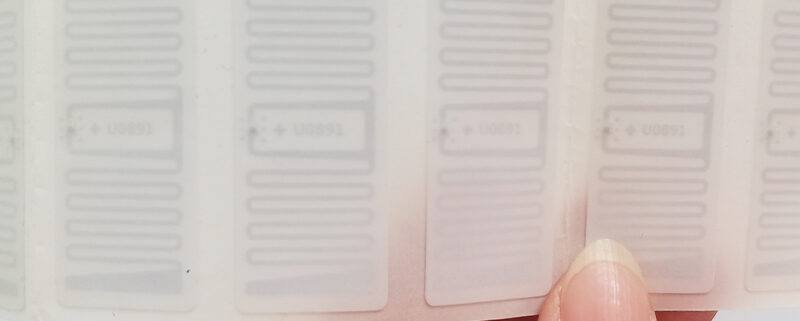
RFID Labels and Smart Labels: The Future of Product Tracking.
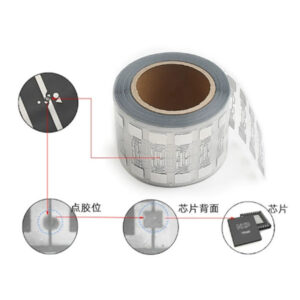
As businesses look for faster inventory management, better product traceability, automated identification, and more connected packaging, RFID Labels and Smart Labels are becoming increasingly important across manufacturing, retail, logistics, healthcare, pharmaceuticals, electronics, and consumer products.
Unlike conventional printed labels, smart labels can connect physical products with digital information. Depending on the technology selected, a label can identify an individual product, record inventory information, support automated scanning, enable product authentication, or provide customers with digital content.
However, buyers searching for RFID Labels and Smart Labels are usually not looking only for a definition. Their actual search intent is more commercial and practical:
- What are RFID labels and smart labels?
- How do RFID labels work?
- What is the difference between RFID, NFC, and ordinary labels?
- Which RFID chip should I choose?
- Can RFID labels be customized?
- What materials are suitable for RFID labels?
- Where are RFID labels used?
- Are RFID labels waterproof?
- How much do RFID labels cost?
- Can RFID labels be used for inventory and supply-chain management?
- How can I choose a suitable RFID label manufacturer?
This guide answers these questions from the perspective of product selection, application, customization, and procurement.
What Are RFID Labels?
RFID Labels are adhesive labels that combine a printed label structure with an RFID inlay.
An RFID inlay generally consists of:
- RFID chip
- Antenna
- Substrate
- Adhesive or label construction
The chip stores identification or other data, while the antenna communicates with an RFID reader through radio frequency technology.
Unlike a traditional barcode, an RFID label does not necessarily need direct line-of-sight scanning.
A typical RFID system includes:
RFID Label → RFID Reader → Antenna → Software/Database
When an RFID reader sends a radio-frequency signal, the RFID tag responds according to the type of RFID technology being used. The reader then transfers the captured information to the relevant software system.
This makes RFID particularly useful when businesses need to identify large numbers of products or assets quickly.
What Are Smart Labels?
Smart Labels are a broader category of labels that combine conventional printed information with additional technologies.
Depending on the application, smart labels may incorporate:
- RFID
- NFC
- QR codes
- Barcodes
- Sensors
- Electronic components
- Variable data
- Digital authentication technologies
Therefore:
RFID labels are one type of smart label.
But not every smart label is an RFID label.
For example, a label containing a unique QR code linked to a product database can be considered a smart or connected label, even though it does not contain an RFID chip.
RFID Labels vs. Traditional Labels
Traditional labels primarily communicate information visually.
They may include:
- Product name
- Logo
- Ingredients
- Instructions
- Barcode
- Batch number
- Price
RFID labels add electronic identification capabilities.
| Feature | Traditional Label | RFID Label |
|---|---|---|
| Printed information | Yes | Yes |
| Product identification | Visual | Electronic + visual |
| Line-of-sight scanning | Usually required for barcode | Generally not required |
| Multiple-item reading | Limited | Possible |
| Unique identification | Barcode/serial number | RFID UID/data |
| Automated inventory | Limited | Strong |
| Real-time data integration | Limited | Available |
| Rewritable data | No | Depends on chip |
| Digital tracking | Limited | Strong potential |
This does not mean RFID should replace every barcode.
In many applications, RFID and barcodes work effectively together.
How Do RFID Labels Work?
The working principle depends on the RFID frequency and tag type.
For a typical passive UHF RFID label, the process is approximately:
Step 1: Reader Sends a Signal
The RFID reader generates a radio-frequency field.
Step 2: RFID Antenna Receives Energy
A passive RFID tag can harvest energy from the reader’s signal.
Step 3: Chip Activates
The RFID chip uses the available energy to operate.
Step 4: Tag Responds
The chip communicates its stored information through the antenna.
Step 5: Reader Captures the Data
The reader receives and processes the response.
Step 6: Software Uses the Information
The data can be connected to:
- Inventory systems
- Warehouse management systems
- ERP systems
- Retail systems
- Production systems
- Logistics platforms
This allows physical products to become identifiable digital objects within a company’s information system.
What Are the Main RFID Frequencies?
RFID technology is commonly divided into several frequency categories.
LF RFID
Low-frequency RFID typically operates around 125–134 kHz.
It is often used for:
- Animal identification
- Access control
- Industrial applications
- Specialized asset identification
LF systems generally have relatively short read ranges.
HF RFID
High-frequency RFID operates at 13.56 MHz.
HF technology is used in:
- Access cards
- Library systems
- Smart cards
- Product authentication
- NFC-related applications
HF is particularly suitable for applications requiring short-range communication.
UHF RFID
UHF RFID commonly operates in the region of approximately 860–960 MHz, depending on regional regulations.
It is widely used for:
- Retail inventory
- Warehouse management
- Logistics
- Supply-chain tracking
- Apparel
- Asset management
UHF is often selected when longer reading distances and faster bulk identification are important.
RFID Labels vs. NFC Labels
RFID and NFC are related technologies, but their practical applications can differ significantly.
| Feature | RFID Labels | NFC Labels |
|---|---|---|
| Typical applications | Inventory, logistics, tracking | Consumer interaction, authentication |
| Reading distance | Can be relatively long | Usually very short |
| Bulk scanning | Excellent for suitable UHF systems | Generally not the main use |
| Smartphone interaction | Usually not directly | Strong |
| Retail inventory | Excellent | Limited |
| Product authentication | Possible | Excellent |
| Digital marketing | Possible | Excellent |
| Supply-chain applications | Strong | Limited |
NFC operates within the HF RFID family, but it is specifically designed for short-range communication and interaction with compatible devices.
For example:
UHF RFID → warehouse inventory
NFC → smartphone product authentication
Of course, real-world applications can overlap.
Why Are RFID Labels Becoming Popular?
The primary reason is simple:
Businesses want to identify physical products faster and with less manual work.
Traditional inventory systems often depend heavily on:
- Barcode scanning
- Manual counting
- Visual inspection
- Data entry
RFID can automate portions of this process.
Potential benefits include:
- Faster inventory counting
- Reduced manual scanning
- Better product visibility
- Automated identification
- Improved traceability
- Better inventory accuracy
- Reduced handling time
For companies processing thousands or millions of individual items, these advantages can become commercially significant.
RFID Labels for Retail
Retail is one of the most important applications for RFID technology.
RFID labels can be attached to:
- Clothing
- Shoes
- Bags
- Accessories
- Consumer electronics
- General merchandise
A retailer can use RFID to identify products during:
- Receiving
- Storage
- Inventory counting
- Replenishment
- Order fulfillment
- Returns
For example, instead of manually scanning each barcode one by one, a suitable RFID system can identify multiple tagged products within a reading area.
This can make inventory operations more efficient.
RFID Labels for Warehousing
Warehouses handle large numbers of products moving through multiple stages.
RFID labels can help identify goods during:
Receiving → Storage → Picking → Packing → Shipping
A unique RFID identity can be associated with:
- SKU
- Product model
- Batch
- Serial number
- Location
- Shipment
- Customer order
The exact data structure depends on the company’s software architecture.
RFID therefore becomes more valuable when it is integrated into a complete warehouse-management system rather than used as an isolated label.
RFID Labels for Supply Chain Management
Supply chains involve multiple parties.
A product may move from:
Manufacturer → Distributor → Warehouse → Retailer → Customer
Each transfer creates opportunities for inventory discrepancies.
RFID can help companies improve visibility by assigning products, cases, pallets, or assets with unique identifiers.
Potential applications include:
- Shipment verification
- Receiving confirmation
- Inventory tracking
- Distribution management
- Asset tracking
- Return management
This can help companies reduce uncertainty about where products are located within their supply network.
RFID Labels for Manufacturing
Manufacturers can use RFID labels throughout production.
Potential applications include:
- Raw material identification
- Work-in-progress tracking
- Finished product identification
- Production-line management
- Tool tracking
- Container tracking
- Quality control
For example, a reusable production container can carry an RFID tag.
When it enters a production area, the system can identify the container automatically and associate it with the relevant process.
This can reduce manual identification work.
RFID Labels for Healthcare
Healthcare environments involve large numbers of products and assets.
RFID labels may be used for:
- Medical equipment
- Pharmaceutical products
- Laboratory samples
- Hospital assets
- Consumables
- Patient-related identification systems
However, healthcare applications require careful consideration of privacy, regulatory, data-security, and operational requirements.
RFID should therefore be implemented as part of a properly designed identification system rather than treated simply as a replacement for ordinary labels.
RFID Labels for Pharmaceuticals
Pharmaceutical manufacturers and distributors can use RFID technology to improve product identification and supply-chain visibility.
Potential applications include:
- Medicine packaging
- Pharmaceutical cartons
- Medical devices
- High-value healthcare products
- Inventory management
- Authentication systems
RFID can be combined with printed information and other security technologies.
For higher-security applications, a smart label may combine:
RFID + Serialization + QR Code + Tamper Evidence
This creates multiple layers of product identification and protection.
RFID Labels for Electronics
Electronics products often have high unit values and complex supply chains.
RFID labels can be used for:
- Electronic components
- Finished devices
- Spare parts
- Equipment
- IT assets
- Warranty management
A serialized RFID label can associate an individual product with its production and service records.
This can be useful for:
- Warranty verification
- Asset management
- Product returns
- Maintenance records
- Inventory control
RFID Labels for Automotive Parts
Automotive manufacturing requires precise identification of components.
RFID labels can be used for:
- Parts
- Returnable containers
- Pallets
- Production tools
- Work-in-progress
- Spare parts
In industrial environments, label durability becomes particularly important.
The label may need to resist:
- Oil
- Grease
- Water
- Abrasion
- Heat
- Chemicals
The correct face material and adhesive must be selected for the application.
What Materials Are Used for RFID Labels?
The RFID inlay itself is only one part of the final product.
The outer label material can be customized.
Paper RFID Labels
Paper is economical and provides excellent printability.
It is suitable for:
- Cartons
- Retail products
- General inventory
- Logistics labels
Paper is often a practical choice when the label does not require extreme environmental resistance.
PP RFID Labels
PP provides better resistance to:
- Moisture
- Tearing
- Handling
It can be used for products exposed to more demanding conditions.
PET RFID Labels
PET provides higher durability and dimensional stability.
It can be considered for:
- Industrial applications
- Electronics
- Outdoor assets
- Durable equipment
Synthetic Paper
Synthetic materials can balance paper-like printing performance with improved durability.
The best material depends on the environment, label lifespan, and budget.
Can RFID Labels Be Waterproof?
Yes, RFID labels can be manufactured with waterproof or water-resistant constructions.
However, waterproof performance depends on the complete label structure, not simply the RFID chip.
Important factors include:
- Face material
- Adhesive
- Printing
- Lamination
- Edge protection
- Application surface
For example, a synthetic face material combined with a suitable permanent adhesive and protective finish may be more appropriate for a wet environment than an ordinary paper label.
For products exposed to water, condensation, or outdoor conditions, physical testing is recommended before mass production.
Can RFID Labels Be Used on Metal?
Metal can affect RFID performance, especially with conventional RFID tag constructions.
When the RFID antenna is placed directly on or very close to metal, the radio-frequency characteristics can change significantly.
For metal applications, specialized on-metal RFID tags can be used.
These may incorporate:
- Spacer layers
- Specialized antenna designs
- Foam materials
- Rigid constructions
Typical applications include:
- Machinery
- Metal containers
- Tools
- Industrial equipment
- IT assets
- Automotive components
If the label will be attached to metal, always tell the RFID label manufacturer before selecting the inlay.
What RFID Chips Can Be Used?
Different applications require different chip capabilities.
Common UHF RFID chip families may include products from major RFID semiconductor manufacturers.
Selection factors can include:
- Memory capacity
- Read sensitivity
- Operating characteristics
- Security features
- Encoding requirements
- Compatibility with the reader system
For HF and NFC applications, different chip families are available.
The right chip should therefore be selected based on:
Frequency + Reader + Application + Required Memory + Security + Read Environment
Choosing a chip simply because it is popular can lead to unnecessary cost or inadequate performance.
What Can Be Customized on RFID Labels?
A major advantage of working with a custom RFID label manufacturer is that the label can be developed around the application.
Customization may include:
Label Size
Examples include:
- Small product labels
- Medium retail labels
- Large logistics labels
Label Shape
Possible formats include:
- Rectangle
- Square
- Circle
- Oval
- Custom die-cut
Printing
Options can include:
- CMYK
- Spot colors
- Variable data
- Serial numbers
- Barcodes
- QR codes
Material
Options include:
- Paper
- PP
- PET
- Synthetic paper
- Specialty materials
Adhesive
The adhesive can be selected according to:
- Glass
- Plastic
- Metal
- Cardboard
- Painted surfaces
RFID Inlay
The inlay can be selected according to:
- Frequency
- Read distance
- Application
- Required memory
- Reader compatibility
RFID Labels With QR Codes
RFID and QR codes do not have to compete.
They can complement each other.
For example:
RFID → automated warehouse identification
QR Code → customer-facing digital information
A product can therefore have both technologies on the same label.
This can support different users:
- Warehouse staff → RFID
- Retail employees → RFID/barcode
- Customers → QR code
- Service technicians → QR code/RFID
Combining technologies can make one physical label useful across multiple stages of the product lifecycle.
Smart Labels for Product Authentication
Counterfeit products remain a concern in many industries.
Smart labels can help brands create digital authentication systems.
A label may contain:
- Unique QR code
- NFC chip
- RFID chip
- Serial number
- Holographic feature
- Tamper evident construction
The customer can scan or interact with the label to access authentication information.
For example:
Physical product → Unique smart label → Digital product record
This creates a connection between the physical product and the brand’s digital platform.
The exact effectiveness of an authentication system depends on the underlying software and data architecture, not just the presence of a QR code or RFID chip.
RFID Labels and Product Traceability
Traceability means being able to understand the movement or history of a product.
An RFID label can provide a unique identifier linked to information in a database.
Depending on the system, this may include:
- Manufacturing batch
- Production date
- SKU
- Serial number
- Warehouse location
- Shipment
- Distribution channel
For example:
RFID ID: 123456789
can be associated within the customer’s software system with:
Product: Model A
Batch: B2026-08
Production: August 2026
Destination: European warehouse
The RFID label itself does not automatically create traceability. The value comes from integrating the physical identifier with appropriate software.
RFID Labels and Inventory Accuracy
One of the most attractive applications for RFID is inventory management.
A barcode system generally requires scanning each barcode.
RFID systems can automate identification under suitable conditions.
This can potentially improve:
- Inventory visibility
- Stock counting
- Replenishment
- Receiving
- Shipping verification
For retailers and warehouses with large SKU volumes, even small improvements in inventory processes can have meaningful operational value.
What Affects RFID Reading Performance?
RFID performance is not determined by the label alone.
Important factors include:
1. Material
Paper, plastic, glass, liquid, and metal can interact differently with radio waves.
2. Tag Orientation
The orientation of the tag relative to the reader antenna can influence performance.
3. Reader Power
Reader settings affect the available operating range.
4. Antenna Design
Different antenna designs are optimized for different applications.
5. Product Density
When many products are packed together, tag interaction and RF conditions can change.
6. Environment
Warehouses containing metal racks, liquids, machinery, or other RF-interacting materials may require specialized testing.
This is why a good RFID project should involve real-world sample testing.
How to Choose the Right RFID Labels
Before ordering RFID labels, buyers should evaluate several questions.
What Are You Tracking?
Is it:
- Apparel?
- Cartons?
- Pallets?
- Electronics?
- Industrial equipment?
- Medical assets?
- Automotive components?
What Is the Packaging Material?
Is the label attached to:
- Paperboard
- Plastic
- Glass
- Metal
- Wood
What Reading Distance Do You Need?
A short-range application may require a different RFID technology from a warehouse gate where longer-range identification is required.
How Much Data Do You Need?
If the RFID chip only needs a unique identifier, a lower-memory option may be sufficient.
If additional information must be stored on the chip, memory requirements change.
Does the Label Need to Be Durable?
For long-term industrial applications, PET or other synthetic materials may be more appropriate than standard paper.
Do You Need Custom Printing?
Consider whether you require:
- Logo
- Product information
- Barcode
- QR code
- Serial number
- Variable data
Common Mistakes When Buying RFID Labels
Choosing the RFID Inlay Without Testing
An inlay that works well on cardboard may not perform the same way on metal or liquid-filled products.
Focusing Only on Read Range
Maximum laboratory read range does not necessarily equal real-world performance.
Ignoring the Adhesive
A technically excellent RFID inlay is useless if the label does not stay attached.
Using the Wrong Frequency
The RFID frequency should match the reader system and regional requirements.
Assuming RFID Replaces Everything
RFID can complement existing barcode and digital systems rather than necessarily replacing them completely.
Ordering Large Quantities Before Testing
Always test samples on the actual products and under real operating conditions.
How Are Custom RFID Labels Manufactured?
A typical custom RFID label manufacturing process may include:
1. Application Analysis
The manufacturer identifies:
- Product
- Packaging
- Environment
- Reading requirements
- Label dimensions
2. RFID Inlay Selection
The manufacturer selects an appropriate chip and antenna configuration.
3. Label Material Selection
Choose paper, PP, PET, or another material.
4. Printing
Brand artwork and product information are printed.
5. Encoding
When required, RFID data can be encoded according to the customer’s system.
6. Die Cutting
The label is cut to the required size and shape.
7. Quality Inspection
The finished labels can be checked for:
- Print quality
- Dimensions
- Adhesion
- Encoding
- RFID performance
8. Packaging
Labels can be supplied in rolls, sheets, or other formats, depending on application and equipment requirements.
RFID Labels Manufacturer and Custom Smart Label Solutions
For companies implementing RFID for the first time, choosing a supplier based solely on label price can be risky.
The RFID label needs to work as part of the customer’s complete system.
A capable RFID Labels manufacturer should understand:
- RFID inlays
- Label materials
- Adhesives
- Printing
- Encoding
- Product surfaces
- Application environments
- Reader compatibility
- Custom dimensions
Perfect Label provides customized RFID and smart label solutions for manufacturers, retailers, distributors, logistics companies, and brand owners.
Custom solutions can include:
- UHF RFID Labels
- HF RFID Labels
- NFC Smart Labels
- RFID Product Labels
- RFID Logistics Labels
- RFID Asset Labels
- RFID Inventory Labels
- RFID Security Labels
- On-Metal RFID Labels
- Serialized RFID Labels
- QR + RFID Labels
The label structure can be customized according to the customer’s product and operating environment.
RFID Labels vs. Smart Labels: Which Should You Choose?
The right solution depends on the application.
Choose RFID Labels When:
- You need automated identification
- Large numbers of products must be scanned
- Inventory efficiency is important
- Supply-chain tracking is required
- Manual barcode scanning is inefficient
Choose NFC Smart Labels When:
- Smartphone interaction is important
- Customer authentication is required
- Digital product information is needed
- Brand engagement is a priority
Choose QR Smart Labels When:
- Low-cost digital connectivity is needed
- Customers need to scan the product
- Product information should be easily updated online
Choose RFID + QR Labels When:
- Both automated inventory and consumer interaction are required
Choose RFID + Tamper Evident Labels When:
- Product authentication and package security are both important
There is no universal “best” smart label. The right solution is the one that matches the workflow.
The Future of Smart Labels
Smart labels are moving beyond simple identification.
Future applications are increasingly connected with:
- Digital product passports
- Supply-chain visibility
- Product authentication
- Automated inventory
- Circular economy initiatives
- Recycling information
- Connected packaging
- Digital customer experiences
For example, a future product label may simultaneously provide:
Product Identification + Traceability + Authentication + Consumer Information
This creates a bridge between physical products and digital systems.
For manufacturers and brands, that means the label can become an active part of the product lifecycle rather than simply a printed piece of packaging.
FAQ About RFID Labels and Smart Labels
What is an RFID label?
An RFID label is a printed adhesive label containing an RFID inlay made from a chip and antenna. It enables products, assets, or packaging to be identified electronically using compatible RFID readers.
What is a smart label?
A smart label combines traditional printed labeling with additional technologies such as RFID, NFC, QR codes, sensors, or variable digital information.
Are RFID labels waterproof?
Yes. RFID labels can be produced using water-resistant or waterproof materials and adhesives. Select the complete label construction based on the environment.
Can RFID labels be printed with a company logo?
Yes. Custom RFID labels can include logos, product information, barcodes, QR codes, colors, serial numbers, and other printed content.
Can RFID labels work on metal?
Yes, but standard RFID labels may not perform optimally when directly attached to metal. Specialized on-metal RFID tags are generally more appropriate for metal surfaces.
What is the difference between RFID and NFC?
NFC is a short-range technology based on HF RFID technology and is optimized for close-range interaction, particularly with compatible smartphones. RFID, especially UHF RFID, is widely used for inventory, logistics, and automated identification.
Can RFID labels replace barcodes?
RFID can replace barcodes in some applications, but many businesses use RFID and barcodes together. The best approach depends on the operational requirements and existing IT infrastructure.
How much do RFID labels cost?
The price depends on the RFID inlay, chip, material, size, printing, encoding, adhesive, quantity, and special requirements. Large-volume orders generally have different unit economics from small customized batches.
Do RFID labels require a battery?
Many commonly used passive RFID labels do not require an internal battery. They obtain operating energy from the reader’s RF field. Active and battery-assisted RFID products are different categories.
How far can an RFID label be read?
Read distance varies considerably depending on RFID frequency, chip, antenna, reader, environment, tag orientation, and product material. Determine a practical reading distance through testing rather than relying solely on a generic specification.
Final Thoughts
RFID Labels and Smart Labels are transforming the traditional role of product labeling.
A conventional label tells customers what a product is.
A smart label can help a business identify, track, authenticate, manage, and connect that product.
For retail, RFID can improve inventory visibility. For logistics, it can support automated identification. For manufacturing, it can connect products and assets with production processes. For brands, NFC and QR technologies can create digital customer experiences. For high-value products, smart labels can combine identification with authentication and tamper evidence.
The most important step is choosing the right technology for the application.
Consider:
Product → Material → Environment → Reading Distance → RFID Frequency → Chip → Adhesive → Printing → Software Integration
For a simple retail application, a standard paper UHF RFID label may be sufficient. For an outdoor industrial asset, a durable PET construction may be more appropriate. For metal equipment, an on-metal RFID solution may be necessary. For consumer authentication, NFC or QR technology may provide greater value.
Ultimately, the best RFID Labels and Smart Labels are not simply the ones with the most advanced chips. They are the ones that reliably solve a specific identification, tracking, authentication, or digital-connectivity problem while fitting the product’s physical environment and the customer’s business workflow.

International Trade Sales professional with 10+ years of experience in the label printing and packaging industry. Specializing in export sales, global market development, and client relationship management, with expertise in custom labeling solutions across paper and film substrates (PP, PE, PET). Serving global clients across FMCG, pharmaceutical, and personal care sectors. Committed to delivering quality, consistency, and trust in every shipment.


Leave a Reply
Want to join the discussion?Feel free to contribute!