
Choosing the right Custom Labels is not simply a matter of selecting a color, logo, or attractive finish. A successful product label must do several jobs at once: identify the product, communicate essential information, reinforce the brand, withstand the intended environment, and stay securely attached to the packaging throughout its expected life.
The challenge is that no universal label construction works for every product. A refrigerated beverage label faces moisture and condensation. A cosmetic label may come into contact with oils and water. An industrial equipment label may need to withstand heat, abrasion, chemicals, or outdoor exposure. A pharmaceutical label may need space for barcodes, variable data, lot numbers, and regulatory information.
This guide explains how to choose custom labels based on the actual application environment, including material, adhesive, size, printing, finishing, durability, and regulatory requirements. Whether you are a product brand, importer, distributor, packaging buyer, or manufacturer, the goal is to help you specify a label that performs correctly—not just one that looks good on a computer screen.
What Are Custom Labels?
Custom Labels are product identification and branding labels manufactured according to specific requirements rather than using a fixed, off-the-shelf format.
A custom label can be personalized in almost every part of its construction, including:
- Size and shape
- Face material
- Adhesive
- Printing method
- Colors
- Surface finish
- Protective coating
- Embossing
- Foil stamping
- Variable data
- Barcode or QR code
- Security features
- Packaging format
For pressure-sensitive labels, the basic construction generally consists of a face material, adhesive layer, and release liner. The combination of these components determines how the label prints, bonds to the product, and performs in its final environment.
This is why the phrase “standard white label” is not really a sufficient technical specification. The correct construction depends on the product surface, environmental conditions, expected service life, and application process.
Why Choosing the Right Custom Labels Matters
A label can fail even when the artwork and printing quality are excellent.
Common problems include:
- Edge lifting
- Complete label peeling
- Wrinkling
- Water damage
- Ink fading
- Scratching
- Poor barcode readability
- Adhesive residue
- Cracking at low temperatures
- Shrinking at high temperatures
- Chemical attack
- Difficult application
- Inconsistent positioning
For example, a paper label that performs perfectly on a dry cardboard box may not be appropriate for a chilled beverage bottle exposed to condensation.
Similarly, a strong permanent adhesive may be unnecessary for a temporary promotional label where the customer needs to remove the label cleanly.
The best Custom Labels therefore start with the application rather than the artwork.
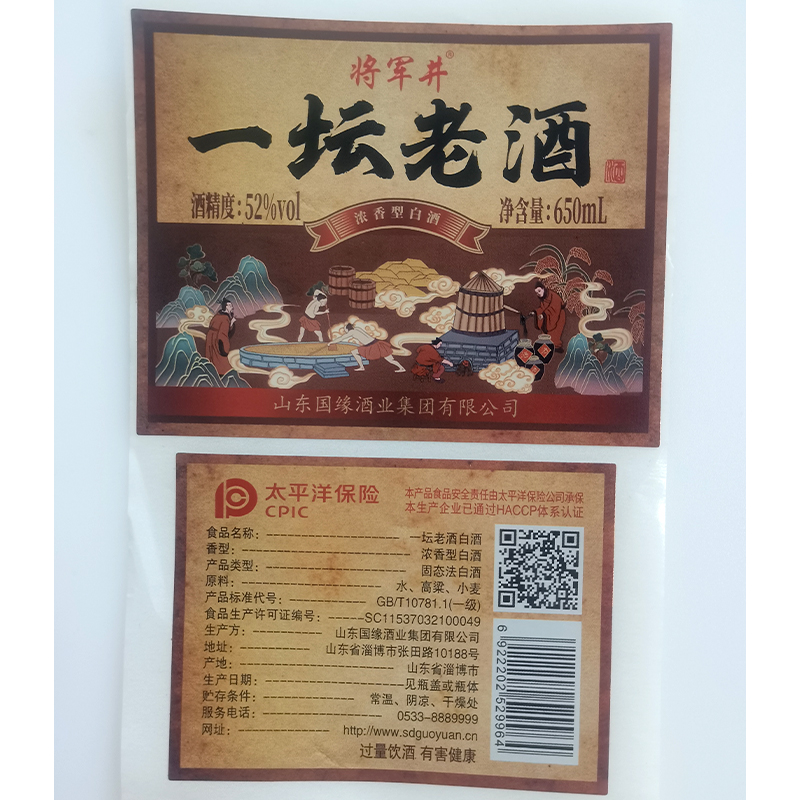
Step 1: Identify Where Your Custom Labels Will Be Used
The first question to ask is:
What will happen to the product after the label is applied?
Consider the complete journey:
Manufacturing → filling → labeling → packaging → transportation → storage → retail → customer use
A label that survives production but fails during transportation is still a failed label.
Before choosing materials, identify:
- Indoor or outdoor use
- Expected temperature range
- Humidity
- Water exposure
- Oil or grease exposure
- Chemical exposure
- UV exposure
- Abrasion
- Refrigeration or freezing
- Handling frequency
- Expected label lifetime
This application-first approach is increasingly important because label performance depends on the interaction between the surface, environment, face material, and adhesive.
Step 2: Choose the Right Custom Label Material
The face material is the visible part of the label and strongly influences appearance and durability.
Paper Custom Labels
Paper is one of the most economical choices for general-purpose applications.
Common options include:
- Coated paper
- Uncoated paper
- Kraft paper
- Art paper
- Textured paper
- Pearl paper
- Cotton paper
Paper labels are particularly suitable for:
- Dry food packaging
- Wine
- Gift packaging
- Retail products
- General consumer goods
- Promotional products
They can also support premium finishing such as embossing and hot stamping.
However, ordinary paper is generally less suitable for prolonged exposure to water, condensation, or harsh outdoor conditions unless an appropriate coating or construction is used.
BOPP Custom Labels
BOPP, or biaxially oriented polypropylene, is widely used where durability and moisture resistance are important.
BOPP labels can be produced in:
- White
- Clear
- Metallic
- Gloss
- Matte
Typical applications include:
- Food and beverage
- Cosmetics
- Personal care
- Household products
- Refrigerated products
- Industrial packaging
A major advantage is that polypropylene film does not absorb water like ordinary paper.
PET Custom Labels
PET is a stronger synthetic option for demanding applications.
It can be considered when the label requires:
- High dimensional stability
- Tear resistance
- Chemical resistance
- Heat resistance
- Moisture resistance
- Long-term durability
PET labels are commonly considered for:
- Electronics
- Automotive components
- Industrial equipment
- Chemical containers
- Laboratory applications
- Outdoor products
If the product is exposed to significant temperature changes or harsh handling, PET may be a more appropriate starting point than conventional paper.
PP and PE Labels
PP and PE are also useful synthetic materials.
PP is commonly selected for durable packaging and applications requiring moisture resistance.
PE is more flexible and can be useful on squeezable containers or surfaces that require greater conformability.
The correct choice depends on the shape of the package and the expected movement of the container.
Step 3: Choose the Right Adhesive
The adhesive is often the most overlooked part of Custom Labels.
A beautiful label with the wrong adhesive can become a very expensive sticker-shaped problem.
The adhesive needs to match:
Surface + Temperature + Environment + Application Method + Required Lifetime
Common adhesive categories include:
Permanent Adhesive
Designed for long-term bonding.
Suitable for:
- Product packaging
- Industrial equipment
- Electronics
- Automotive components
- Product identification
Removable Adhesive
Designed for applications where the label needs to be removed cleanly.
Useful for:
- Promotions
- Temporary identification
- Retail displays
- Reusable packaging
- Temporary instructions
Repositionable Adhesive
Allows the label to be adjusted during application.
This can be useful when:
- Manual application is used
- Positioning accuracy is important
- Operators need additional adjustment time
Freezer-Grade Adhesive
Suitable for applications involving refrigeration or freezing.
The important point is that low-temperature performance should be tested under the actual conditions rather than assumed from the adhesive name alone.
High-Temperature Adhesive
Designed for applications involving elevated temperatures.
These labels are commonly considered for:
- Automotive components
- Electronics
- Industrial machinery
- Thermal processing
- Laboratory equipment
Adhesive performance depends on factors including initial tack, ultimate adhesion, surface energy, temperature, and application conditions.
Step 4: Match Custom Labels to the Product Surface
Not every container has the same surface characteristics.
Glass
Glass is commonly used for:
- Wine bottles
- Beverage bottles
- Cosmetics
- Food jars
- Pharmaceutical containers
Labels generally bond well to clean glass, but moisture, condensation, dust, and surface contamination still need to be considered.
Cardboard
Cardboard is common in:
- Boxes
- Shipping cartons
- Retail packaging
- Food packaging
Paper-based labels can be an economical choice for dry cardboard applications.
Plastic
Plastic packaging is more complicated.
Different plastics have different surface-energy characteristics, and some can be more challenging for adhesive bonding.
Examples include:
- PP
- PE
- PET
- HDPE
- PVC
If you are labeling a plastic container, tell the manufacturer the exact substrate rather than simply saying “plastic.”
Metal
Metal surfaces are common in:
- Industrial equipment
- Automotive parts
- Cans
- Machinery
- Chemical containers
The label may need to withstand temperature, oil, abrasion, or outdoor exposure depending on the application.
Step 5: Choose Custom Labels According to Industry
Different industries have different label priorities.
Custom Labels for Food & Beverage
Food and beverage labels need to combine attractive branding with practical durability.
Typical applications include:
- Water bottles
- Juice
- Sauces
- Jams
- Coffee
- Snacks
- Frozen food
- Wine
- Spirits
For refrigerated beverages, moisture resistance becomes particularly important because condensation can weaken unsuitable paper constructions.
For products sold in the United States, food labeling is also subject to federal requirements. FDA guidance covers areas including identity, net quantity, ingredients, allergens, nutrition labeling, and claims.
Therefore, the label supplier should receive the correct regulatory artwork from the brand or compliance team before production.
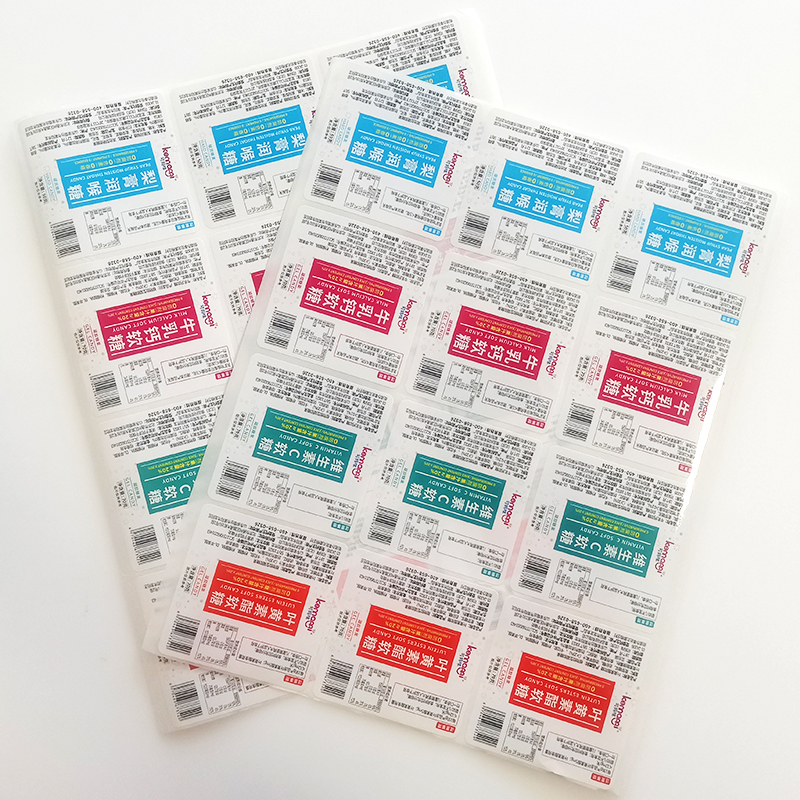
Custom Labels for Cosmetics & Beauty Products
Cosmetic packaging often requires a combination of:
Premium appearance + moisture resistance + chemical resistance + strong adhesion
Applications include:
- Skincare
- Shampoo
- Conditioner
- Facial serum
- Body lotion
- Perfume
- Makeup
- Hair care products
Cosmetic packaging may come into contact with water, oils, creams, and alcohol-containing formulations.
Premium finishes can include:
- Soft-touch
- Matte
- Gloss
- Gold foil
- Silver foil
- Embossing
- Spot UV
- Transparent film
For premium beauty brands, the label is often part of the product’s perceived value.
Custom Labels for Wine & Liquor
Wine labels have unusually high visual requirements.
Common materials include:
- Specialty art paper
- Cotton paper
- Textured paper
- Kraft paper
- Pearl paper
- Clear PET
- Foil materials
Popular decorative techniques include:
- Gold hot stamping
- Silver hot stamping
- Embossing
- Debossing
- Spot UV
- Metallic printing
The label must also be compatible with the bottle’s curvature.
A wine label that looks excellent in a design file may wrinkle when applied to a curved bottle if the dimensions or material are not correctly selected.
Custom Labels for Pharmaceutical & Healthcare Products
Pharmaceutical and healthcare labels require much more than attractive printing.
Typical requirements include:
- Product identification
- Lot or batch information
- Expiration information
- Barcodes
- Variable data
- Warning information
- Traceability
- Tamper evidence
For medical devices in the EU, UDI requirements are particularly important. The European Commission explains that UDI supports unambiguous device identification and traceability, while the UDI carrier is placed on the device label and higher packaging levels as required.
The EU’s current framework also specifies that UDI is an addition to, rather than a replacement for, other applicable labeling requirements.
For these applications, the label supplier should work from approved technical artwork and specifications rather than assume regulatory content.
Custom Labels for Electronics & Industrial Equipment
Industrial labels often prioritize durability over decorative appearance.
Typical requirements include resistance to:
- Heat
- Cold
- Chemicals
- Oil
- Abrasion
- UV exposure
- Moisture
Applications include:
- Electronic components
- Machinery
- Electrical equipment
- Automotive parts
- Control panels
- Industrial tools
- Equipment identification
Synthetic materials such as PET may be considered for applications requiring greater dimensional stability and durability.
For industrial labels, the question is often not:
“Does the label look good?”
but:
“Will the label still be readable after three years of real-world use?”
That’s a much better question.
Step 6: Choose Custom Labels for Outdoor Applications
Outdoor products create a different set of challenges.
The label may be exposed to:
- Sunlight
- Rain
- Snow
- Temperature changes
- Dust
- Dirt
- Abrasion
- Humidity
For long-term outdoor applications, consider:
Synthetic face material + appropriate outdoor adhesive + UV-resistant printing/protection
Applications can include:
- Outdoor equipment
- Garden products
- Agricultural machinery
- Electrical cabinets
- Vehicle components
- Construction equipment
A label intended for six months outdoors should not necessarily use the same construction as one expected to remain readable for five years.
Define the required service life before choosing the material.
Step 7: Consider High and Low Temperature Conditions
Temperature is one of the most important factors when selecting industrial Custom Labels.
High-temperature applications
Potential examples:
- Automotive manufacturing
- Electronics
- Industrial processing
- Machinery
- Laboratory equipment
Low-temperature applications
Potential examples:
- Frozen food
- Refrigerated beverages
- Cold-chain logistics
- Laboratory storage
- Medical storage
Temperature cycling
This is even more challenging.
For example:
Room temperature → refrigeration → room temperature → freezing → room temperature
Repeated expansion and contraction can place stress on both the adhesive and face material.
If your product experiences temperature cycling, tell the label manufacturer the actual temperature range and exposure duration.
Do not simply ask for a “strong label.”
Give the supplier data.
Step 8: Select the Right Label Size and Shape
Base label size on the product, not the printing machine alone.
Consider:
- Container dimensions
- Curved surfaces
- Available flat area
- Information volume
- Barcode size
- Logo proportions
- Application equipment
Custom shapes can also improve brand recognition.
Popular options include:
- Rectangle
- Square
- Circle
- Oval
- Arch
- Shield
- Die-cut logo shapes
- Irregular custom shapes
For cylindrical packaging, excessive label height can create wrinkles around curved areas.
For very small containers, the challenge is often fitting enough readable information into a limited surface area.
Step 9: Choose the Right Printing Method
Match the printing method to the order quantity, artwork complexity, variable data requirements, and budget.
Digital Printing
Digital printing is useful for:
- Short and medium runs
- Multiple SKUs
- Variable data
- Fast artwork changes
- Product testing
- Personalized labels
It reduces the need for traditional plate preparation and can be particularly useful for brands launching new products.
Flexographic Printing
Flexographic printing is widely used for larger-volume label production.
It can be suitable when:
- Quantities are high
- Artwork is stable
- Consistency is important
- Unit economics matter
Offset Printing
Offset printing can provide high-quality reproduction for appropriate label constructions and larger production requirements.
The best production method depends on the project, not a blanket rule that one technology is always better.
Step 10: Select the Right Finishing
Finishing can transform a basic label into a premium branding element.
Matte Finish
Creates a softer, understated appearance.
Suitable for:
- Premium food
- Wine
- Cosmetics
- Natural products
Gloss Finish
Provides a bright and vibrant appearance.
Useful for:
- Consumer products
- Beverage labels
- Promotional packaging
Soft-Touch Finish
Creates a smooth tactile surface.
It is particularly effective for premium cosmetics and luxury packaging.
Hot Foil Stamping
Gold and silver foil are among the most popular options.
Other metallic effects may also be available.
Embossing
Raises selected elements from the label surface.
It can be used for:
- Logos
- Brand names
- Decorative patterns
Spot UV
Adds selective gloss to specific areas while leaving the rest of the label matte.
For premium products, combining specialty paper + embossing + foil stamping can create a much stronger tactile experience than simply using a glossy label.
Step 11: Consider Smart and Security Features
Modern Custom Labels can do more than identify products.
They can also provide traceability and authentication.
Available options may include:
- QR codes
- Barcodes
- Variable serial numbers
- RFID
- NFC
- Holographic elements
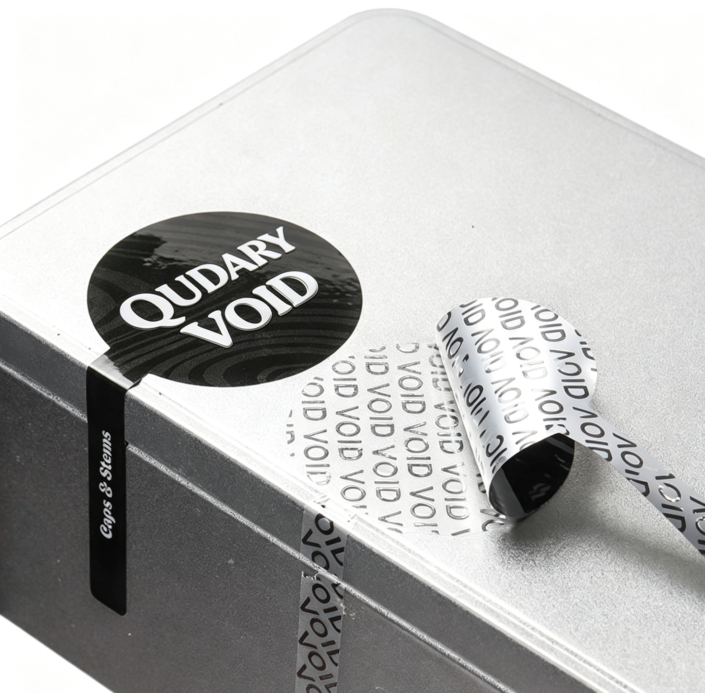
- Tamper-evident materials
- Void labels
- Security inks
- Traceability codes
These features can help brands address:
- Counterfeit products
- Inventory tracking
- Product authentication
- Consumer engagement
- Supply-chain visibility
For medical devices, for example, UDI carriers can use automatic identification and data-capture technologies such as linear barcodes, 2D matrix barcodes, or RFID where applicable.
Step 12: Make Sure Your Custom Labels Meet Regulatory Requirements
Regulatory requirements vary significantly by product and destination market.
This is an area where brands should not rely on generic label templates.
For example:
Food
Food products may require information such as:
- Product identity
- Net quantity
- Ingredients
- Allergen information
- Nutrition information
- Manufacturer/distributor information
FDA guidance states that most prepared foods require proper labeling, including nutrition and major allergen information, with requirements governed by applicable US food-labeling laws and regulations.
Hazardous Chemicals
Under OSHA’s Hazard Communication Standard, hazardous chemical labels include elements such as:
- Product identifier
- Signal word
- Hazard statements
- Precautionary statements
- Pictograms
- Supplier identification
Medical Devices
Medical-device labeling may require UDI and other identification information depending on the market and device category.
The important lesson is:
Your label manufacturer can help manufacture the label, but the product owner remains responsible for ensuring that the final regulatory content is correct.
How to Choose Custom Labels for Different Environments
A useful way to simplify the decision is to build a product-to-environment matrix.
| Application | Recommended Starting Direction | Main Concern |
|---|---|---|
| Dry cardboard packaging | Paper | Cost and appearance |
| Food packaging | Paper / BOPP | Moisture and compliance |
| Refrigerated beverages | BOPP / synthetic | Condensation |
| Cosmetics | Art paper / BOPP / PET | Water, oils, appearance |
| Wine bottles | Specialty paper / PET | Appearance and curvature |
| Outdoor equipment | PET / durable film | UV and weather |
| Industrial machinery | PET / durable synthetic | Abrasion and chemicals |
| Frozen products | Synthetic + cold adhesive | Low temperature |
| Electronics | PET / specialized materials | Heat and durability |
| Medical products | Approved label construction | Traceability and compliance |
| Temporary promotions | Removable material | Clean removal |
| Security applications | Security materials | Authentication |
This approach is much more useful than choosing a label simply because another brand uses it.
How to Avoid Common Custom Label Problems
1. Don’t Choose Material Based Only on Price
A cheaper label can become more expensive if it causes:
- Product rejection
- Re-labeling
- Production downtime
- Customer complaints
- Packaging damage
Evaluate the total cost of performance, not only the unit price.
2. Don’t Ignore the Application Surface
Always tell your supplier whether the label is applied to:
- Glass
- PET
- PP
- PE
- Metal
- Cardboard
- Painted surfaces
- Other substrates
3. Don’t Forget the Environment
Tell the manufacturer:
- Temperature
- Humidity
- Water exposure
- Chemical exposure
- Outdoor/indoor use
- Expected service life
4. Don’t Skip Physical Samples
A sample allows you to test:
- Adhesion
- Appearance
- Barcode scanning
- Label positioning
- Material flexibility
- Resistance to water
- Temperature performance
For demanding products, real-world testing is much more valuable than judging a PDF proof alone.
Custom Labels: What Information Should You Give the Manufacturer?
When requesting a quotation, prepare a technical brief.
At minimum, provide:
Product Information
- Product type
- Packaging type
- Application surface
Label Specifications
- Width
- Height
- Shape
- Quantity
- Roll or sheet format
Material
- Paper
- BOPP
- PET
- PP
- PE
- Specialty material
Adhesive
- Permanent
- Removable
- Repositionable
- Freezer
- High-temperature
- Other specialized adhesive
Environment
- Indoor/outdoor
- Temperature
- Humidity
- Water
- Chemicals
- UV
- Abrasion
Printing
- Number of colors
- Digital/flexographic/offset
- Variable data
- Barcode
- QR code
Finishing
- Matte
- Gloss
- Soft-touch
- Foil
- Embossing
- Spot UV
- Lamination
The more complete the specification, the more accurate the manufacturer’s recommendation and quotation can be.
Custom Labels Manufacturer: Why Customization Matters
Perfect Label provides custom label manufacturing and OEM/ODM solutions for brands, manufacturers, distributors, packaging companies, and product developers.
The company can customize the label construction according to:
- Product application
- Packaging material
- Environmental conditions
- Brand requirements
- Label dimensions
- Adhesive requirements
- Printing requirements
- Decorative finishes
- Security requirements
Product categories can include:
- Food & Beverage Labels
- Cosmetic & Beauty Labels
- Pharmaceutical & Healthcare Labels
- Wine & Liquor Labels
- Electronic & Industrial Equipment Labels
- Security Labels
- RFID Tags
- Holographic Labels
- High & Low Temperature Resistant Labels
- Removable Labels
- Static Cling Labels
- 3D Epoxy Labels
- Multi-Layer Labels
- Synthetic Paper Labels
The value of working with a manufacturer is not simply getting a printed sticker. The objective is to develop a label construction that matches the product, environment, branding, and production requirements.
Custom Labels Selection Checklist
Before placing a bulk order, ask these questions:
1. What surface will the label be applied to?
2. What temperature range will it experience?
3. Will it contact water, oil, chemicals, or cleaning agents?
4. How long must the label remain attached?
5. Is the label permanent or removable?
6. Does the product require outdoor durability?
7. Does it require barcode, QR code, RFID, or NFC?
8. Are there regulatory requirements for the destination market?
9. What label size and shape fit the packaging?
10. What finish matches the brand positioning?
11. What quantity is required?
12. Has a physical sample been tested before bulk production?
If you can answer these twelve questions, you are already much closer to specifying the right Custom Labels.
Final Thoughts: The Best Custom Labels Are Application-Specific
The right Custom Labels are not necessarily the most expensive, the thickest, or the most decorative.
They provide the right combination of adhesion, durability, readability, appearance, compliance, and cost for the actual application.
For a premium wine bottle, specialty paper and embossing may be the priority. For a refrigerated beverage, moisture resistance and adhesive performance may matter more. For an industrial machine, chemical and temperature resistance may matter more than decorative effects. For pharmaceutical and medical products, traceability and regulatory information may take priority.
The most reliable selection process is therefore:
Product → Surface → Environment → Material → Adhesive → Size → Printing → Finishing → Testing → Mass Production
Perfect Label can develop customized label solutions around these variables, helping brands move from a basic label concept to a production-ready specification.
If you are sourcing Custom Labels, don’t start with “What is your cheapest price?”
Start with:
“What does this label need to survive?”
That single question can prevent many of the most expensive labeling mistakes.
Related Products

International Trade Sales professional with 10+ years of experience in the label printing and packaging industry. Specializing in export sales, global market development, and client relationship management, with expertise in custom labeling solutions across paper and film substrates (PP, PE, PET). Serving global clients across FMCG, pharmaceutical, and personal care sectors. Committed to delivering quality, consistency, and trust in every shipment.

