

How Much Do RFID Tags Cost? 2026 Price Guide
RFID tags can cost anywhere from a few cents to more than $50 per unit, depending on the technology, materials, chip, durability, and order quantity. For businesses buying RFID labels for retail products, logistics, asset tracking, or industrial applications, the biggest price differences usually come from the tag’s construction and intended use.
For 2026 budgeting, standard passive UHF RFID labels may cost about $0.05–$0.25 per unit, while ruggedized tags for demanding industrial environments may cost $0.50–$5.00 or more. Active RFID tags with batteries and more complex electronics can cost $15–$50 or more per unit. These ranges are indicative rather than guaranteed quotations; actual supplier prices vary by specification and order volume.
For B2B buyers, the right question is not simply, “How cheap can I buy an RFID tag?” It is, “What is the lowest-cost tag that can reliably perform the required job?”
This guide compares RFID tag prices, explains the factors that affect quotations, and provides practical purchasing strategies for importers, manufacturers, wholesalers, retailers, and system integrators.
RFID Tag Price Overview: How Much Should You Budget?
The following table provides indicative 2026 price ranges for common RFID tag types. Prices are expressed in US dollars per tag and should be used for preliminary budgeting, not as binding market quotations.
| RFID tag type | Indicative unit price (USD) | Common applications |
|---|---|---|
| Passive UHF dry inlay | $0.04–$0.10 | Testing, apparel identification, high-volume tagging |
| Passive UHF RFID label | $0.05–$0.25 | Retail inventory, cartons, logistics, product identification |
| Printed NFC/HF sticker | $0.10–$0.50 | Smart packaging, tap-to-open information, selected authentication applications |
| Durable printable RFID label | $0.10–$0.50 | Equipment identification, reusable assets, industrial labeling |
| Ruggedized passive RFID tag | $0.50–$5.00+ | Industrial equipment, reusable containers, selected on-metal applications |
| Laundry RFID tag | $0.40–$1.20 | Linen management, uniforms, commercial laundry |
| Active RFID tag | $15–$50+ | Selected real-time tracking and long-range identification systems |
Different sources quote different constructions, quantities, and sales channels, so the table is a budgeting guide rather than a like-for-like market survey.
One distinction matters: a dry inlay is a basic RFID component, while a finished RFID label may include adhesive, printable face material, converting, encoding, and other services. Directly comparing their prices can be misleading.

How Much Do RFID Tags Cost at Different Order Quantities?
Order volume is one of the most important variables in RFID label purchasing. Large orders can reduce the per-unit impact of setup, material handling, and production operations. However, savings depend on the product specification, supplier capacity, and whether the order uses a standard or custom design.
For standard passive UHF labels, one published 2026 price guide provides the following indicative volume tiers:
| Order quantity | Indicative price per standard passive UHF label |
|---|---|
| Fewer than 1,000 pieces | $0.15–$0.25 |
| 10,000–50,000 pieces | $0.08–$0.12 |
| More than 100,000 pieces | $0.05–$0.07 |
These figures are published market estimates, not a universal supplier price list. The source does not establish a specific price for every order size or specification.
Example: Estimating Your Bulk RFID Label Budget
Suppose your business needs 100,000 standard passive UHF labels and receives a quotation of $0.06 per unit.
- Quantity: 100,000 labels
- Unit price: $0.06
- Estimated label cost: $6,000
If a comparable quotation is $0.10 per unit, the same order would cost $10,000, a $4,000 difference.
This comparison is meaningful only if both quotations cover the same chip, antenna, material, dimensions, printing, encoding, testing, packaging, and delivery terms.
Practical purchasing tip: Ask suppliers to quote at several volume tiers, such as 10,000, 50,000, and 100,000 pieces. This helps you evaluate the benefit of a larger order without committing to excess inventory before demand is established.
What Factors Affect RFID Tag Prices?
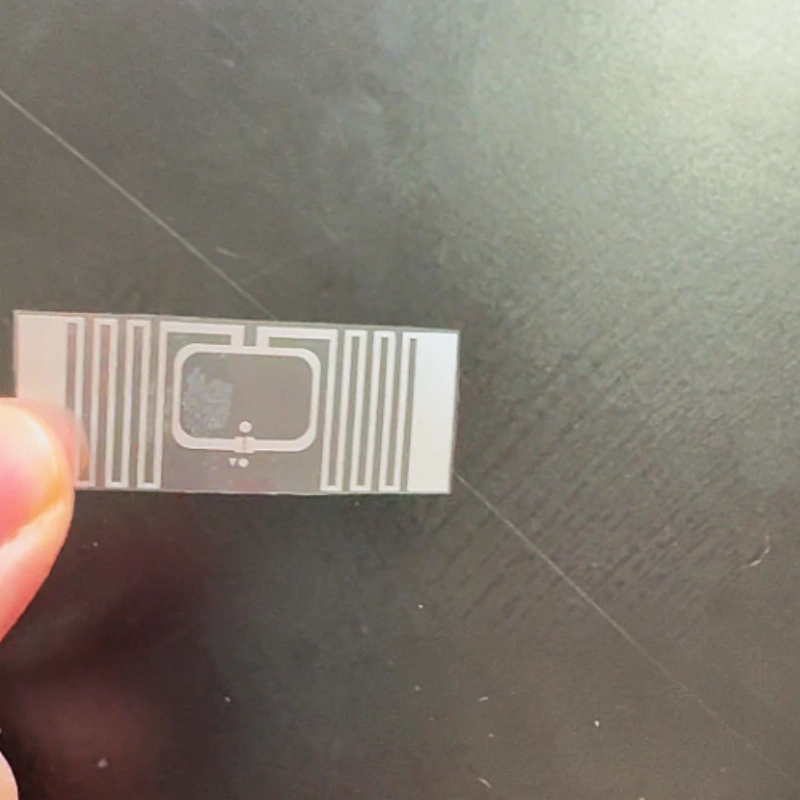
Two RFID tags can look similar but have very different costs. The main reason is that RFID products are engineered for different reading environments, service lives, and business functions.
1. RFID Technology: Passive, Semi-Passive, or Active
The tag’s power architecture strongly affects its price.
Passive RFID tags do not have their own battery. They receive energy from the reader’s field and are widely used for retail, inventory, product identification, and logistics labels. Their relatively simple construction makes low unit costs possible at scale.
Battery-assisted or semi-passive RFID tags use an onboard battery to support selected tag functions, depending on the design. They generally cost more than standard passive tags.
Active RFID tags have their own power source and are used in applications that may require longer-range communication or additional functionality. Their electronics and battery contribute to higher unit prices.
The U.S. Federal Trade Commission’s RFID report explains the differences between passive, semi-passive, and active tags, including how power architecture, antenna design, memory, and operating environment affect performance and cost. Although the report is historical, these distinctions remain useful for understanding the basic technology categories.
For high-volume product identification, passive RFID is often the first option to evaluate. Active RFID is not a direct replacement for a low-cost passive label; it serves different system requirements.
2. Frequency: LF, HF/NFC, or UHF
RFID tags operate at different frequency bands, and the right choice depends on the application.
| Technology | Common use cases | Purchasing considerations |
|---|---|---|
| LF RFID | Selected access, animal identification, and industrial systems | Reader compatibility and the required identification environment |
| HF RFID | Cards, selected industrial applications, and NFC-related uses | Chip features, antenna geometry, and compatible readers |
| UHF RFID | Retail inventory, logistics, supply chain, and bulk identification | Read-zone performance, tag orientation, materials, and reader setup |
UHF is widely used for inventory and logistics because it can support applications where many tagged items must be identified efficiently. NFC is designed for short-range interactions with compatible phones and readers.
Don’t select these technologies based on unit price alone. A lower-cost tag isn’t economical if the equipment already installed in your facility can’t read it reliably.
3. Chip Model and Memory
Different chips provide different memory capacities, identification functions, and security features.
For example, an application that only needs a product identifier may not require the same chip capabilities as a project that stores additional data or needs specialized authentication functions.
Before requesting a quotation, establish:
- Required chip model or acceptable alternatives
- Memory requirements
- Whether tags need unique identifiers
- Whether user data must be encoded
- Whether password protection or other security functions are required
- Compatibility with existing readers and software
For most large-volume identification projects, the best chip meets the functional requirements reliably, not necessarily the one with the most memory.
4. Tag Construction and Materials
Tag construction can significantly affect price.
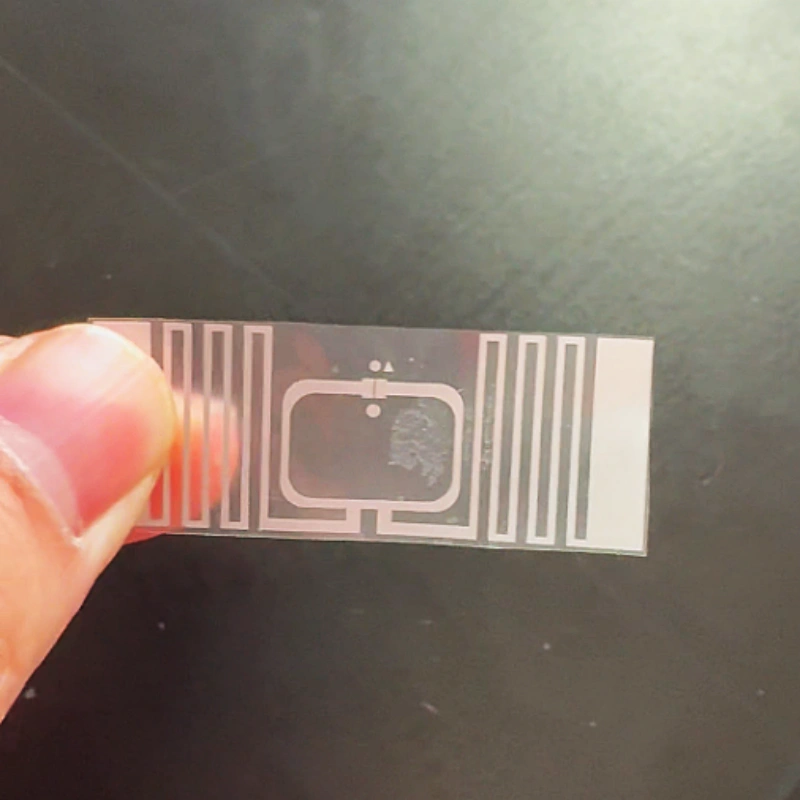
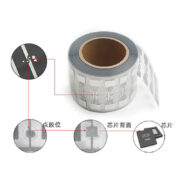
A basic inlay contains the chip and antenna on a substrate. A finished RFID label may add adhesive, a printable face material, a release liner, protective finishing, and converting operations.
Ruggedized tags may use a protective enclosure designed for mechanical impact, moisture, chemicals, temperature variation, or repeated handling. Specialized on-metal tags may need a construction that reduces the effects of metal on the antenna.
These additions increase manufacturing complexity, but they may be necessary for reliable operation.
For example, a paper RFID label intended for a cardboard carton is not equivalent to a rugged tag installed on a metal machine housing. Selecting the cheaper format for an unsuitable environment can lead to read failures, replacement labor, and higher lifecycle costs.
5. Antenna Size and Reading Performance
Antenna design affects how an RFID tag communicates with a reader. The required performance depends on the size and orientation of the tag, the target object, and the surrounding environment.
Smaller labels may be suitable for compact products, but a small form factor can constrain antenna design. Tags attached to metal, liquid-filled containers, or densely packed products may require additional testing or a specialized design.
Instead of asking a supplier for the longest possible reading distance, specify the real operating requirement:
- What is the approximate distance between tag and reader?
- Will items move past a fixed reader or be scanned by hand?
- Will multiple tags need to be read together?
- What materials are directly behind the tag?
- Is the reading environment affected by metal, liquids, or other sources of interference?
The answers help determine whether a standard label will work or whether a more specialized construction is necessary.
6. Printing, Encoding, and Customization
Printing a company logo or barcode can add production steps. Encoding unique data into each tag requires data preparation, programming, and verification.
Typical additional requirements include:
- Company logos and brand colors
- Barcodes or QR codes
- Serial numbers and variable data
- EPC or other required data encoding
- Custom label dimensions and shapes
- Protective laminates
- Special packaging and roll configurations
For serialized orders, buyers should ask how the supplier checks that each printed identifier matches the data programmed into the corresponding chip. This is especially important when RFID labels support inventory control, traceability, or product authentication.
Why Are Some RFID Tags So Much More Expensive?
The main price difference is usually the gap between a low-cost identification label and a tag engineered for a demanding application.
Consider three examples.
Example 1: Retail carton identification
A retailer needs RFID labels for cardboard cartons. A standard passive UHF label may be sufficient if it performs reliably with the retailer’s readers and software. In this case, the buyer should focus on consistent reading, label dimensions, data encoding, and volume pricing.
Example 2: Industrial equipment tracking
A manufacturer wants to track metal equipment through maintenance and production workflows. A standard label may not read reliably on the metal surface. A specialized on-metal tag or rugged enclosure may be necessary, increasing the unit cost.
Example 3: Laundry and reusable textile tracking
A commercial laundry operator needs tags to withstand repeated handling and laundering cycles. The tag may need a specialized structure designed for textile integration and repeated exposure to washing. A cheap paper label is not an appropriate substitute.
The lesson is simple: the correct comparison is between tags that can perform the same job under the same conditions.
How to Reduce RFID Tag Costs Without Sacrificing Performance
For B2B buyers, cost optimization should start with the application specification rather than negotiating the unit price alone.
1. Choose the Simplest Suitable Tag
Avoid paying for rugged housings, additional memory, or specialized security functions unless the application requires them. At the same time, do not remove features that are necessary for reliable reading or service life.
2. Standardize Tag Dimensions
If your products can use a standard label size, you may avoid some custom tooling or converting costs. Standard dimensions can also simplify repeat orders.
3. Optimize Order Quantity
Request tiered quotations and compare the unit savings with storage, cash-flow, obsolescence, and demand risks. Buying more tags is not automatically cheaper overall if a large proportion will remain unused.
4. Confirm Encoding Requirements Early
Determine whether you need blank tags, a shared encoded URL, or individually serialized data. Defining the programming method before production helps prevent avoidable setup changes and rework.
5. Test Samples Before Bulk Production
Test the tag on the actual product, packaging, or equipment. Confirm read performance, attachment, print quality, and data accuracy. This reduces the risk of purchasing a large quantity of unsuitable tags.
6. Compare Total Cost of Ownership
A tag’s unit price is only one part of the cost. Consider the labor required to apply labels, the time needed to scan items, replacement rates, reader compatibility, software integration, and the consequences of missed or incorrect reads.
A tag that costs slightly more may deliver a lower overall cost if it reduces operational failures.
RFID Tag Cost vs. Total RFID System Cost
Businesses sometimes ask how much RFID costs when they are actually planning an entire identification system.
The total project may include more than tags:
| Cost component | What it covers |
|---|---|
| RFID tags or labels | The consumable identification items attached to products or assets |
| RFID readers | Handheld, fixed, or other compatible reading equipment |
| Antennas and accessories | Components needed for the intended reading environment |
| Printers and encoding equipment | Equipment for printing or programming tags when required |
| Software and integration | Inventory systems, middleware, dashboards, and links to existing business systems |
| Installation and testing | Deployment, configuration, validation, and staff training |
| Ongoing support | Maintenance, software updates, replacement tags, and system troubleshooting |
The cost of readers, software, and installation varies widely by system size and complexity. An operation that only needs to scan tags with an existing handheld reader has a different budget from a warehouse installing fixed readers at multiple portals.
A historical retail RFID industry report published by Avery Dennison also separates tag and inlay costs from readers, portals, and software, showing why tag prices shouldn’t be treated as the full deployment budget.
Before calculating ROI, estimate both the upfront investment and recurring operating costs. Then compare them with expected benefits such as reduced manual counting, better inventory visibility, fewer identification errors, or improved asset tracking.
How to Request an Accurate RFID Tag Quotation
A vague inquiry such as “Please quote 50,000 RFID tags” may lead to an inaccurate or incomplete price comparison.
To obtain a useful quotation, provide the following information.
| Information needed | Example |
|---|---|
| Application | Retail inventory, carton identification, industrial assets, laundry |
| RFID technology | UHF, HF/NFC, LF, or a specified chip family |
| Tag construction | Dry inlay, adhesive label, hard tag, on-metal tag, textile tag |
| Dimensions | Required label or tag size |
| Target material | Cardboard, plastic, glass, metal, fabric, or another substrate |
| Chip and data | Required chip model, EPC format, user memory, or unique serialization |
| Printing | Logo, barcode, QR code, variable data, or blank labels |
| Quantity | Estimated order quantity and expected annual demand |
| Reading requirements | Reader type, intended distance, and environmental conditions |
| Delivery | Destination, packaging, and required delivery schedule |
If you are not sure which tag to select, send the supplier a sample of the target product or a detailed description of the application. A technically appropriate recommendation is often more valuable than a quote for an unsuitable low-cost tag.
How to Choose a Reliable RFID Tag Manufacturer
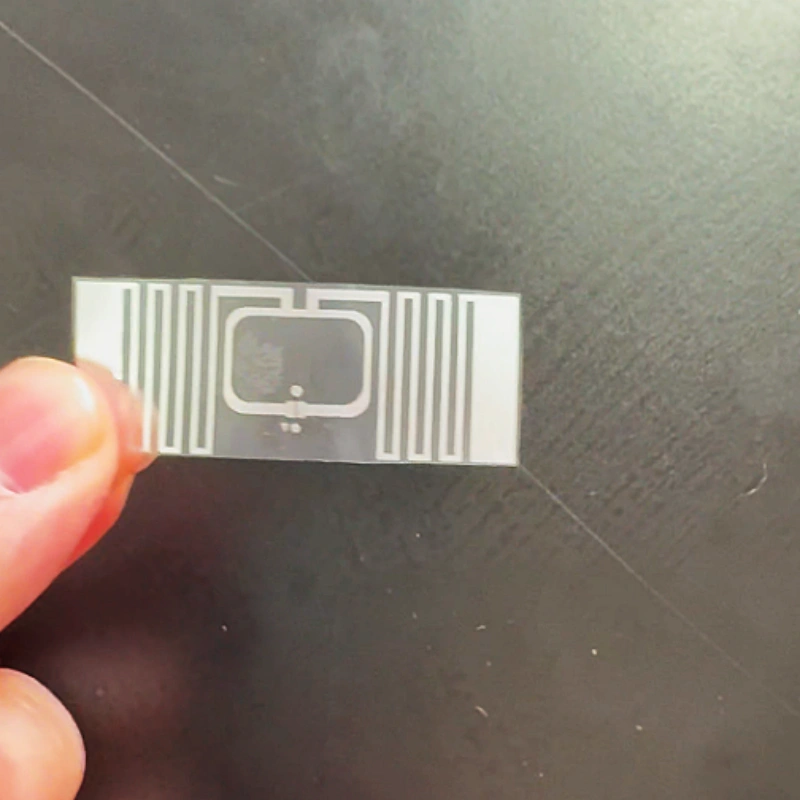
A good RFID Tag supplier should be able to explain the relationship between tag construction, reading performance, application conditions, and cost.
Before placing a bulk order, evaluate the following:
Technical recommendation: Can the supplier recommend a suitable tag based on the target surface, reader, and required performance?
Sample testing: Can the supplier provide samples for testing with your actual products and equipment?
Data handling: If encoding or serialization is required, can the supplier explain how data is prepared, written, and verified?
Quality consistency: Does the supplier define acceptance criteria for printing, dimensions, reading performance, and encoding accuracy?
Quotation transparency: Does the quotation clearly identify the chip, construction, material, customization, programming, packaging, and delivery terms?
Repeat-order control: Can the supplier maintain the approved specification for future production batches?
Application experience: Has the supplier worked with similar applications, such as retail, logistics, industrial assets, or reusable products?
The most reliable purchasing process combines a clear specification, a representative sample, and an agreed quality plan.
Frequently Asked Questions About RFID Tag Costs
1. What is the cheapest RFID tag?
Basic passive RFID inlays are among the lowest-cost options. At high production volumes, some standard UHF inlays may cost only a few cents per unit. The final price depends on the chip, antenna, quantity, and construction.
2. How much does a passive UHF RFID tag cost?
For preliminary budgeting, standard passive UHF labels may cost around $0.05–$0.25 per unit, depending on quantity and specification. Large-volume orders may achieve lower prices for standard constructions, while customized or ruggedized tags cost more.
3. Why are on-metal RFID tags more expensive?
Metal can affect antenna performance. On-metal tags may need a specialized antenna arrangement, isolation layer, or protective housing. These additional materials and engineering requirements increase production costs.
4. Do RFID tags require batteries?
Most standard passive RFID tags do not require batteries. Active tags use their own power source, and battery-assisted designs use an onboard battery for selected functions. These architectures have different costs and application requirements.
5. Is buying RFID tags in bulk cheaper?
Usually, standard tags become less expensive per unit as production quantities increase. However, the exact savings depend on supplier pricing, tag specifications, customization, and order structure. Buyers should compare multiple quantity tiers.
6. Does the RFID tag price include a reader?
Usually, a per-tag quotation covers the tags or labels specified in the offer. Confirm readers, printers, software, integration, and installation separately.
7. What information should I send to an RFID supplier?
Provide the application, quantity, chip preference, dimensions, target surface, required reading behavior, printing, encoding, and delivery requirements. If you are unsure about the technology, explain the use case and ask the supplier to recommend a suitable construction.
Conclusion: Find the Right RFID Tag at the Right Cost
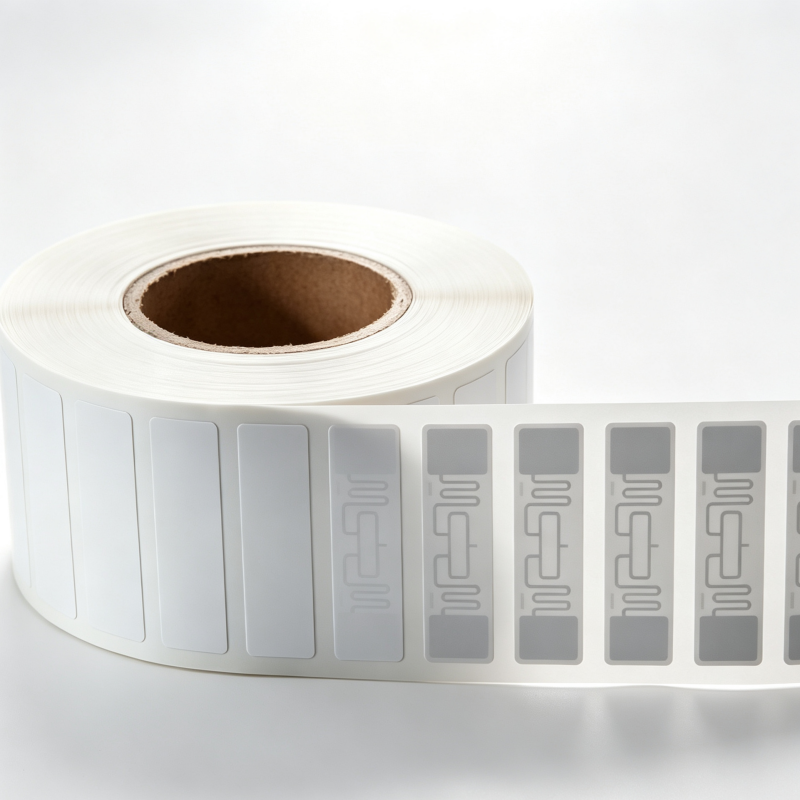
RFID tag prices vary from a few cents for basic passive inlays to tens of dollars or more for active and specialized tags. For B2B buyers, the most important factors are technology, construction, order volume, materials, data requirements, and the environment in which the tag must operate.
The best way to control cost is to specify the application accurately, compare equivalent quotations, test samples, and evaluate total system costs rather than focusing on unit price alone.
If you are sourcing RFID tags for retail, packaging, logistics, or industrial applications, prepare your target quantity, product surface, dimensions, and reading requirements before requesting a quotation. This gives manufacturers the information they need to recommend a suitable tag and provide a meaningful bulk price.
References and Authoritative Sources
U.S. Federal Trade Commission — RFID: Applications and Implications for Consumers Provides background on passive, semi-passive, and active RFID technology, and the relationship between tag design and performance. This is a historical technical report, not a current price guide. Read the report

Jgs is a custom labeling professional with 15 years of industry experience in labeling solutions.

Leave a Reply
Want to join the discussion?Feel free to contribute!