
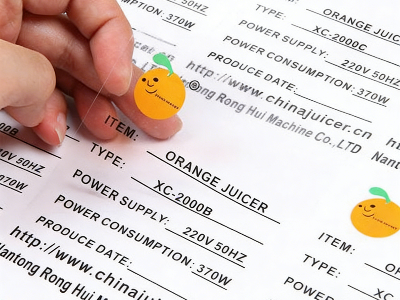
Transparent Labels: Creating a Premium “No Label Look” Packaging Effect.
/0 Comments/in blog /by Wendy Xiao
When brands want packaging to look clean, modern, and premium, traditional opaque labels can sometimes cover too much of the product surface. Transparent Labels provide an alternative by allowing the package, bottle, glass, or container underneath to remain visible while essential branding and product information are still displayed.
This creates the popular “no label look” packaging effect—a design approach in which the printed graphics appear to sit directly on the product rather than on a conventional label.
For beverage brands, cosmetics companies, personal care manufacturers, food producers, candle brands, and premium consumer products, transparent labels can combine visual simplicity with practical product identification.
But choosing the right transparent label is not simply a matter of selecting clear material. The final effect depends on the substrate, adhesive, printing technology, ink opacity, bottle color, application surface, and design.
This guide explains how transparent labels create a premium no-label look, where they work best, what materials and printing options are available, and how brands can choose the right custom solution.
What Are Transparent Labels?
Transparent Labels are self-adhesive labels produced using clear or translucent face materials rather than conventional opaque paper.
The transparent material allows the underlying packaging surface to remain visible.
Common applications include:
- Glass bottles
- Plastic containers
- Cosmetic packaging
- Beverage bottles
- Food jars
- Candle containers
- Personal care products
- Pharmaceutical packaging
- Premium gift packaging
A transparent label can contain:
- Brand logos
- Product names
- Ingredients
- Instructions
- Barcodes
- QR codes
- Regulatory information
- Decorative graphics
The key difference is that the background of the label can visually disappear when applied correctly.
What Is the “No Label Look”?
The “no label look” refers to packaging where the label appears to be printed directly onto the container.
Instead of seeing a visible white rectangle or colored paper background, customers see the original:
- Glass
- Plastic
- Metallic surface
- Product color
- Liquid color
- Container texture
around and sometimes through the printed design.
For example, imagine a transparent bottle containing a golden-colored beverage.
With a conventional white label, the label creates a solid visual block between the customer and the product.
With a transparent label, the bottle and liquid remain visible while the brand name appears to float directly on the surface.
That visual difference can be extremely powerful.
Why Do Brands Choose Transparent Labels?
The popularity of transparent labels is closely related to modern packaging design.
Consumers increasingly encounter packaging that emphasizes:
- Minimalism
- Transparency
- Premium appearance
- Product visibility
- Clean typography
- Simple graphics
Transparent labels support these design trends without requiring a completely label-free printing process.
For brands, the advantages can include:
- Premium visual presentation
- Better product visibility
- Minimalist packaging
- Strong shelf appeal
- Flexible branding
- Compatibility with different container shapes
- Opportunity for special printing effects
The result is a packaging solution that can look more sophisticated without necessarily requiring expensive direct-to-container printing equipment.
Transparent Labels vs. Traditional Labels
The visual difference is easy to understand.
| Feature | Traditional Opaque Label | Transparent Label |
|---|---|---|
| Background | Visible | Can visually disappear |
| Product visibility | Limited | High |
| Minimalist appearance | Moderate | Excellent |
| No-label effect | No | Yes |
| Premium packaging | Possible | Strong potential |
| Bottle color visible | Limited | Yes |
| White ink options | Yes | Important for special designs |
| Custom shapes | Yes | Yes |
| Barcode printing | Yes | Yes |
| QR code printing | Yes | Yes |
Transparent labels do not necessarily replace conventional labels.
Instead, they are particularly useful when the packaging itself is part of the visual identity.
How Transparent Labels Create a Premium Packaging Effect
The no-label look depends on several visual principles.
1. Clear Background
The label substrate is transparent, keeping the packaging underneath visible.
2. Minimal Graphics
Simple typography and clean layouts generally work particularly well.
3. Correct Ink Selection
Ink needs to provide enough contrast against the package.
4. Suitable Container
Glass and clear plastic containers are often excellent candidates.
5. Precise Application
Air bubbles, wrinkles, dust, and misalignment can undermine the premium appearance.
6. Appropriate Finish
Gloss, matte, frosted, or specialty finishes can change the packaging’s visual character.
The “no label” effect is therefore a combination of material + design + printing + application.
Clear Film Is the Foundation of Transparent Labels
The face material determines how the label looks and performs.
Common transparent label materials include clear film substrates based on materials such as:
- PET
- PP
- PE
- Other specialty transparent films
Each material has different properties.
Clear PET Labels
PET is known for:
- Dimensional stability
- Durability
- Moisture resistance
- Good clarity
- Strong appearance
Clear PET labels are suitable for applications where a premium appearance needs to be combined with relatively high durability.
They can be used for:
- Cosmetics
- Beverages
- Personal care
- Industrial products
- Premium consumer goods
Clear PP Labels
Transparent PP can provide:
- Good flexibility
- Moisture resistance
- Good clarity
- Suitable printability
It can work well for curved containers and packaging applications where flexibility is important.
Clear PE Labels
PE is flexible and can be useful for containers that deform or require a softer label construction.
Material selection should always consider the actual packaging and application conditions.
Transparent Labels for Glass Bottles
Glass bottles are one of the most natural applications for transparent labels.
The combination of clear glass and a transparent label can create an elegant appearance.
Applications include:
- Wine
- Spirits
- Beer
- Juice
- Water
- Specialty beverages
- Olive oil
- Sauces
- Cosmetics
For example, a premium beverage brand can use a clear label with metallic gold text.
The bottle remains visible while the gold typography creates a luxurious visual effect.
This approach can be especially effective when the product itself has an attractive color.
Transparent Labels for Wine Bottles
Wine packaging is particularly suitable for transparent label design.
A transparent wine label can emphasize the wine’s color while keeping the front label clean.
Possible design elements include:
- Winery logo
- Wine name
- Vintage
- Grape variety
- Alcohol percentage
- Volume
- Country or region
- Barcode
However, wine labels often require substantial mandatory information.
For these products, brands can combine:
Transparent Front Label + Back Label
or use a transparent label structure that integrates required information without overwhelming the bottle.
A frosted transparent label can also create a more sophisticated appearance than a completely clear glossy label.
Transparent Labels for Cosmetics
Cosmetic packaging frequently uses transparent labels because product presentation is closely connected with perceived quality.
Applications include:
- Shampoo
- Body wash
- Facial cleanser
- Serums
- Essential oils
- Hair products
- Skin-care products
- Liquid cosmetics
A transparent label can create a clean appearance on:
- Clear bottles
- Amber bottles
- Frosted containers
- Colored plastic packaging
For premium cosmetics, transparent labels can be combined with:
- White ink
- Metallic effects
- Matte finishing
- Gloss varnish
- Spot UV-style effects
- Fine typography
This allows brands to create packaging that feels more like a premium cosmetic product than an ordinary household container.
Transparent Labels for Food Packaging
Transparent labels can also work well for food products where customers benefit from seeing the contents.
Applications include:
- Sauces
- Honey
- Jam
- Pickles
- Beverages
- Condiments
- Specialty oils
- Premium snacks
For example, a glass jar containing colorful fruit preserves can use a transparent label that preserves visibility of the product.
The packaging itself becomes part of the visual design.
However, food packaging requires careful consideration of:
- Moisture
- Refrigeration
- Oil exposure
- Condensation
- Label adhesion
- Regulatory information
The transparent film and adhesive should therefore be selected according to the actual food-packaging environment.
Transparent Labels for Clear Plastic Packaging
Transparent labels are not limited to glass.
They can be applied to many clear plastic containers.
Potential applications include:
- PET bottles
- Cosmetic tubes
- Plastic jars
- Personal care containers
- Household products
The key consideration is compatibility between the adhesive and the plastic substrate.
Different plastics have different surface characteristics.
A transparent label that works perfectly on glass may require a different adhesive for certain plastic packaging.
Transparent Labels With White Ink
White ink is one of the most important technologies in transparent label printing.
Why?
Because transparent material does not naturally provide a white background.
If you print a design directly with standard colors, the color may become partially transparent.
For example, yellow printed on a clear label can appear very different when placed over:
- Clear glass
- Dark glass
- Colored liquid
- Black plastic
White ink can be used as an opacity layer beneath selected design elements.
This allows designers to control which areas remain transparent and which areas appear solid.
How White Ink Creates Special Effects
Transparent labels can use different white-ink structures.
Full White Underlayer
White ink is printed behind the entire design.
This makes the printed graphics more opaque while the surrounding label remains clear.
Partial White
White ink is applied only beneath selected areas.
This creates a mixture of:
- Transparent graphics
- Opaque graphics
- Semi-transparent visual effects
Reverse Printing
Some transparent label structures print graphics on the reverse side of the film and use additional white layers to protect or enhance the image.
The correct printing structure depends on the design and application.
Transparent Labels With Metallic Effects
A transparent substrate can be combined with metallic printing to create a premium appearance.
Popular effects include:
- Gold
- Silver
- Rose gold
- Copper
- Metallic colors
For example:
Clear Film + Transparent Background + Gold Logo
can create an elegant luxury appearance.
This is especially useful for:
- Wine
- Spirits
- Cosmetics
- Perfume
- Premium food
- Gift products
Metallic effects can also be selectively applied rather than covering the entire label.
Matte vs. Gloss Transparent Labels
The surface finish significantly changes the packaging appearance.
Gloss Transparent Labels
Gloss creates:
- High clarity
- Strong color appearance
- Shiny surface
- Modern appearance
It works well for:
- Beverages
- Cosmetics
- Consumer products
Matte Transparent Labels
Matte provides:
- Soft appearance
- Reduced reflections
- Premium tactile feel
- Sophisticated visual character
Matte transparent labels can be especially attractive for luxury cosmetics, specialty beverages, and minimalist packaging.
Frosted Transparent Labels
Frosted effects provide a visual middle ground.
They can create:
- Soft transparency
- Premium appearance
- Diffused background
- Glass-like appearance
This is useful when a brand wants transparency without making the package completely visually exposed.
Transparent Labels for Premium Beverage Packaging
The beverage industry is one of the strongest applications for transparent labels.
A clear label can work especially well when the liquid itself has an attractive color.
Imagine:
- Amber whiskey
- Golden olive oil
- Red wine
- Pink gin
- Green herbal beverage
A conventional opaque label hides some of the product.
A transparent label allows the product color to become part of the design.
This can create a stronger connection between:
Product + Packaging + Brand
Transparent Labels for “Clean” and Minimalist Branding
Modern packaging design often emphasizes simplicity.
A transparent label can reduce the visual weight of packaging.
Instead of:
Large white rectangle + multiple graphic elements
the design can become:
Product surface + small logo + clean typography
This can make packaging appear:
- More modern
- More premium
- Less cluttered
- More sophisticated
For brands positioned around natural, clean, minimalist, or premium products, this visual approach can be particularly effective.
Transparent Labels for Natural Products
Transparent labels are often useful for products where brands want to emphasize the physical contents.
Potential applications include:
- Organic beverages
- Natural cosmetics
- Essential oils
- Herbal products
- Handmade products
- Natural food
- Eco-positioned consumer goods
For example, a transparent label on an amber glass bottle can emphasize the natural color of the product while keeping the branding simple.
However, transparent labels do not automatically make packaging environmentally friendly. Evaluate sustainability based on the entire packaging system, including material composition, recyclability, adhesive, and local recycling infrastructure.
Transparent Labels for Small-Batch and Premium Products
Small and emerging brands often need packaging that looks premium without investing in custom bottle printing.
Transparent labels can provide a practical alternative.
Instead of purchasing directly printed containers, a brand can use:
Standard Container + Custom Transparent Label
This offers flexibility when:
- Product designs change
- New SKUs are introduced
- Seasonal products are launched
- Small production batches are required
The same container can potentially be used across several product variants while different labels create product differentiation.
Transparent Labels and Brand Consistency
For brands with multiple products, transparent labels can establish a consistent packaging system.
For example:
Product A → Green liquid + transparent label
Product B → Amber liquid + transparent label
Product C → Clear liquid + transparent label
The same typography, logo placement, and graphic style can create a unified product family while allowing the product color to differentiate each SKU.
This can be particularly effective for:
- Cosmetic ranges
- Beverage collections
- Food products
- Personal care brands
Transparent Labels for Curved Containers
Many bottles and containers have curved surfaces.
Transparent labels can be manufactured in different shapes to fit the package.
However, the label design needs to consider:
- Container diameter
- Label height
- Curvature
- Material flexibility
- Adhesive performance
A label that is too rigid or incorrectly sized may develop:
- Wrinkles
- Edge lifting
- Tunneling
- Bubbles
For cylindrical bottles, accurate dimensions and application testing are particularly important.
Why Transparent Labels Sometimes Look Cloudy
The “no label” look depends heavily on material clarity.
A poorly selected clear label may appear:
- Milky
- Hazy
- Grey
- Excessively glossy
- Visibly outlined
This can reduce the premium appearance.
Factors affecting clarity include:
- Film quality
- Surface finish
- Adhesive
- Printing
- Lamination
- Container surface
- Application conditions
For high-end packaging, brands should evaluate physical samples rather than selecting materials based only on a specification sheet.
How to Avoid Bubbles and Visible Edges
A transparent label makes application imperfections more noticeable.
On an opaque label, a small bubble may be less visually obvious.
On a clear label, it can immediately disrupt the no-label effect.
Common causes include:
- Dust
- Uneven application
- Poor adhesive selection
- Incorrect application pressure
- Contaminated packaging
- Incorrect label dimensions
For premium products, automated application or carefully controlled manual application can help maintain consistency.
Transparent Labels and Adhesive Selection
Adhesive is particularly important because the adhesive layer can influence the visual clarity of a transparent label.
A suitable adhesive should provide:
- Strong initial tack
- Good long-term adhesion
- Appropriate clarity
- Resistance to expected temperature
- Moisture resistance where required
- Compatibility with the container material
For glass, a standard permanent adhesive may work well in many applications.
For certain plastics, textured surfaces, refrigerated packaging, or high-moisture environments, a specialized adhesive may be necessary.
Transparent Labels for Refrigerated Products
Cold-chain products create additional labeling challenges.
A beverage label may encounter:
- Refrigeration
- Condensation
- Ice water
- Moisture
- Temperature changes
A clear label needs to remain attached and visually attractive under these conditions.
For refrigerated beverages, transparent film combined with an appropriate adhesive is generally more suitable than ordinary paper.
Test the label under actual refrigeration and condensation conditions before commercial production.
Transparent Labels for Outdoor Products
Outdoor products may be exposed to:
- Rain
- Sunlight
- UV
- Temperature fluctuations
- Dust
If a transparent label is intended for outdoor use, evaluate the face material, adhesive, printing ink, and protective coating.
UV exposure can affect printed colors over time.
Therefore, an outdoor transparent label may require additional protection compared with an indoor packaging label.
Custom Transparent Labels: What Can Be Customized?
A professional label manufacturer can customize almost every part of the label structure.
Size
Custom dimensions can be produced according to the container.
Shape
Options include:
- Rectangle
- Circle
- Oval
- Logo shape
- Custom die-cut
Material
Possible options include:
- Clear PET
- Clear PP
- Clear PE
- Specialty transparent films
Adhesive
The adhesive can be selected for:
- Glass
- Plastic
- Metal
- Coated surfaces
Printing
Possible options include:
- CMYK
- White ink
- Metallic effects
- Spot colors
- Variable data
Finishing
Options may include:
- Gloss
- Matte
- Frosted
- Protective coating
- Special decorative effects
This makes it possible to create a label specifically around the packaging design rather than adapting the design to a standard label format.
Transparent Labels vs. Direct Screen Printing
Brands sometimes compare transparent labels with direct printing on bottles or containers.
Transparent Labels
Advantages include:
- Lower packaging modification requirements
- Easy artwork changes
- Flexible SKU management
- Custom shapes
- Potentially lower setup complexity
- Suitable for changing product designs
Direct Printing
Advantages can include:
- Extremely integrated appearance
- No separate label layer
- Strong premium effect
However, direct printing requires compatible packaging surfaces and specialized printing processes.
For many brands, transparent labels provide a practical way to achieve a similar visual effect while retaining the flexibility of conventional labeling.
How to Design a Successful No-Label Look
A transparent label should not simply copy the design of a white label.
The design needs to take advantage of transparency.
Use Negative Space
Allow the package to become part of the design.
Keep Typography Clean
Minimal typography often enhances the premium effect.
Use White Strategically
White ink can make critical information stand out.
Consider the Product Color
The liquid or package color becomes part of the visual background.
Avoid Excessive Graphics
Too much printing can eliminate the visual advantage of transparent material.
Test the Real Product
A design that looks excellent on a computer screen may look completely different when applied to a curved bottle containing a colored liquid.
Common Mistakes When Buying Transparent Labels
Choosing a Clear Material Without Testing Clarity
Not all transparent films produce the same visual effect.
Ignoring the Product Color
The background color directly affects printed colors.
Using Too Little White Ink
Light colors may become difficult to see.
Ignoring Condensation
This is particularly important for beverage and refrigerated products.
Designing Only on a Flat Screen
Curved packaging changes how typography and graphics appear.
Focusing Only on Price
A cheaper clear film may not provide the clarity or adhesive performance required for premium packaging.
How Are Custom Transparent Labels Manufactured?
A typical manufacturing process includes several stages.
1. Packaging Assessment
The manufacturer evaluates:
- Container material
- Shape
- Diameter
- Surface
- Application environment
2. Material Selection
The appropriate transparent film is selected.
3. Adhesive Selection
The adhesive is matched to the container and environment.
4. Artwork Preparation
The design is adjusted for:
- Transparent areas
- White ink
- Metallic effects
- Variable data
5. Printing
The artwork is printed using the appropriate technology.
6. Finishing
Gloss, matte, frosting, or protective effects can be added.
7. Die Cutting
The labels are produced in the required shape.
8. Quality Control
The manufacturer checks:
- Print quality
- Clarity
- Dimensions
- Adhesion
- Color consistency
9. Application Testing
Samples can be applied to the actual container to verify the final no-label appearance.
Custom Transparent Labels Manufacturer
Perfect Label provides custom Transparent Labels for brands looking to create premium, minimalist, and no-label-look packaging.
As a label manufacturer, Perfect Label can customize:
- Clear label materials
- Label dimensions
- Custom shapes
- Adhesives
- CMYK printing
- White ink
- Metallic effects
- Matte finishes
- Gloss finishes
- Frosted effects
- Barcodes
- QR codes
- Variable information
Solutions can be developed for:
- Wine bottles
- Beverage packaging
- Cosmetic bottles
- Food jars
- Personal care products
- Essential oil bottles
- Candles
- Premium consumer products
The objective is not simply to produce a transparent sticker.
It is to create a transparent labeling system that visually integrates with the packaging.
How to Choose the Right Transparent Labels
Before ordering, consider these seven questions:
1. What Is the Container Material?
Glass and different plastics may require different adhesives.
2. Is the Container Clear or Colored?
The background directly affects the final printed appearance.
3. Do You Need a True No-Label Look?
If yes, high-clarity film and careful application become especially important.
4. Do You Need White Ink?
White ink is useful when text or graphics need strong opacity.
5. Will the Product Be Refrigerated?
If yes, test the label under condensation and low-temperature conditions.
6. Is the Product Exposed to Water or Oil?
Choose materials and adhesives accordingly.
7. What Premium Effect Do You Want?
Choose between:
- Gloss
- Matte
- Frosted
- Metallic
- Transparent
- Partial opaque effects
Answering these questions before production can significantly reduce the risk of selecting an unsuitable label.
FAQ About Transparent Labels
What are Transparent Labels?
Transparent Labels are clear adhesive labels that allow the underlying packaging surface to remain visible. They are commonly used to create minimalist and premium packaging effects.
How do Transparent Labels create a no-label look?
The clear label material visually blends with the packaging while printed graphics remain visible. With suitable film clarity, printing, and application, the label can appear almost as though the design is printed directly on the container.
What material is best for clear labels?
Clear PET and clear PP are common options. The best material depends on clarity, flexibility, durability, container material, and application environment.
Can Transparent Labels be printed with white ink?
Yes. White ink is widely used to improve opacity and contrast on clear labels. It can also be applied selectively to create transparent and opaque areas within the same design.
Can Transparent Labels be used on glass bottles?
Yes. Glass bottles are one of the most common applications, particularly for beverages, wine, cosmetics, sauces, and premium products.
Are Transparent Labels waterproof?
Many transparent film labels can provide strong moisture resistance, but waterproof performance depends on the film, adhesive, printing, and application environment.
Can Transparent Labels be used on refrigerated beverages?
Yes. Suitable film and adhesive constructions can be designed for refrigerated products. Testing under condensation and temperature-cycle conditions is recommended.
Can I customize the size and shape?
Yes. Custom Transparent Labels can be produced in different sizes, shapes, finishes, and printing configurations according to the packaging design.
Are Transparent Labels suitable for premium products?
Yes. Their ability to preserve product visibility and create a clean, minimalist appearance makes them popular for premium beverages, cosmetics, food, personal care, and specialty products.
Final Thoughts
Transparent Labels offer brands a practical way to create the increasingly popular “no label look” without completely changing their packaging manufacturing process.
The biggest advantage is visual integration.
Instead of covering the product with an opaque label, a clear label allows the:
Bottle + Product Color + Brand Design
to work together as one packaging system.
For a premium wine bottle, the wine itself can become part of the design. For cosmetics, the transparent container can reinforce a clean and sophisticated identity. For food jars, customers can see the product while the brand remains clearly visible.
But achieving a convincing no-label effect requires more than transparent film. Film clarity, adhesive, printing technology, white ink, finish, label design, container material, and application quality all influence the final result.
For brands seeking premium packaging, the right transparent label is therefore not simply the clearest material available. It is the combination of design, material, printing, adhesive, and application technology that makes the label visually disappear while allowing the brand to stand out.

International Trade Sales professional with 10+ years of experience in the label printing and packaging industry. Specializing in export sales, global market development, and client relationship management, with expertise in custom labeling solutions across paper and film substrates (PP, PE, PET). Serving global clients across FMCG, pharmaceutical, and personal care sectors. Committed to delivering quality, consistency, and trust in every shipment.


Leave a Reply
Want to join the discussion?Feel free to contribute!