
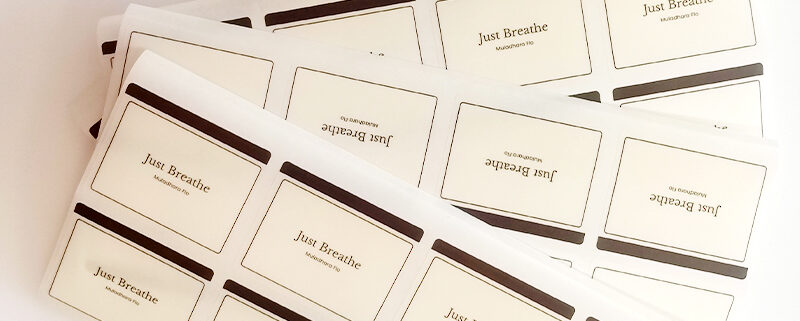
Custom Food Packaging Labels: Complete Guide for Food Brands
Choosing the right Custom Food Packaging Labels is an important decision for food brands, manufacturers, retailers, and private-label businesses. A food label does much more than display a logo. It communicates product information, supports brand recognition, helps customers understand what they are buying, and must remain readable throughout transportation, storage, retail display, and consumer use.
The challenge is that food packaging environments vary significantly. A dry snack pouch, refrigerated yogurt container, frozen food package, sauce bottle, coffee bag, and glass jar may all require completely different label materials and adhesive systems.
For this reason, the best Custom Food Packaging Labels are designed around the product, packaging material, storage environment, and market requirements—not simply around the artwork.
This guide explains how to select, customize, and manufacture food packaging labels, covering materials, adhesives, printing, finishes, applications, compliance considerations, common problems, and practical purchasing advice.
What Are Custom Food Packaging Labels?
Custom Food Packaging Labels are product labels manufactured according to the specific branding, packaging, functional, and regulatory requirements of a food product.
Unlike standard stock labels, custom labels can be produced in different:
- Sizes
- Shapes
- Materials
- Colors
- Adhesives
- Printing methods
- Finishes
- Thicknesses
- Roll formats
- Security features
They can be applied to many types of food packaging, including:
- Glass jars
- Plastic bottles
- Plastic containers
- Paper bags
- Pouches
- Cartons
- Cans
- Boxes
- Food trays
- Flexible packaging
A food label may need to perform several functions simultaneously:
Branding + Product Identification + Consumer Information + Traceability + Packaging Performance
That makes label selection more technical than it may initially appear.
Why Custom Food Packaging Labels Matter
For many consumers, the label is the first part of a packaged food product they see.
Before purchasing, customers may look at:
- Product name
- Brand
- Flavor
- Ingredients
- Nutrition information
- Allergen information
- Net quantity
- Certifications
- Storage instructions
- Expiration or best-before information
At the same time, the label has to visually communicate the brand’s positioning.
A premium organic food brand may prefer textured paper, muted colors, and embossed details.
A children’s snack brand may require bright colors and playful graphics.
A premium sauce manufacturer may choose clear film and metallic finishing.
Therefore, a successful food label has two jobs:
It must communicate information clearly while making the product visually attractive.
Custom Food Packaging Labels Start With the Packaging
One of the biggest mistakes food brands make is choosing the label material before considering the package itself.
The same label material may perform differently on different substrates.
Common packaging surfaces include:
Glass
Common for:
- Jams
- Sauces
- Pickles
- Honey
- Beverages
- Premium food products
Glass usually provides a relatively smooth labeling surface, but condensation and refrigeration can create additional adhesive challenges.
PET Plastic
Used for:
- Drinks
- Sauces
- Food containers
- Condiments
The label needs to be compatible with the specific plastic surface.
PP Plastic
PP is common in food containers and flexible packaging. Because polypropylene can be challenging for some adhesive systems, select an adhesive specifically for the application.
Cardboard
Common in:
- Cereal boxes
- Snack boxes
- Frozen food cartons
- Gift food packaging
Paper-based labels can often provide a cost-effective solution for dry cardboard applications.
Flexible Pouches
Pouches can be more challenging because they may bend, flex, or have textured surfaces.
The label should therefore be selected according to the flexibility and surface characteristics of the pouch.
How to Choose the Right Material for Custom Food Packaging Labels
Material selection directly affects appearance, durability, moisture resistance, and cost.
1. Paper Food Labels
Paper remains one of the most popular materials for food labels.
Common options include:
- Coated paper
- Semi-gloss paper
- Matte paper
- Kraft paper
- Textured paper
- Specialty art paper
Paper is particularly suitable for dry products.
Typical applications include:
- Coffee
- Tea
- Snacks
- Bakery products
- Dry foods
- Cereal
- Gift food products
Advantages
- Cost-effective
- Excellent printability
- Natural appearance
- Wide range of finishes
- Easy to customize
Limitation
Standard paper is less suitable for prolonged exposure to water or condensation.
For refrigerated or wet products, a synthetic label may be a better choice.
2. BOPP / PP Food Packaging Labels
BOPP and PP films are popular when food labels need improved moisture resistance.
Typical applications include:
- Beverage bottles
- Sauces
- Condiments
- Refrigerated food
- Fresh food packaging
- Cooking products
Advantages include:
- Moisture resistance
- Good printability
- Flexible construction
- Attractive appearance
- Good durability
White BOPP provides a strong background for colorful graphics, while clear BOPP can create a transparent or “no-label” appearance.
For food brands selling products in refrigerators or humid environments, BOPP can provide a significant advantage over conventional paper.
3. PET Food Packaging Labels
PET labels are suitable when greater durability is required.
They can provide resistance to:
- Moisture
- Tearing
- Abrasion
- Temperature changes
- Certain chemicals
Potential applications include:
- Industrial food containers
- Refrigerated products
- Beverage packaging
- Food-processing environments
- Durable product identification
PET is particularly useful when the label needs to maintain dimensional stability.
4. Kraft and Specialty Paper Labels
For natural, organic, handmade, or premium food brands, specialty papers can make a significant difference.
Popular choices include:
- Kraft paper
- Cotton paper
- Textured paper
- Recycled-look paper
- Embossed paper
- Pearl paper
These materials can communicate qualities such as:
Natural + Handmade + Premium + Sustainable-looking
For example, a small-batch honey brand may benefit from kraft paper, while a premium chocolate brand may choose textured art paper with gold foil.
The key is that the material should support the brand positioning.
Waterproof Custom Food Packaging Labels
Moisture is one of the most common reasons food labels fail.
Consider products such as:
- Chilled beverages
- Sauces
- Pickles
- Refrigerated foods
- Frozen foods
- Fresh products
Condensation can appear when cold products are moved into warmer environments.
If a conventional paper label absorbs moisture, it may:
- Wrinkle
- Tear
- Lose visual quality
- Lift at the edges
- Become difficult to scan
For these applications, food brands can consider:
BOPP + suitable adhesive
or
PET + suitable adhesive
depending on the required durability.
However, waterproof performance depends on the complete construction—not just the face material.
Choosing the Right Adhesive
The adhesive is one of the most important but frequently overlooked components of Custom Food Packaging Labels.
The right adhesive depends on:
- Packaging material
- Application temperature
- Storage temperature
- Moisture
- Surface cleanliness
- Product lifetime
- Removal requirements
Permanent Adhesive
Permanent adhesive is appropriate when the label should remain attached throughout the product’s normal life.
Common applications include:
- Food jars
- Beverage bottles
- Sauce bottles
- Retail packaging
- Product identification
Removable Adhesive
Removable adhesives are useful when the label is intended to be removed.
Potential applications include:
- Promotional labels
- Temporary packaging
- Reusable containers
- Seasonal campaigns
Freezer Adhesive
Frozen food requires special attention.
Low temperatures can affect adhesive performance, while frost and condensation may further complicate bonding.
For frozen products, provide the manufacturer with the actual:
- Application temperature
- Storage temperature
- Transportation conditions
- Expected duration
rather than simply requesting a “strong adhesive.”
Custom Food Packaging Labels for Different Food Categories
Different food products have different labeling environments.
Snack Food Labels
Common products include:
- Potato chips
- Nuts
- Cookies
- Crackers
- Dried fruit
- Granola
- Candy
These products often use:
- Paper labels
- BOPP labels
- Matte finishes
- Gloss finishes
- Bright full-color printing
For dry products, moisture resistance may be less critical than branding and print quality.
Coffee Packaging Labels
Coffee brands often emphasize premium visual identity.
Popular label materials include:
- Kraft paper
- Textured paper
- Matte paper
- White BOPP
- Clear BOPP
Finishes may include:
- Gold foil
- Silver foil
- Embossing
- Soft-touch
- Spot UV
For specialty coffee, the label can communicate roast type, origin, flavor profile, processing method, and brand story.
A premium label can therefore become part of the customer’s perception of product quality.
Sauce and Condiment Labels
Sauces and condiments create a more demanding environment.
Products may include:
- Ketchup
- Chili sauce
- Hot sauce
- Soy sauce
- Salad dressing
- Mustard
- Mayonnaise
- Cooking sauces
The packaging may encounter:
- Water
- Oil
- Food residue
- Refrigeration
- Repeated handling
For these products, BOPP or other moisture-resistant films can be considered.
Frozen Food Labels
Frozen food presents two major challenges:
Low temperature + moisture
Common products include:
- Frozen vegetables
- Frozen meat
- Frozen seafood
- Frozen fruit
- Frozen meals
- Ice cream
The label needs to maintain adhesion and readability under cold-storage conditions.
A freezer-compatible adhesive and moisture-resistant face material should be evaluated together.
Fresh Food Labels
Fresh food packaging can include:
- Fruit
- Vegetables
- Meat
- Seafood
- Bakery products
- Dairy products
These products may encounter refrigeration, condensation, and frequent handling.
The appropriate label construction depends heavily on whether the label is applied to:
- Plastic trays
- Film
- Cardboard
- Glass
- Flexible packaging
Food Label Printing Options
Printing quality has a direct impact on shelf appeal.
Digital Printing
Digital printing is useful for:
- Short runs
- Multiple SKUs
- Seasonal products
- Personalized packaging
- Product testing
- Frequent artwork changes
It can be especially useful for emerging food brands that do not want to commit to very large quantities.
Flexographic Printing
Flexographic printing can be suitable for larger production volumes.
Advantages may include:
- Efficient high-volume production
- Consistent color reproduction
- Competitive unit cost at scale
For established food brands with stable artwork and large quantities, flexographic printing may be attractive.
Variable Data Printing
Variable data can be used for:
- Batch numbers
- Lot codes
- Serial numbers
- Expiration information
- QR codes
- Promotional codes
This allows each label or label group to contain unique information.
Custom Food Packaging Label Finishes
Finishing is where a standard food label can become a strong branding tool.
Matte Finish
Matte labels create a soft and sophisticated appearance.
Suitable for:
- Organic foods
- Premium coffee
- Natural products
- Gourmet foods
Gloss Finish
Gloss can make colors appear more vibrant and provide a polished appearance.
Suitable for:
- Snacks
- Beverages
- Children’s foods
- Retail products
Gold and Silver Foil
Foil stamping can create a premium visual effect.
Popular applications include:
- Chocolate
- Wine
- Gourmet foods
- Premium sauces
- Specialty coffee
Embossing
Embossing adds physical texture to selected elements.
Commonly used for:
- Logos
- Brand names
- Decorative patterns
Spot UV
Spot UV creates selective gloss on specific areas of the label.
For example, a brand may use:
Matte background + Spot UV logo
to create contrast without adding additional colors.
Clear Custom Food Packaging Labels
Clear labels are increasingly popular for premium food packaging.
A transparent label can be applied to:
- Glass bottles
- Clear plastic containers
- Transparent jars
The result can create a visual effect where the packaging itself becomes part of the design.
Clear labels are especially effective when the food product has attractive visual qualities.
Examples include:
- Sauces
- Beverages
- Honey
- Premium oils
- Gourmet products
However, clear labels require careful consideration of:
- Ink opacity
- White ink
- Surface color
- Printing technology
- Adhesive clarity
For example, printing white ink underneath selected graphics can make colors more visible on transparent packaging.
Food Packaging Label Size and Shape
There is no universal food label size.
The correct dimensions depend on:
- Container size
- Available labeling area
- Product information
- Barcode requirements
- Brand logo
- Labeling equipment
- Container curvature
Common shapes include:
- Rectangle
- Square
- Circle
- Oval
- Custom die-cut
- Wrap-around
For bottles and jars, label curvature is particularly important.
An oversized label may wrinkle around a curved surface.
An undersized label may fail to provide enough space for required information.
The best approach is to measure the actual packaging before finalizing label dimensions.
Food Packaging Labels and Regulatory Information
Food labels are not purely a marketing tool.
Depending on the destination market and product category, regulations may govern information such as:
- Product name
- Net quantity
- Ingredient list
- Allergen declarations
- Nutrition information
- Manufacturer information
- Country of origin
- Storage instructions
- Date marking
- Claims and certifications
For example, the U.S. Food and Drug Administration provides guidance covering food labeling requirements, including nutrition labeling, ingredient declarations, and major food allergens. (fda.gov)
In the European Union, Regulation (EU) No 1169/2011 governs food information requirements, including mandatory information such as the name of the food, ingredients, allergens, net quantity, date marking, and other applicable details. (eur-lex.europa.eu)
The exact requirements depend on the product and market.
Therefore, the food brand should provide the label manufacturer with approved regulatory artwork.
A label manufacturer can help produce the label accurately, but the food business remains responsible for ensuring that the final product information meets the applicable regulations.
Barcode and QR Code Requirements
Modern food packaging labels increasingly incorporate machine-readable information.
Common technologies include:
- EAN/UPC barcodes
- QR codes
- Data Matrix codes
- Batch codes
- Variable data
A barcode label needs:
- Adequate contrast
- Sufficient quiet zone
- Correct dimensions
- Consistent printing
- Appropriate surface finish
A visually attractive label is not useful if the barcode cannot be reliably scanned.
Therefore, brands should test printed samples with the scanners used in their distribution or retail environment.
Sustainable Custom Food Packaging Labels
Sustainability has become an important consideration for food brands.
Potential approaches include:
- FSC-certified paper
- Recycled-content paper
- Lightweight label materials
- Reduced liner weight
- Paper-based constructions
- Wash-off label systems where appropriate
- Material combinations designed for packaging recycling systems
However, sustainability claims should be based on the actual material construction and applicable recycling infrastructure.
A label described as “eco-friendly” is not automatically environmentally preferable in every packaging system.
For brands selling internationally, it is useful to evaluate:
Label material + adhesive + packaging material + recycling process
as one system.
Common Food Packaging Label Problems
Problem 1: Label Peeling
Possible causes:
- Wrong adhesive
- Wet surface
- Low application temperature
- Contaminated packaging
- Difficult substrate
Solution
Select an adhesive specifically for the packaging material and application environment.
Problem 2: Wrinkled Labels
Possible causes:
- Incorrect material
- Curved container
- Excessive label size
- Poor application process
Solution
Test the label on the actual container before mass production.
Problem 3: Water Damage
Possible causes:
- Conventional paper
- Unprotected printing
- Moisture entering the label edges
Solution
Consider BOPP, PP, PET, or other moisture-resistant constructions.
Problem 4: Barcode Cannot Be Scanned
Possible causes:
- Insufficient contrast
- Poor print resolution
- Excessive gloss
- Incorrect dimensions
Solution
Create a barcode testing process before production approval.
Problem 5: Colors Look Different From the Design
Possible causes:
- Different printing processes
- Material color
- Screen-to-print differences
- Incorrect color management
Solution
Request a physical proof or production sample for critical brand colors.
How to Order Custom Food Packaging Labels
Before contacting a label manufacturer, prepare the following information.
Product Information
- Food category
- Packaging type
- Target market
- Storage conditions
Label Specifications
- Width
- Height
- Shape
- Quantity
- Roll or sheet format
Material
- Paper
- Kraft
- BOPP
- PP
- PET
- Specialty paper
Adhesive
- Permanent
- Removable
- Freezer
- Moisture-resistant
- Specialized adhesive
Printing
- CMYK
- Pantone
- Digital
- Flexographic
- Variable data
Finishing
- Matte
- Gloss
- Lamination
- Foil
- Embossing
- Spot UV
The more complete the information, the more accurately the manufacturer can recommend the label construction.
Custom Food Packaging Labels Manufacturer: Perfect Label
Perfect Label provides Custom Food Packaging Labels manufacturing and customization services for food brands, manufacturers, distributors, retailers, and private-label businesses.
Custom solutions can be developed around different food products and packaging environments.
Available customizations can include:
- Paper food labels
- Kraft food labels
- BOPP labels
- PP labels
- PET labels
- Waterproof food labels
- Freezer labels
- Clear labels
- Metallic labels
- Premium specialty paper labels
- Barcode labels
- QR code labels
- Variable-data labels
Perfect Label can also customize:
Material + Adhesive + Size + Shape + Printing + Finishing + Packaging
The recommended manufacturing process is:
Application analysis → Material selection → Artwork review → Sampling → Performance testing → Mass production
This approach allows brands to evaluate both visual appearance and practical performance before committing to a large order.
How to Choose the Best Custom Food Packaging Labels
A simple decision framework can help.
Choose Paper When:
- The product is dry
- Moisture exposure is low
- Cost efficiency is important
- A traditional paper appearance is preferred
Choose BOPP/PP When:
- Moisture resistance is required
- The package may be refrigerated
- The product is exposed to condensation
- Flexible synthetic material is preferred
Choose PET When:
- High durability is required
- The label may face abrasion
- Temperature resistance is important
- Industrial-style performance is required
Choose Specialty Paper When:
- Premium appearance matters
- The brand emphasizes craftsmanship
- Texture is part of the packaging experience
Choose Clear Film When:
- A transparent appearance is desired
- The container itself should remain visible
- Premium packaging is the goal
FAQ About Custom Food Packaging Labels
What are Custom Food Packaging Labels?
Labels manufactured to the specific size, shape, material, adhesive, printing, finishing, and functional requirements of a food product.
What material is best for food packaging labels?
There is no universal best material. Paper suits many dry products, while BOPP and PP are often better for moisture-prone environments. Consider PET when you need greater durability.
Are food packaging labels waterproof?
They can be. BOPP, PP, PET, and other synthetic materials can provide good moisture resistance, but waterproof performance also depends on the adhesive, printing, protective coating, and application conditions.
Can food labels be customized in different shapes?
Yes. Custom food labels can be produced as rectangles, circles, ovals, squares, wrap-around labels, or custom die-cut shapes.
Can I add a barcode or QR code?
Yes. You can incorporate barcodes, QR codes, batch numbers, lot numbers, and other variable information into custom food labels.
Can food labels be used in freezers?
Yes, but frozen products require appropriate face materials and low-temperature adhesives. Test the label under actual freezing and condensation conditions.
Can I order custom food labels with gold foil?
Yes. Gold foil, silver foil, embossing, debossing, spot UV, matte lamination, and other finishing techniques can be used for premium food packaging.
What information should I provide when requesting a quotation?
At minimum, provide the packaging material, label size, quantity, application temperature, storage environment, artwork, material preference, and required finishing. More detail helps the manufacturer recommend a more suitable construction.
Final Thoughts
Custom Food Packaging Labels are much more than printed stickers. They are an important part of the product’s packaging system and have to balance branding, information, durability, application performance, and regulatory requirements.
The right solution depends on the product.
A dry snack may work well with an economical paper label. A refrigerated beverage may require BOPP and a moisture-resistant adhesive. Frozen food needs a construction designed for low temperatures. A premium coffee or gourmet product may benefit from textured paper, foil, or embossing. Industrial food containers may require PET and higher durability.
The most reliable selection process is:
Product → Packaging Surface → Environment → Material → Adhesive → Size → Printing → Finishing → Testing
For food brands, the best label is not necessarily the most expensive one. It is the label that looks right on the shelf, performs correctly throughout the supply chain, communicates essential product information clearly, and supports the brand’s positioning.
By working with a manufacturer such as Perfect Label, brands can customize the complete label construction rather than being restricted to a standard material or size. That makes it easier to create Custom Food Packaging Labels that are visually distinctive, technically appropriate, and ready for commercial production.

International Trade Sales professional with 10+ years of experience in the label printing and packaging industry. Specializing in export sales, global market development, and client relationship management, with expertise in custom labeling solutions across paper and film substrates (PP, PE, PET). Serving global clients across FMCG, pharmaceutical, and personal care sectors. Committed to delivering quality, consistency, and trust in every shipment.


Leave a Reply
Want to join the discussion?Feel free to contribute!